
International Law
-
A classroom activity featuring short‑answer questions that introduce students to key concepts in international law, including treaties, treaty bodies, accountability mechanisms, sovereignty, case studies and emerging global challenges. The worksheet supports understanding of how international obligations interact with Australia’s legal system and encourages critical thinking about the role and impact of international organisations.
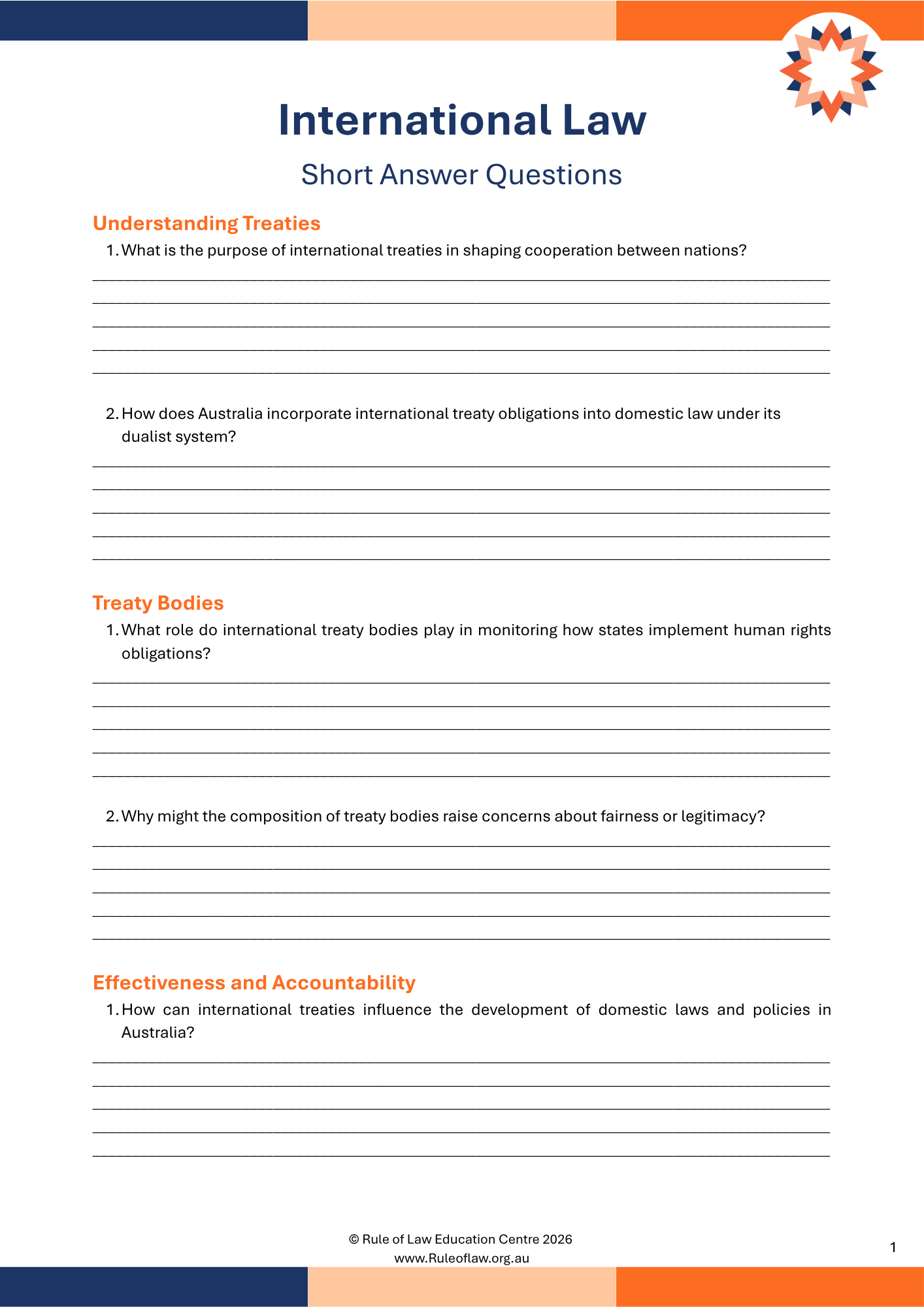
International Law
Short Answer Questions
Understanding Treaties
What is the purpose of international treaties in shaping cooperation between nations?
How does Australia incorporate international treaty obligations into domestic law under its dualist system?
Treaty Bodies
What role do international treaty bodies play in monitoring how states implement human rights obligations?
Why might the composition of treaty bodies raise concerns about fairness or legitimacy?
Effectiveness and Accountability
How can international treaties influence the development of domestic laws and policies in Australia?
Why is the reporting process to treaty bodies considered an important accountability mechanism?
What limits exist on the ability of international committees to enforce their decisions?
Case Studies
How does the Kazal case illustrate the challenges individuals may face when seeking remedies through international bodies?
Sovereignty and Democracy
Why do some critics argue that international treaties can reduce national sovereignty?
How might the external affairs power allow the Commonwealth to expand its legislative reach?
Future Global Challenges
Why might reliance on voluntary funding create concerns about the independence of international organisations?
Related Resources
-
This explainer outlines how international treaty bodies monitor states’ compliance with human rights treaties and how their influence interacts with Australian sovereignty and the rule of law. It describes the structure and election of committee members, assesses the effectiveness of treaty bodies in shaping domestic human rights protections, and highlights concerns about diminished sovereignty, democratic accountability, and the use of the external affairs power.
-
A comparative classroom poster explaining how monist and dualist systems treat international and domestic law. It highlights automatic incorporation in monist systems and the need for parliamentary implementation in dualist systems, using clear definitions and country examples to support student understanding.
Explore Related Topics
-
Human Rights
Explore resources on human rights, outlining key protections, legal frameworks, and how rights are balanced against government power in through constitutional principles, legislative safeguards and rule‑of‑law accountability.
-
Aboriginal & Torres Strait Islanders
Explore our resources on Aboriginal and Torres Strait Islander peoples, outlining legal history, cultural traditions, land rights, and contemporary justice issues in Australia.
-
Democracy
Explore resources on democracy, highlighting how accountability and representative institutions ensure power is exercised fairly and transparently through open processes, civic engagement and responsible governance.