
Informed Civic Competition
A deck of cards and reflective drawings to develop a vibrant civic culture in schools
Let’s build a more informed Australia
The fabric of Australia is woven from our values, governance structures, and pluralist heritage. These threads come together through the people, laws, and institutions that shape our nation.
The Informed Fabric of Australia competition invites Years 7–10 students to explore the foundational threads that hold our nation together and examine the principles that safeguard our rights and freedoms.
This competition is for all ages and abilities, and develops an understanding of our democratic institutions through
ready-to-use resources and factsheets aligned to the national curriculum,
interactive classroom activities and discussion prompts to spark peer-to-peer conversations, encourage critical inquiry, and connect civic concepts to current events; and
reflection activity where students create their own playing cards that can be submitted as part of the competition.
Competition Opens: 9am Monday February 09
Competition Closes: 5pm Friday November 20
Your Questions, Answered
-
We have six simple steps for you to follow.
The Steps:
ONE: Download
Explore the resources provided including
TWO: Pre-Test
Test what you already know.
Click the link to take the Benchmark Test.
THREE: Learn
Pick (or be assigned) a civics topic from the list of 14 existing cards. Each topic includes three subtopics for you to explore and represent. This research will help you prepare to create your civics cards.
Use the resources and activities provided to help you
Use any other resources your teacher gives you
Use Rule of Law Education Centre posters and your own research
Make use of classroom materials to design and create your own playing card
FOUR: Create
Divide the class into pairs.
Assign each pair on one of the 14 topic blank card sheets and provide each pair with the relevant factsheet. If using a class page on a learning platform, you could have a link to the resources page here so that they can look up the information directly and download it themselves.
Using the blank card templates, each pair must create one card for their topic area.
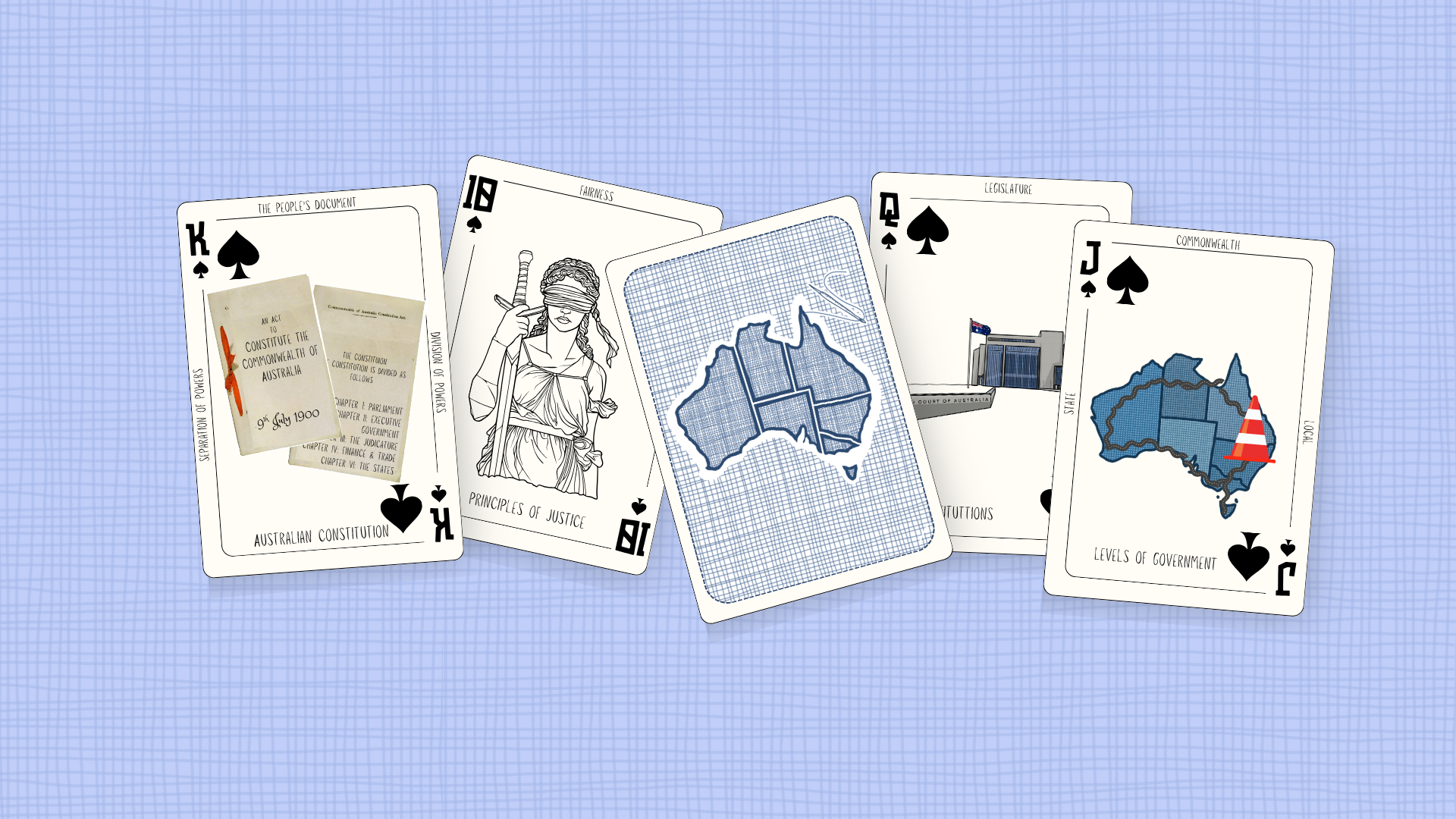
For example, for the topic Levels of Government, we have used the map of Australia held together with train tracks to represent the unified federalist system.
Students must create a new picture for their card that shows that concept in their understanding that other students could find relatable.
What should we draw for the front design?
A drawing, symbol, or image that visually represents the subtopic. Encourage creativity and original designs based on the students’ understanding
Five: Submit
Your teacher will collect and send your card designs through to the team at education@ruleoflaw.org.au.
Each submission must include:
Your teacher’ s name
Your teacher’s email address
Your school’s name
Your name or the names of all group members (if a group submission)
SIX: Post-test
Take the Post-Test Survey to reflect on what you’ve learned.
Click the link to complete the survey.
-
At the heart of the program are 14 essential civics topics, each presented as a concise, one-page fact sheet. These have been developed by experienced educators from across Australia to ensure curriculum and syllabus relevance, clarity, and classroom practicality.
Quick links: Combined Fact Sheets and Activities, and Combined Blank Cards for reflection task
Each fact sheet includes:
A clear explanation of the topic
Three core ideas to anchor understanding
Chunked content to support cognitive load and accessibility
This structure supports explicit teaching, introducing new concepts in manageable steps that build student confidence and retention. These fact sheets are designed to activate prior knowledge, spark peer-to-peer conversations, encourage critical inquiry, and connect civic concepts to current events.
Teachers can use them flexibly to guide discussions, integrate with ongoing lessons, or respond to emerging issues in the classroom.
-
Accessible and Inclusive Competition
The Fabric of Australia: Informed Competition is designed to be inclusive and adaptable, ensuring all students can participate regardless of background or access to technology. The competition is open to students in Years 7–10 across Australia
It can be completed using paper-based or digital formats and can be delivered in a single lesson or at different times.
-
All factsheets and activities are FREE!
The competition is FREE to enter!
All participants receive an Informed Emerging Leaders Award certificate from the Rule of Law Education Centre.
Because all classes aren’t made the same, there are two entry categories – Most Engaging Picture and Best Set of Cards, each with their own prize.
Most engaging picture (for smaller or single picture entries). Catering to smaller classes and single entries, entries to this category will have the chance to have their entry made into an A2 poster sent to them to keep!
Best set of cards (for entries of a complete set of 14 pictures for a full set of cards). Groups submitting a set of 14 pictures for a complete set of cards will be in the running to win a full printed set of cards with their own designs, a lasting resource that reinforces learning and encourages pride in civic participation.
PLUS, there will also be a First Past the Post mystery prize up for grabs every competition period for the first class that sends us a picture of the poster with every topic ticked off as being covered!
Don’t forget to get your students to complete the pre- and post-learning surveys so you (and they) can see how much they have learned!
-
Curriculum-Linked Learning
Each resource in The Fabric of Australia: Informed Competition is directly aligned with the Civics and Citizenship strand of the Australian Curriculum (ACARA) and the Victorian Curriculum 2.0, and Stages 3-5 of the NSW Curriculum. and incorporates key terms and concepts across three core areas:
Government and Democracy: Understanding Australia’s democratic system, institutions, and the role of citizens.
Laws and Citizens: Exploring how laws are made, the legal system, and the rights and responsibilities of citizens.
Citizenship, Diversity and Identity: Investigating shared values, cultural diversity, identity, and global citizenship.
While these resources are grounded in the Civics and Citizenship National curriculum, civic learning is not confined to one subject. Informal civics education also occurs in English, History, Geography, Art, and more.
The Fabric of Australia: Informed Competition and its accompanying playing cards are designed to be flexible and interdisciplinary, making them ideal for integration into subjects like History and Art.
The 14 topic areas serve as curriculum-aligned prompts that support both specialists and non-specialists, offering accessible entry points into key civic concepts that can be embedded across a range of learning experiences.
-
Classroom-Ready, Evidence-Based Resources
The Fabric of Australia: Informed Competition provides a suite of evidence-based, curriculum-linked resources designed to deepen students’ understanding of civics and citizenship.
Rather than relying on rote memorisation, these materials promote meaningful learning by helping students explore the purpose and significance of civic institutions and values. Based upon the Center for Information and Research on Civic Learning and Engagement (CIRCLE) and Carnegie Corporation of New York, in consultation with the Corporation for National and Community Service recommendations, these resources start with direct instruction and respectful discussion. They then encourage students to connect civic concepts to their own lives and current events, fostering deeper engagement and understanding.
-
Interactive Classroom Activities
Each fact sheet is accompanied by engaging, printable activities that reinforce key concepts and encourage active participation. These activities are designed to foster a classroom culture of respectful dialogue, critical thinking, and civic engagement. They can be found at the bottom of the fact sheet/resource page for each topic area, accessed by clicking on the relevant playing card below.
There are also instructional videos for games that classes can play using just one deck of cards. If you wish to purchase decks of playing cards, head to the Shop button at the top of the website!
All the factsheets are available in one file here.
-
Surveys can be used as Formative Assessment and Evidence of Quality Teaching in line with AITSL Teacher Standard 5.
The surveys are not required to be eligible to win, but are a useful tool in understanding existing student knowledge to guide teaching and then in assessing student learning.
The surveys come in the form of a pre-learning and post-learning survey, which contain the same questions to enable teachers to conduct a measurable comparison easily.
Comprising of 28 questions, these benchmark tests will assist teachers to:
Measure factual knowledge and civic understanding prior to learning
Track student progress across key learning outcomes
Support the development of skills essential for active citizenship
Teachers can also use the results from the benchmark tests in their reporting to establish the knowledge, understanding and skills that students have been able to demonstrate because of teaching and learning activities undertaken in the relevant course.
The survey results help show the efficacy of the program and the teaching methods and activities adopted in the classroom.
Click here for the survey
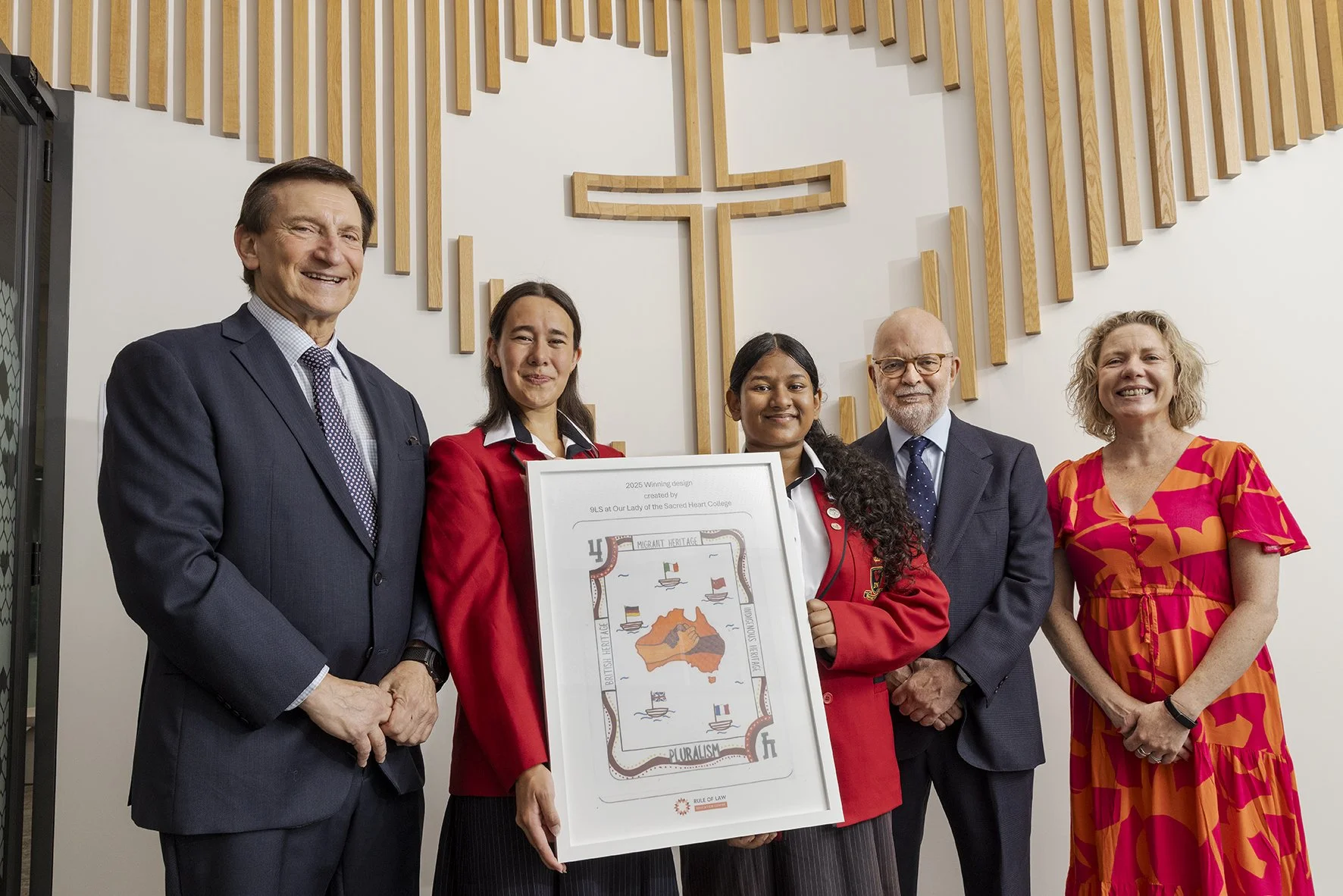
The Fabric of Australia: Informed Civics Competition top prize was awarded by the Hon. Ron Hoenig MP, Minister of Local Government in New South Wales to two students from a Year 9 class at Our Lady of the Sacred Heart College, Kensington (NSW).
The winning design, on Pluralism – A Portrait of Modern Australia, was produced by Tiffany and Olive.
It captured Australia as a diverse nation where people of different cultures, languages, beliefs and religions live together, united by shared democratic principles. It depicted Australia’s story as woven from three strands- our Indigenous heritage, British institutional foundations and migrant contributions, illustrating how diversity and unity coexist under our democracy and the rule of law.
The inaugural competition had 87 entries and awarded First Runner Up to Norwest Christian College (NSW), Civic Knowledge Growth Award to Broughton Anglican College (NSW), Special Commendation to The Springfield Anglican College (QLD) and Special Commendation went to Caroline Chisholm College (NSW).
2025 Winners:
Educational Card Games using Fabric of Australia Deck
Use the Fabric of Australia Deck of Cards as a fun and educational way to get students engaged in the principles of the rule of law!
Fact Sheets and Activities
-
Australian Constitution
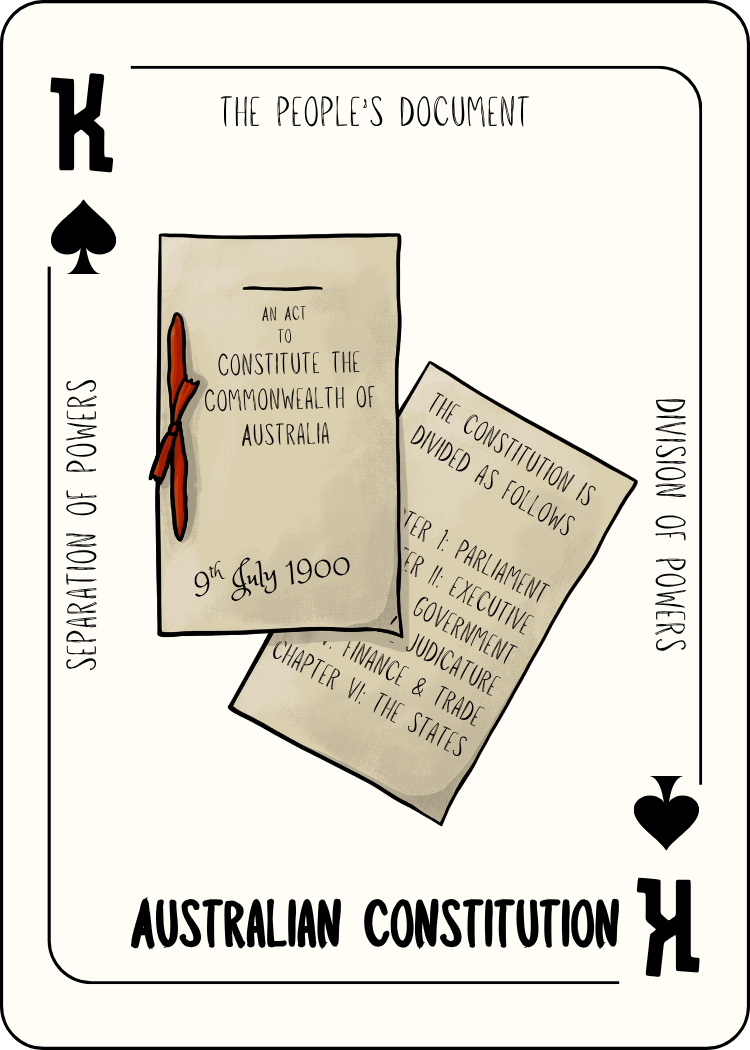
The Australian Constitution provides the legal framework for governing Australia, establishing federalism, separation of powers, and representative democracy. It allocates authority between levels of government, limits arbitrary power, and embeds rule of law principles that safeguard fairness, accountability, and individual freedoms.
-
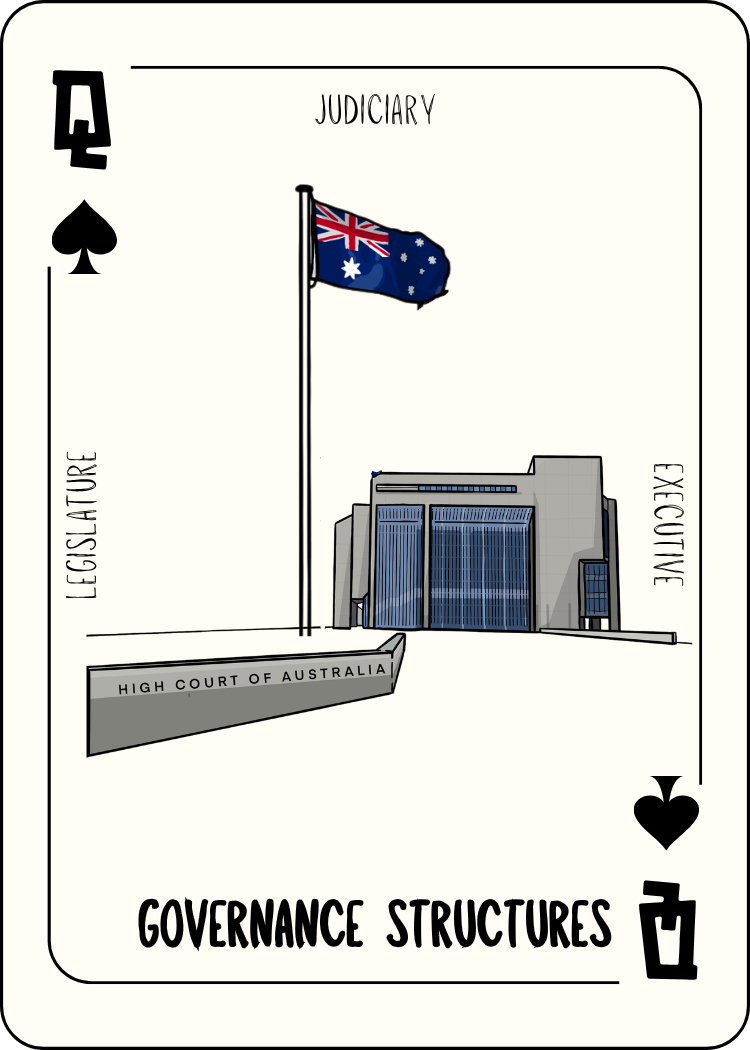
Governance Structures
Australia’s governance structures divide power between the legislature, executive and judiciary under the Constitution. This separation of powers, prevents concentration of authority. Elected parliaments make laws, the executive administers them, and independent courts interpret and enforce the law, ensuring accountability and balance.
-
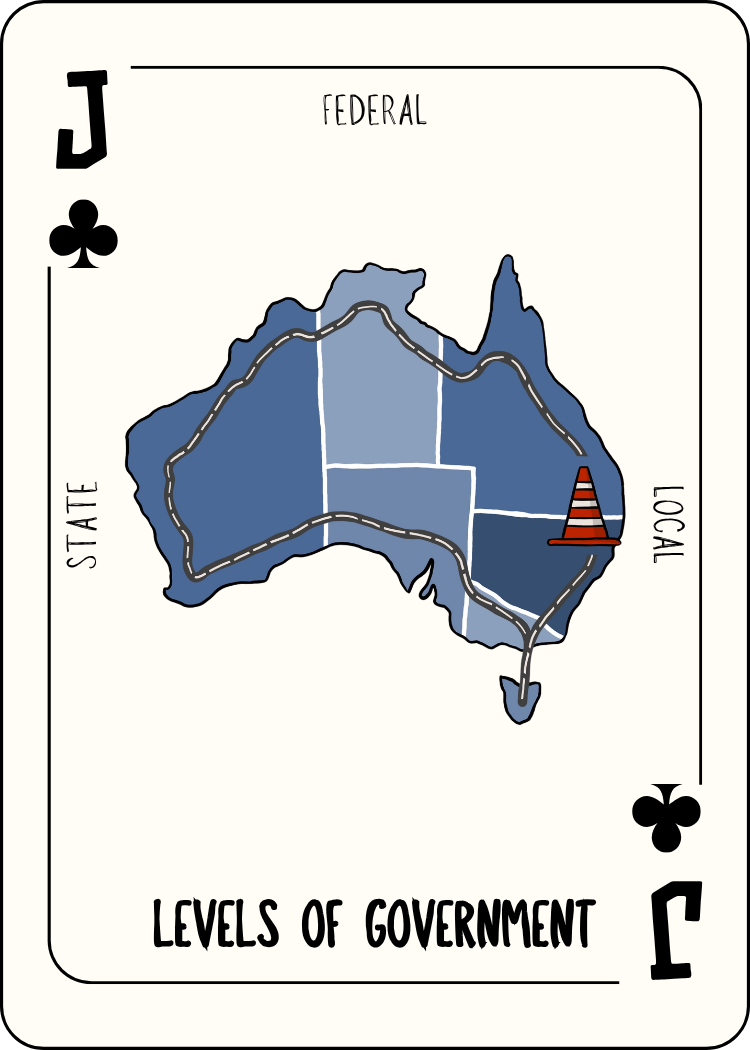
Levels of Government in Australia
Australia has three levels of government: federal, state/territory and local. Under federalism in the Constitution, this division of powers allow different governments to manage national, state and community issues. This division allows laws to reflect local needs while maintaining national coordination and accountability at the Commonwealth level.
-
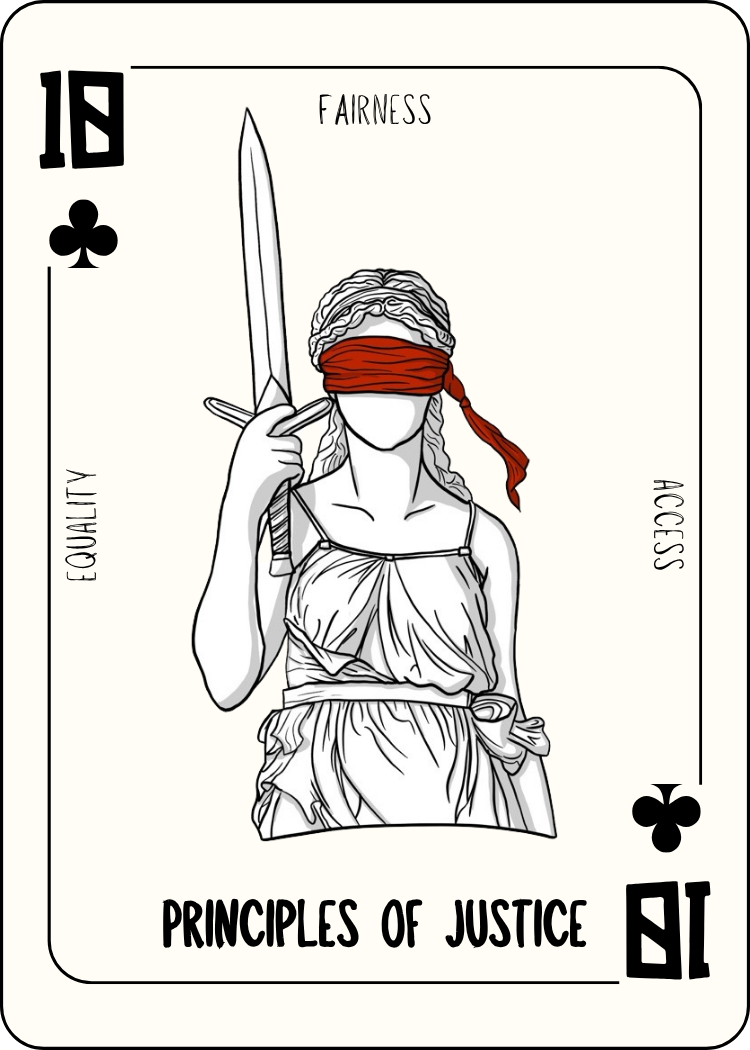
Principles of Justice
The principles of justice are equality, fairness and access. Together, they ensure everyone is treated equally before the law, decisions are impartial and transparent, and people can understand, use and benefit from the legal system to protect rights and uphold the rule of law.
-
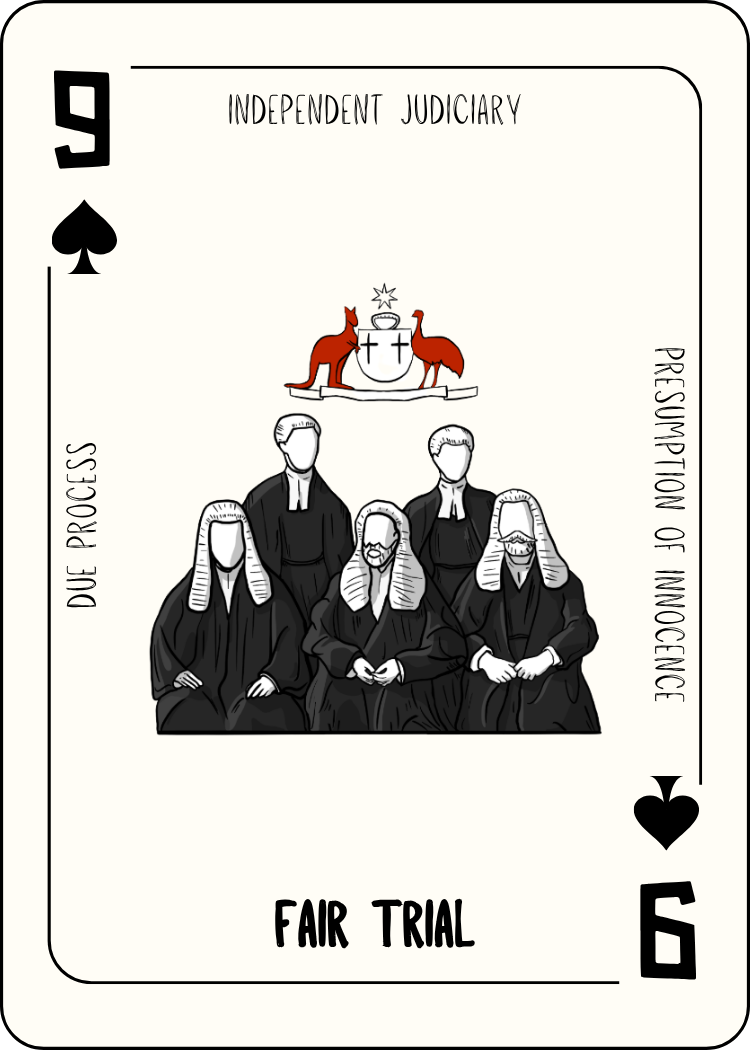
Fair Trial
A fair trial protects individuals from injustice and abuse of power. It ensures cases are decided openly and impartially by independent courts, with the presumption of innocence, clear procedures and equal treatment, building public confidence and safeguarding fundamental rights.
-
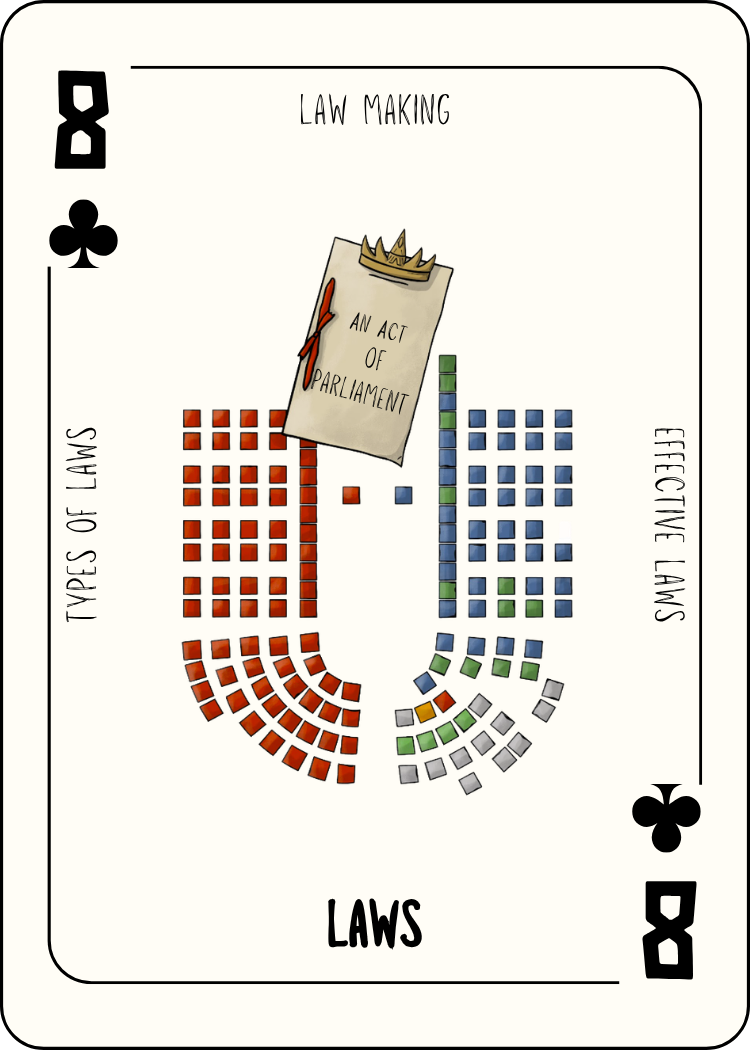
Laws
Laws organise society, protect rights and keep communities safe. Made by parliaments, they apply within specific jurisdictions and are enforced by courts and authorities. Effective laws are clear, fair, publicly debated and consistent with democratic values and the rule of law.
-
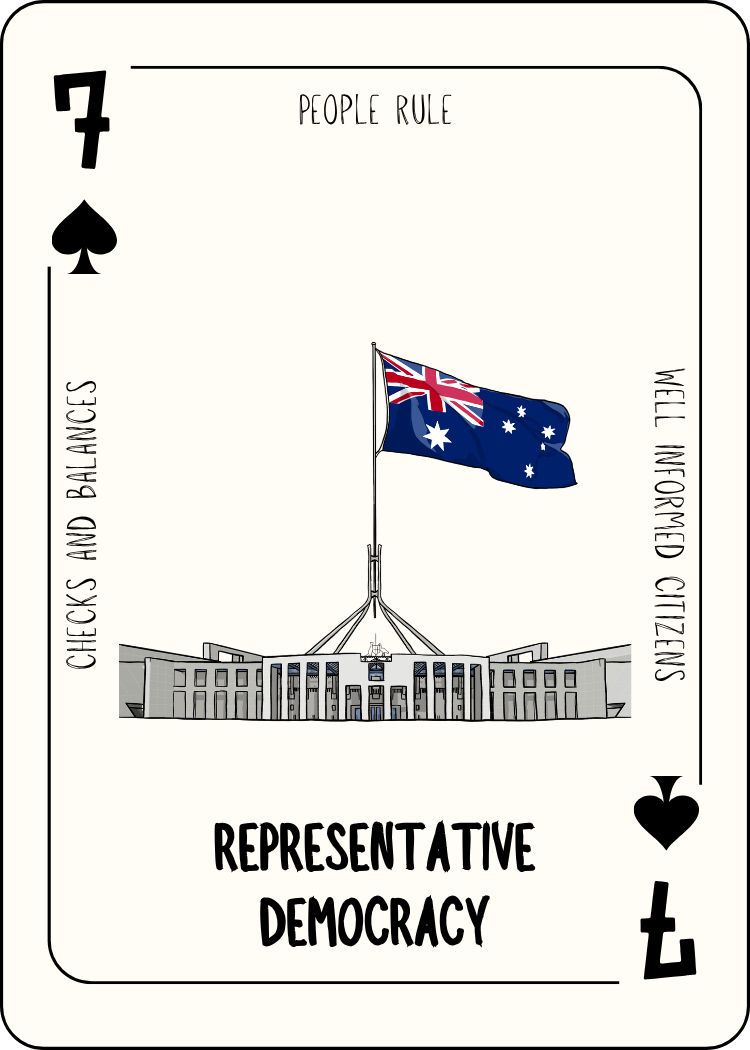
Representative Democracy
In a representative democracy, citizens elect representatives to make laws and govern on their behalf. Free and fair elections, accountability, checks and balances, and the rule of law ensure leaders exercise power responsibly and remain answerable to the people.
-
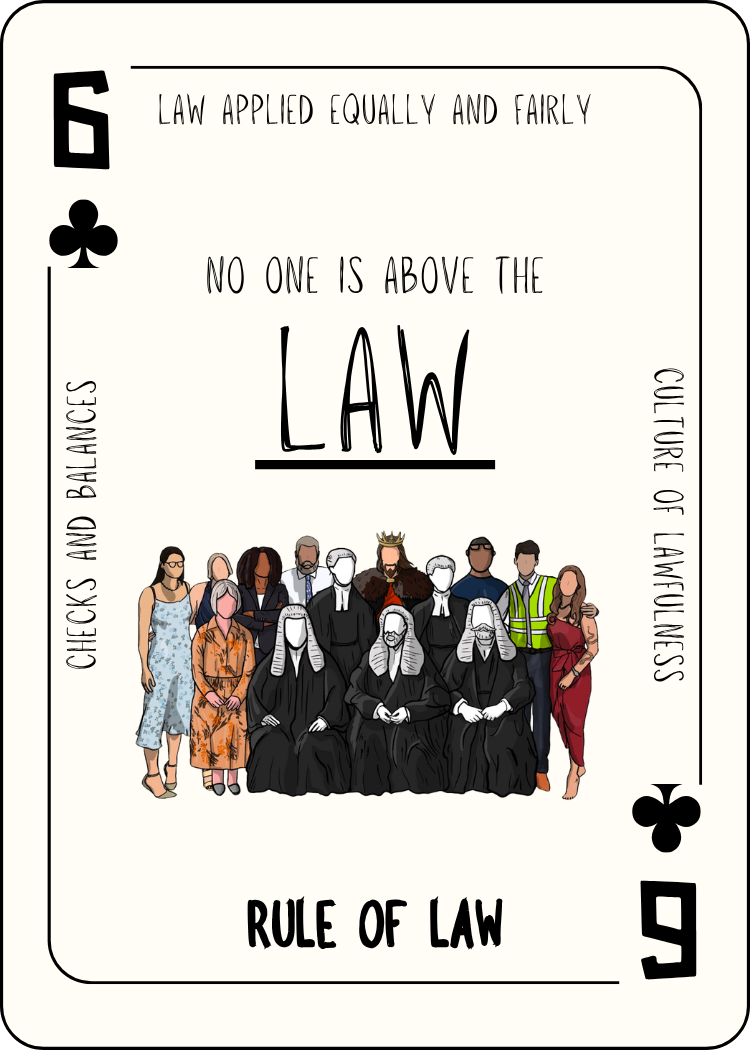
Rule of Law
The rule of law means everyone, including government, is bound by the law. Laws must be clear, applied equally and fairly and supported by independent courts. This prevents arbitrary power, protects rights and freedoms, and ensures fairness, accountability and stability in a democratic society.
-
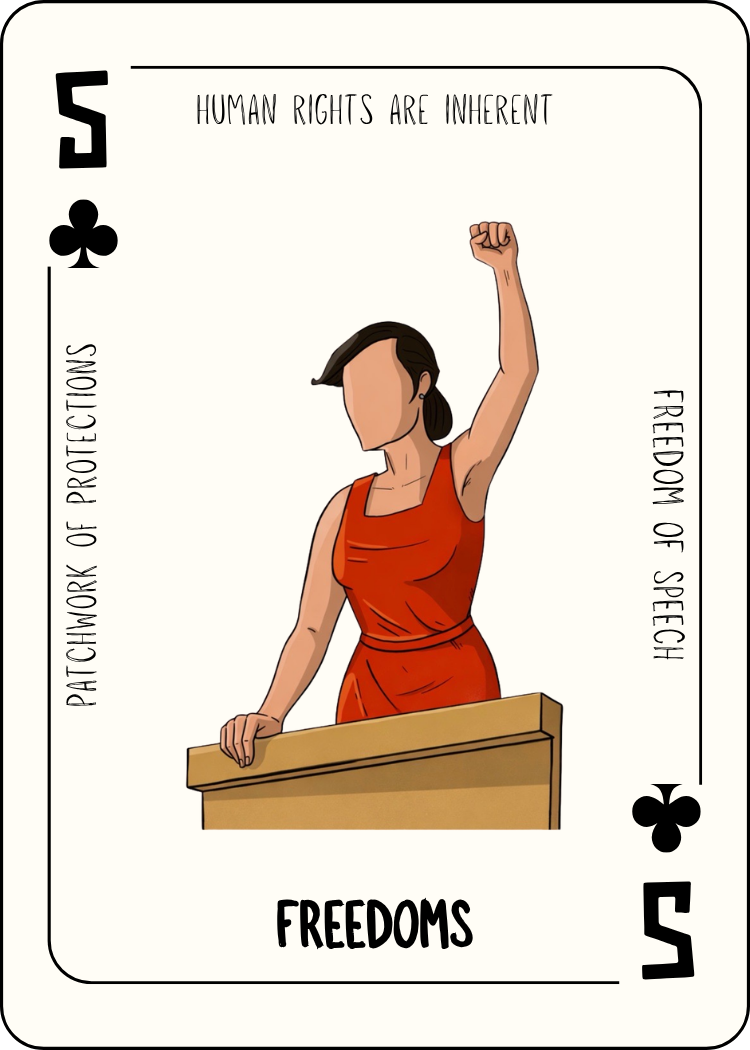
Freedoms
Freedoms are inherent human rights that belong to all people simply because they are human. In Australia, freedoms such as speech, religion and movement are protected through the Constitution, common law and legislation, and should only be limited when necessary to protect others or public order.
-
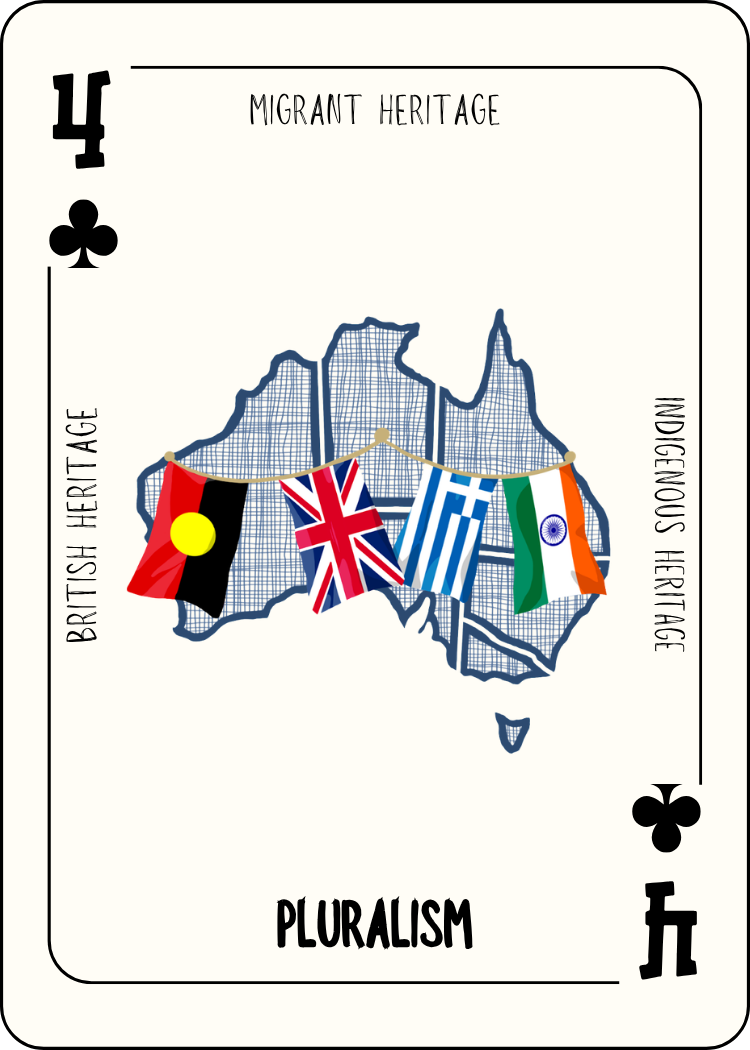
Pluralism
Pluralism recognises that people in Australia hold diverse beliefs, cultures and values with three stands: Indigenous history, British Heritage and a migrant culture. A pluralist democracy relies on a shared commitment to the rule of law, our democratic institutions and ensuring peaceful coexistence, mutual respect and equal participation in society.
-
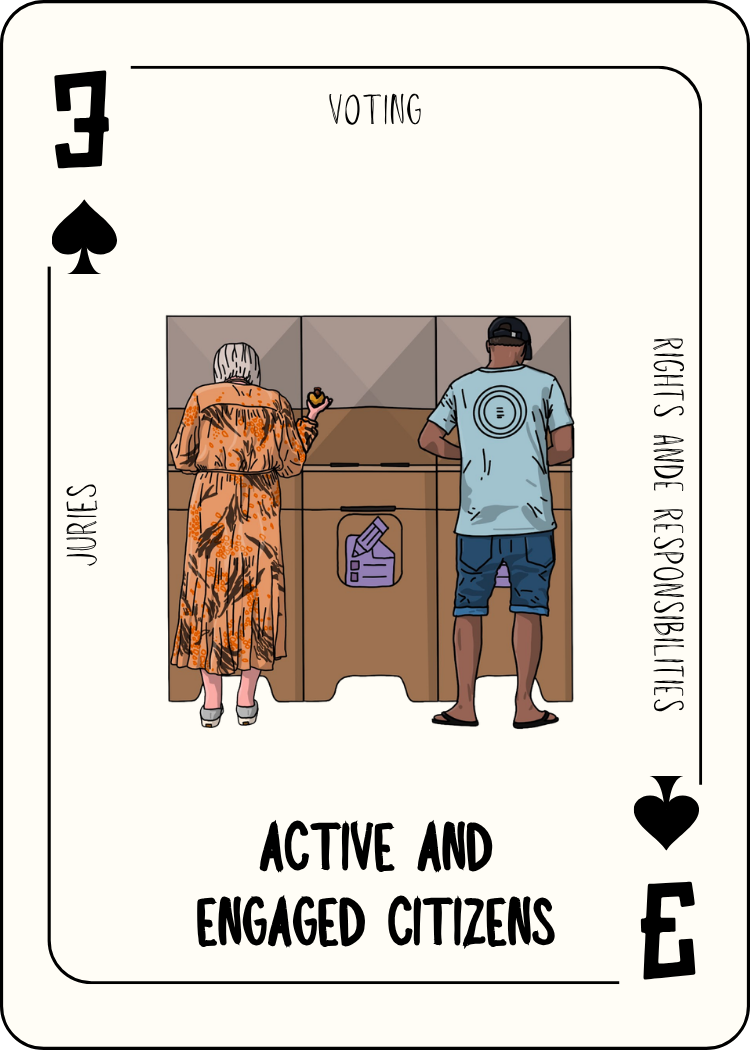
Active and Engaged Citizens
A strong democracy relies on citizens who are informed and engaged. Active citizens have responsibilities such as voting, jury service, lawful protest and community involvement. Being informed helps people hold governments accountable, protect democratic institutions and uphold the rule of law.
-
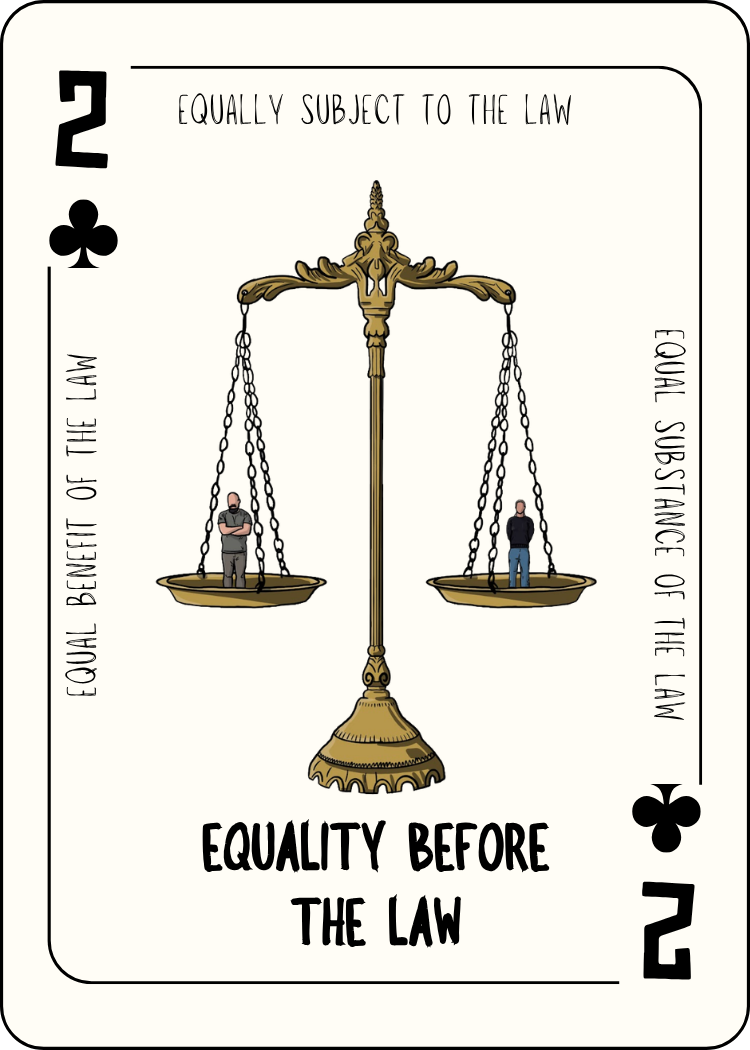
Equality before the Law
Equality before the law means everyone is treated the same by the legal system, regardless of status or background (unless there is a specific reason). No one is above the law, including government. Courts must act impartially so that similar cases are treated alike, ensuring justice for all.
-
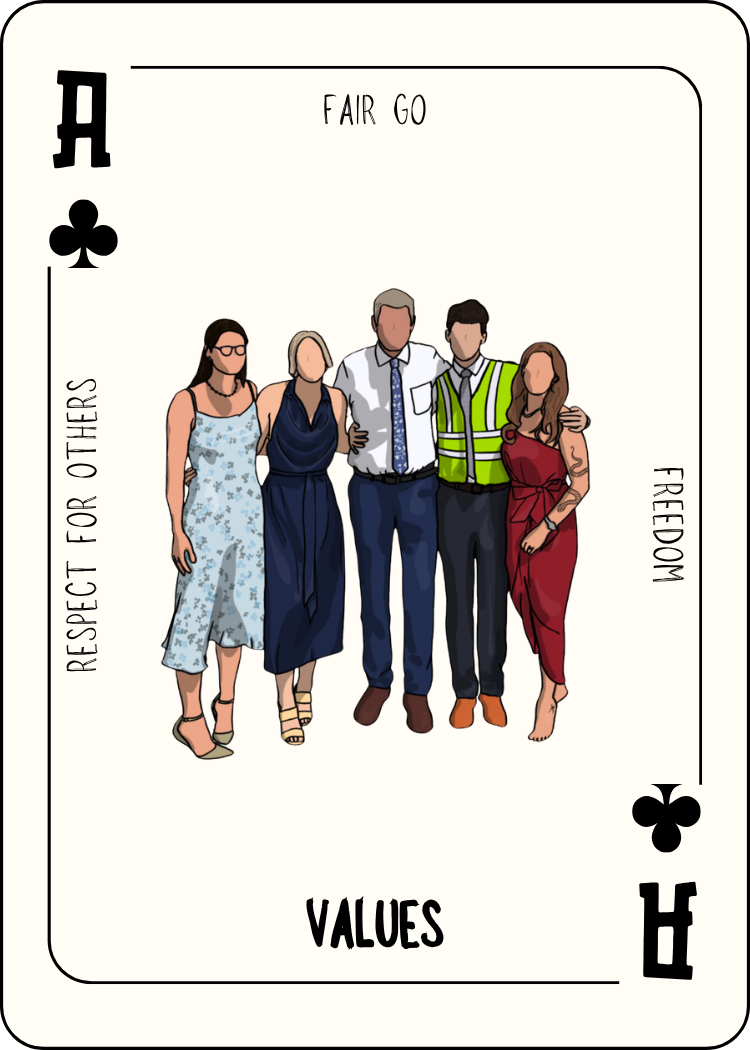
Values
Democratic values such as fairness, respect, freedom, responsibility and equality underpin Australia’s legal system. These shared values guide how laws are made, interpreted and followed, supporting social cohesion and reinforcing the rule of law as the foundation of democratic governance.
-
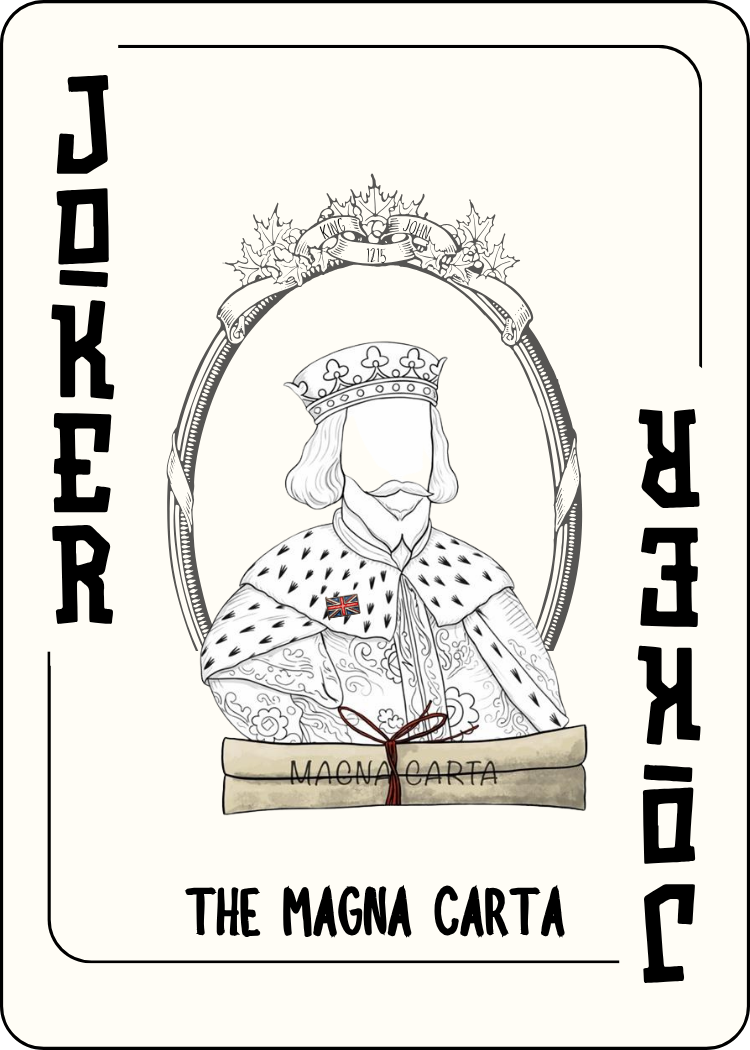
Magna Carta
The Magna Carta (1215) is a peace treaty from England that established that even the king was subject to the law. Its principles—lawful judgement, access to justice and limits on power— have shaped British common law, influenced Australia’s legal system, and laid foundations for the rule of law, democracy and human rights.
-
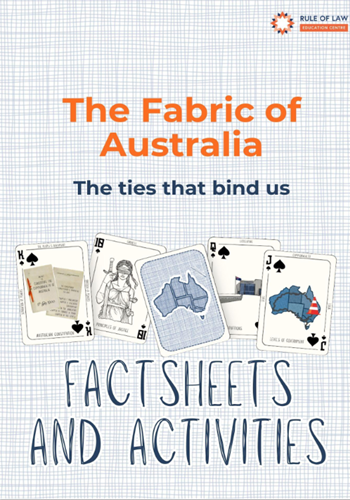
Combined Document
All of the factsheets and activities for the Competition and Fabric of Australia playing cards all in one easy to print PDF.
-
Informed Playing Card Deck Poster
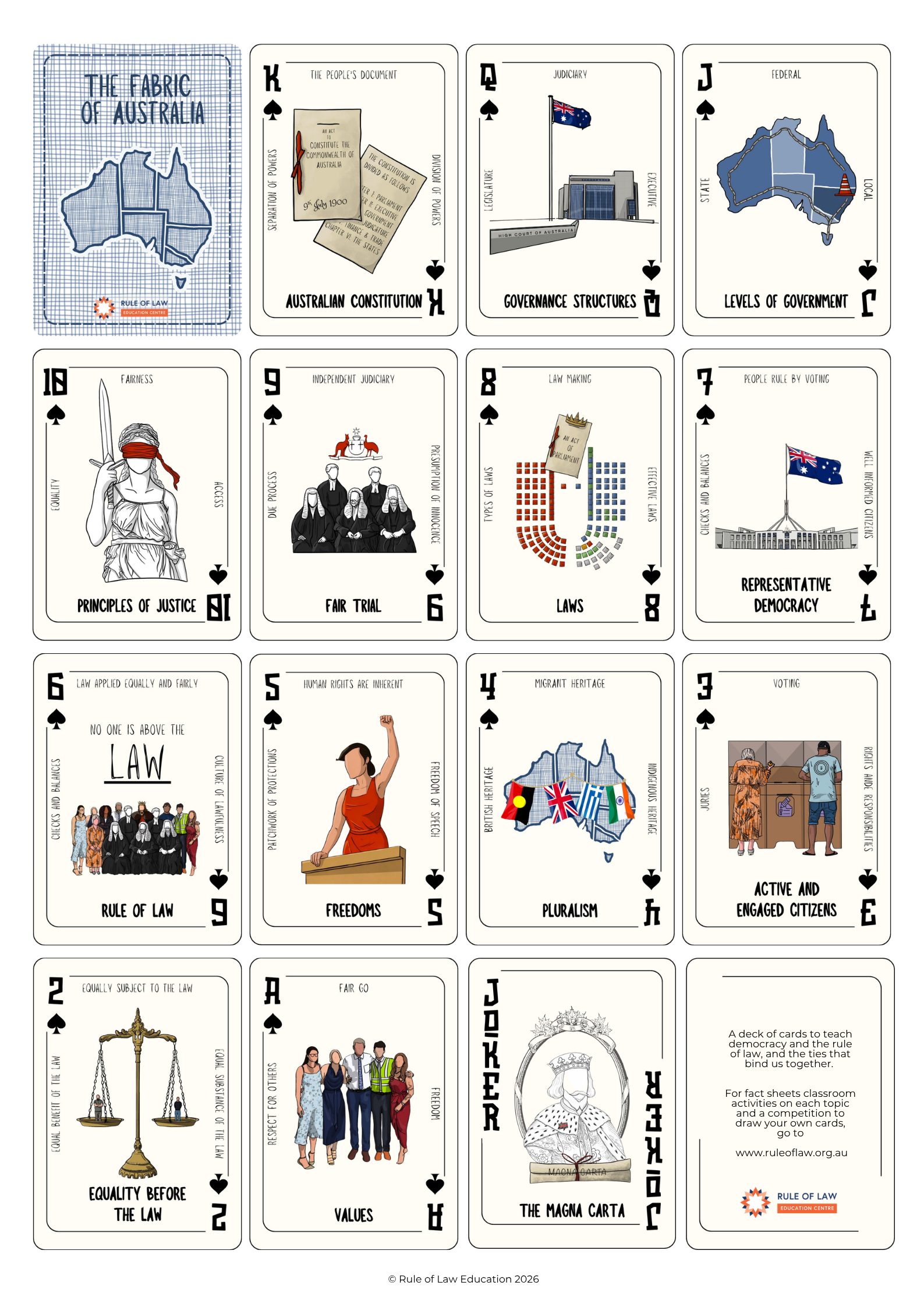
This poster presents the full suite of civic playing cards, visually mapping core concepts of Australia’s democracy and rule of law.