
Presumption of Innocence
-
This explainer introduces the role of a prosecutor and the importance of the presumption of innocence, showing how prosecutors must act fairly, present evidence responsibly, and ensure that guilt is proven beyond reasonable doubt. It highlights how these duties protect individual rights, maintain the integrity of criminal trials, and uphold public confidence in the justice system.
-
This explainer introduces the role of a prosecutor and the importance of the presumption of innocence, showing how prosecutors must act fairly, present evidence responsibly, and ensure that guilt is proven beyond reasonable doubt. It highlights how these duties protect individual rights, maintain the integrity of criminal trials, and uphold public confidence in the justice system.
-
This explainer outlines how the presumption of innocence has evolved from historical practices to modern legal standards, showing why it must be protected both inside and outside the courtroom. It highlights the dangers of “trial by media” and reinforces that fair, evidence‑based justice depends on treating every person as innocent until proven guilty.
-
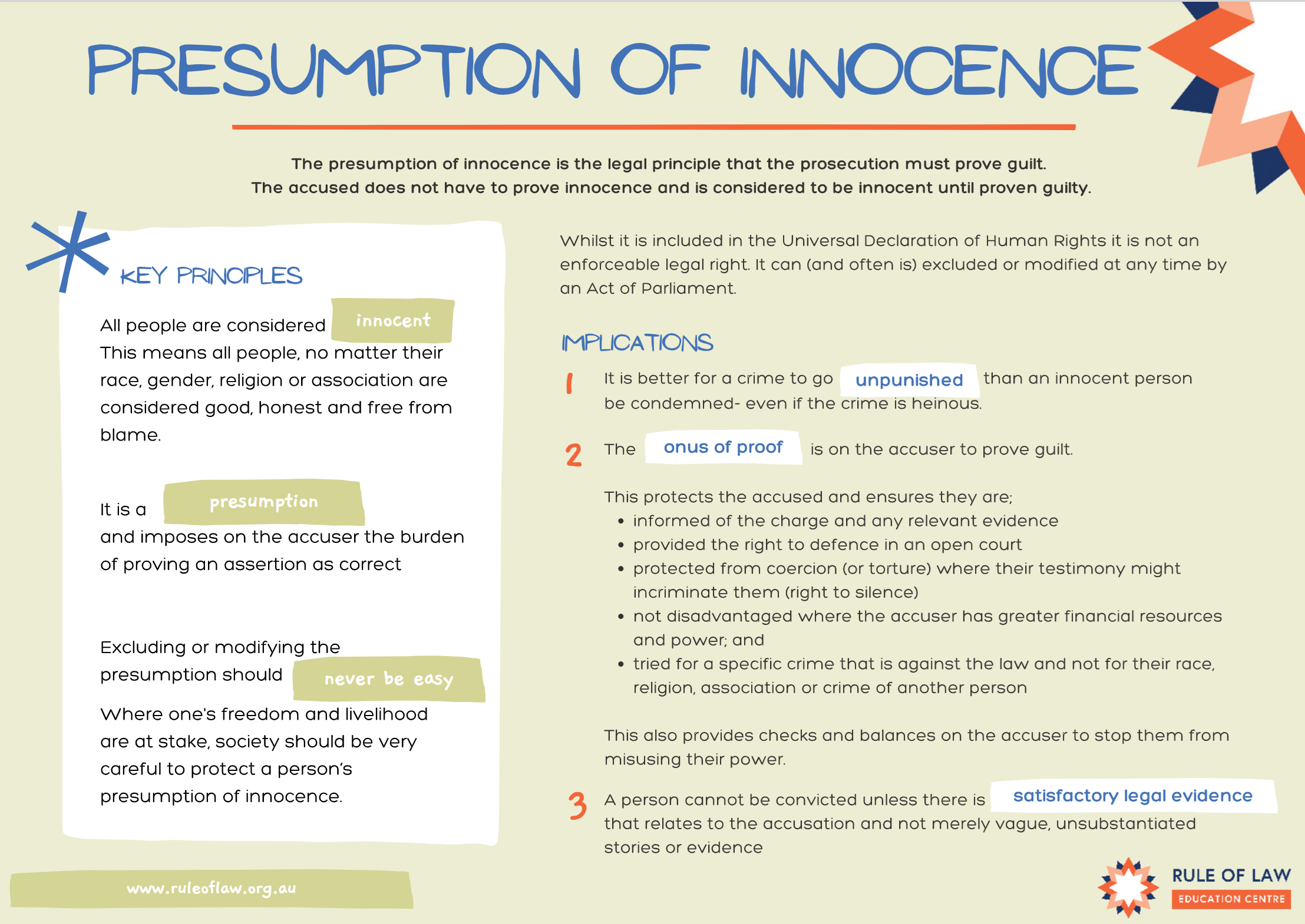
Simple poster explaining the key principles and implications of the presumption of innocence
Poster: Presumption of Innocence
Overview
How has the presumption of innocence changed from past to present? Has it even changed that much? And what principles remain the same?
Related Resources
-
This explainer outlines the presumption of innocence, showing why people must be treated as innocent until proven guilty and why the prosecution carries the burden of proving guilt beyond reasonable doubt. It highlights how this principle protects individual rights, limits state power, and ensures fair, evidence‑based justice.
-
This explainer introduces the role of a prosecutor and the importance of the presumption of innocence, showing how prosecutors must act fairly, present evidence responsibly, and ensure that guilt is proven beyond reasonable doubt. It highlights how these duties protect individual rights, maintain the integrity of criminal trials, and uphold public confidence in the justice system.
-
This case note explains the Kulwinder Singh prosecution, highlighting how lengthy investigations, evidentiary issues, media influence, and two jury trials ultimately resulted in an acquittal and a rare costs order. It shows how the case engages key rule‑of‑law principles, including the presumption of innocence, fair and prompt trials, and the need for rigorous, unbiased investigative processes.
Explore Related Topics
-
Equality Before the Law
Explore resources on equality before the law, including the Lost Parcel story, showing how legal rules apply fairly to all people, strengthening fairness in everyday situations.
-
What is the Rule of Law?
Explore resources explaining the rule of law and its origins. The rule of law is built from a collection of principles that work together to limit government power and protect rights.
-
Independent and Impartial Judiciary
Explore resources on an independent and impartial judiciary, including the history of the Supreme Court & its role in delivering justice & strengthening trust in the judiciary.