
Equality Before the Law
-
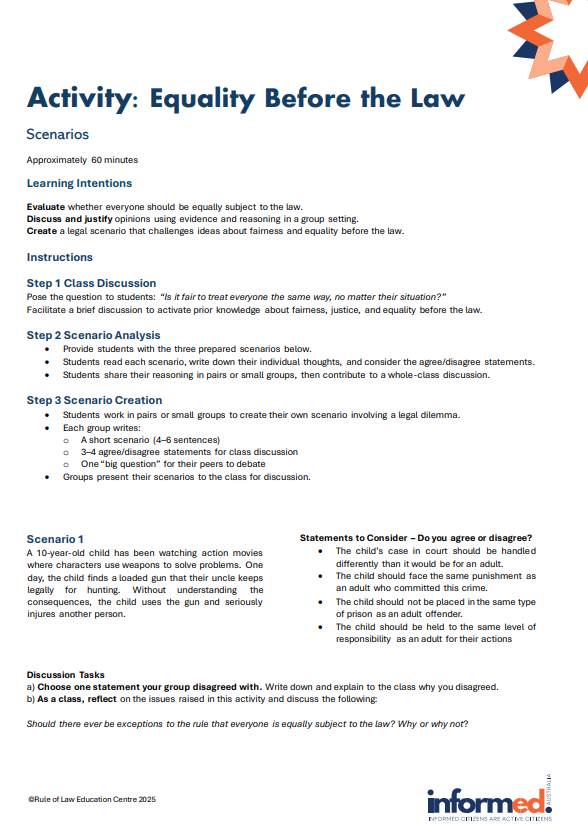
This activity helps students explore how the principle of equality before the law operates in real situations. It guides learners to identify unequal treatment, analyse how fair procedures protect rights and understand why impartial laws and courts are essential for justice in a democratic society.
Equality Before the Law Scenario Creation
Related Resources
-
Explains the rule‑of‑law principle that all people are equal before the law and entitled to the same legal protections, rights, and responsibilities. Highlights how impartial courts, fair procedures, and the consistent application of legal rules prevent discrimination, uphold accountability, and ensure justice is administered without favour or prejudice.
-
This explainer outlines the principle that all people are treated equally by the legal system, regardless of status, background or identity. It highlights how impartial courts, consistent rules and fair procedures protect individuals from discrimination and ensure everyone has the same rights, responsibilities and access to justice.
Explore Related Topics
-
The Magna Carta
Explore resources on the Magna Carta, outlining how this landmark document became a foundational pillar of the rule of law by limiting royal power, affirming legal rights and shaping enduring principles of justice and accountability.
-
Independent and Impartial Judiciary
Explore resources on an open, independent & impartial judiciary, including the history of the Supreme Court and its role in delivering fair justice through transparency, and accountability.
-
What is the Rule of Law?
Explore resources explaining the rule of law, showing how a collection of principles works to limit government power and protect rights through clear rules, accountability & fairness.