
Law and Technology
-
This activity asks students to examine the COVIDSafe app as a case study in balancing public health tracking with individual rights, highlighting how increased surveillance must remain controlled, transparent and limited to prevent misuse while managing the spread of COVID‑19.
-
This activity guides students to analyse how media and social media influence the justice process, the Rule of Law and legal compliance. It uses juror‑misconduct scenarios to highlight risks to fairness, impartiality and just outcomes, then extends learning through review questions and a writing task. The document notes issues such as “the impacts on individuals when a jury is dismissed, and a retrial is needed” and how media commentary can affect “public perception of justice.”
-
This activity guides students to analyse how media and social media commentary can influence public perception, juror impartiality and the achievement of legal effectiveness criteria. Using real headlines and online comments, students evaluate impacts on fairness, the presumption of innocence, access to justice and public confidence, before applying these insights through written responses and a law‑reform research task.
Media and Social Media: Impact on the Effectiveness of the Law
Teacher Copy
Learning Intention: to analyse how the use of media and social media can impact on the achievement of the effectiveness criteria (MR J PEARR)
Success Criteria: Students can discuss the impact of media and social media commentary on the achievement of several effectiveness criteria (MR J PEARR)
Pre-learning Activities:
Teachers can use either the media or social media activity separately, or both at once.
Class can be split into groups, pairs or can be facilitated as a whole class.
Teacher could print tables, cut statements into strips from student sheet to distribute randomly or show statements on a screen, not letting the students know that these are actual tweets/ FB comments/ Instagram posts or headlines that have appeared publicly.
Students to discuss and share their thoughts on the impact of these commentaries on the different effectiveness criteria (see next page).
Teachers can then move into using the Media and Social Media documents to look at the issues in depth.
Media Headlines
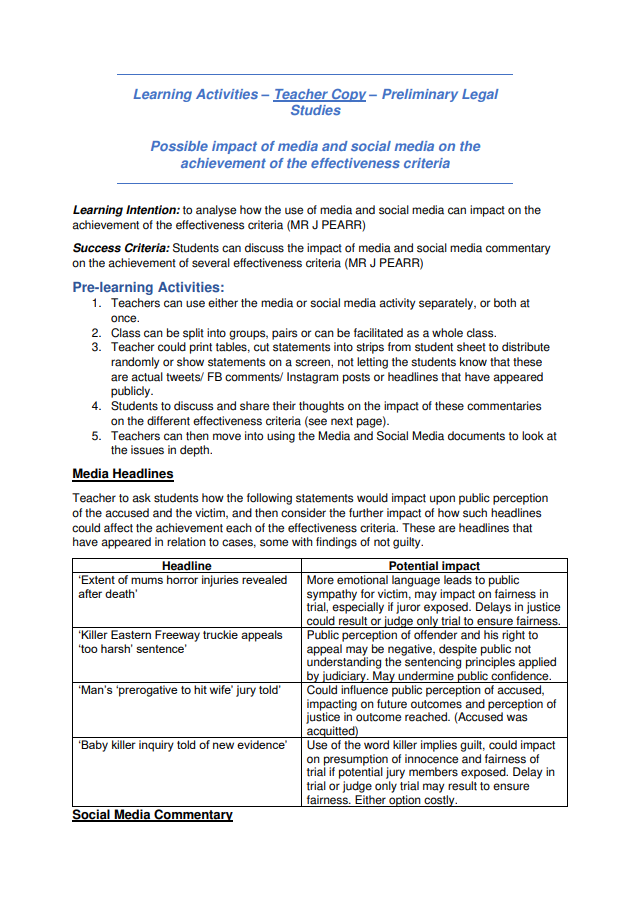
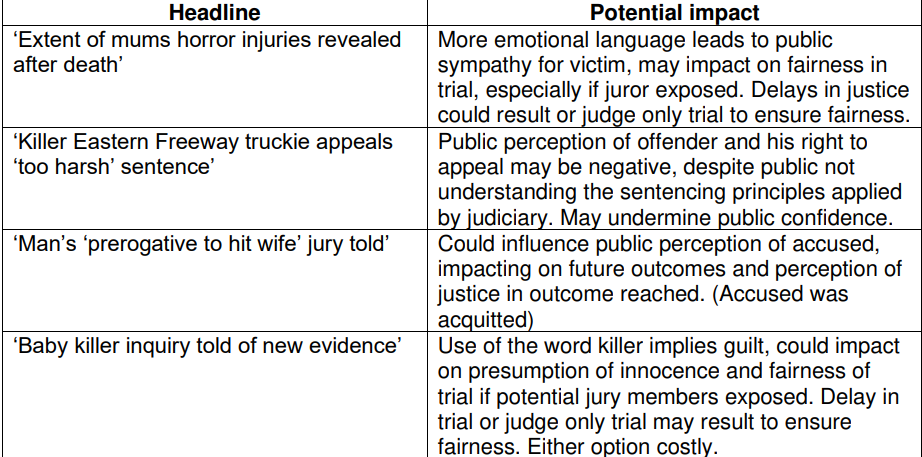
Teacher to ask students how the following statements would impact upon public perception of the accused and the victim, and then consider the further impact of how such headlines could affect the achievement each of the effectiveness criteria. These are headlines that have appeared in relation to cases, some with findings of not guilty.
Social Media Commentary
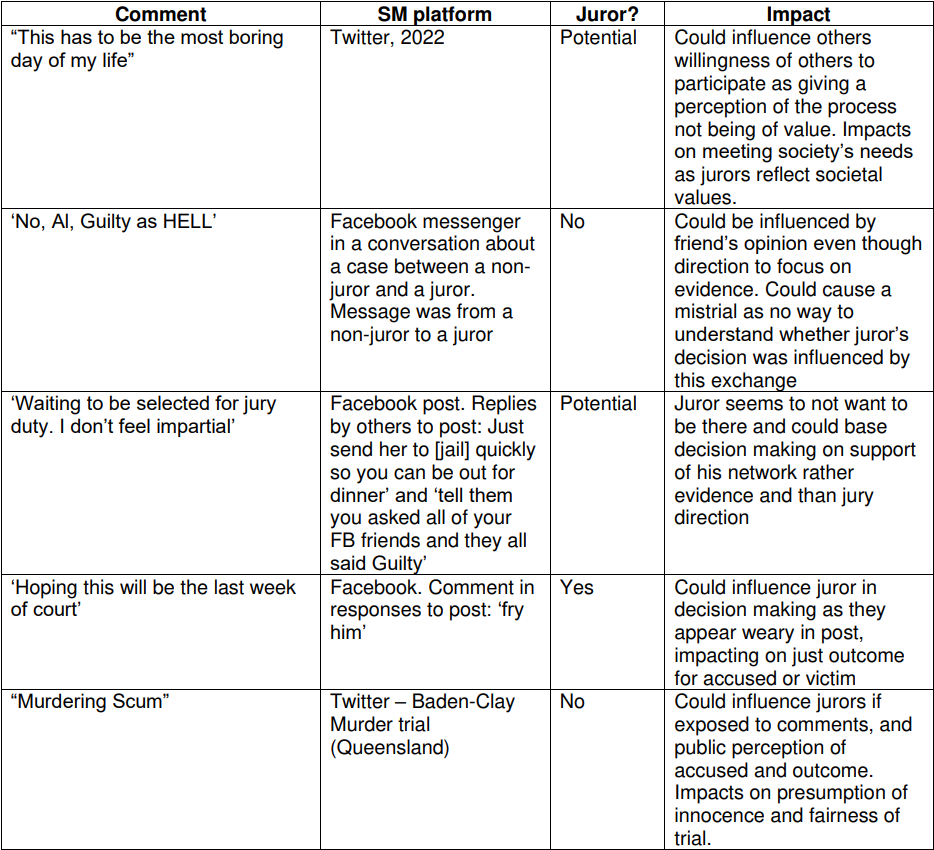
Teacher to ask students how the following statements would impact upon public perception of the accused and the victim, and then consider the further impact of how such headlines could affect jurors who might view these. Students are then asked to consider the impact on the effectiveness criteria – Rule of Law (all are treated equally and fairly before the law), Justice (in particular fairness/ just outcomes) and Protection of Rights (specifically individual rights – presumption of innocence, right to a fair trial).
Post learning activities:
Written response or debate questions – effectiveness criteria:
This activity is designed to be completed individually as writing practice or in a debate style class.
Teacher can direct students to write one (or more) PEEL style practice paragraphs using any of the points presented in response to either of the following questions:
Analyse the impact of a non-legal responses on the achievement of just outcomes for individuals.
“The media is effective in assisting the justice system to uphold collective and individual rights.” Discuss.
Law Reform Research Activity and Presentation
This activity can be completed in groups, pairs or individually and used as a presentation or submission to teachers.
Student instructions:
Using the media and/or social media resource and your own research, create a presentation that demonstrates how media and/or social media has assisted in achieving law reform in any Australian jurisdiction in the past 8 years. In your research, you will need to examine the following aspects of law reform:
• Conditions
• Agencies
• Mechanism
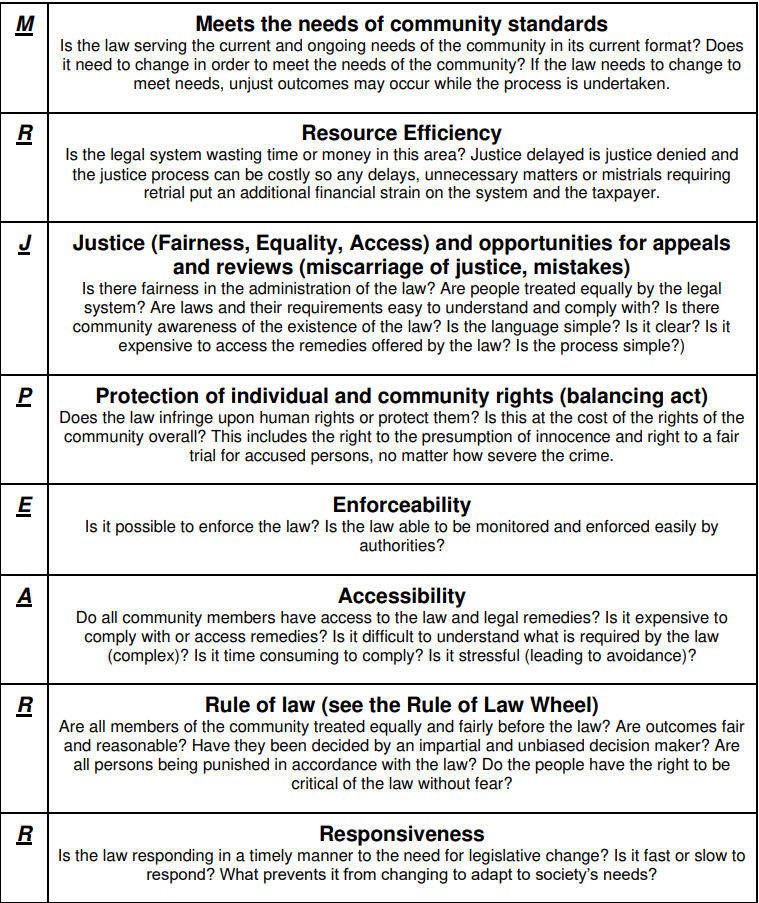
Criteria to evaluate or assess the effectiveness of the legal system ‘MR J PEARR’
Media and Social Media Impact on the Effectiveness of the Law
Student Copy
Learning Intention: to analyse how the use of media and social media can impact on the achievement of the effectiveness criteria (MR J PEARR)
Success Criteria: Students can discuss the impact of media and social media commentary on the achievement of several effectiveness criteria (MR J PEARR)
Pre-learning Activities:
Read through the statements your teacher has given you.
Consider how seeing these statements may impact on aspects or participants of the justice system, for example jury members, victims families, trial processes, public perception of trial outcomes.
Key questions to consider:
• How do the following statements impact upon public perception of the accused and the victim?
• What effectiveness criteria could be affected by members of the public viewing these headlines or public comments?
• How could reading these headlines affect the achievement of the effectiveness criteria you have identified as relevant?
Discuss and share your thoughts on the impact of these commentaries on the different effectiveness criteria.
Media Headlines

Social Media Commentary
Teacher to ask students how the following statements would impact upon public perception of the accused and the victim, and then consider the further impact of how such headlines could affect jurors who might view these. Students are then asked to consider the impact on the effectiveness criteria – Justice (in particular fairness) and Protection of Rights (specifically individual rights – presumption of innocence, right to a fair trial).

Post learning activities:
After reading the media and social media resources, complete the following activities.
1. Written responses – effectiveness criteria:
As directed by your teacher, write one (or more) practice paragraphs using any of the points presented in response to the following questions:
Analyse the impact of non-legal responses on the achievement of just outcomes for individuals.
“The media and use of social media effectively assists the justice system to uphold collective and individual rights.” Discuss.
2. Law Reform Research Activity and Presentation
This activity can be completed in groups, pairs or individually and used as a presentation or submission to teachers.
Student instructions:
Using the media and/or social media resource and your own research, create a presentation that demonstrates how media and/or social media has assisted in achieving law reform in any Australian jurisdiction in the past 8 years. In your research, you will need to examine the following aspects of law reform:
• Conditions
• Agencies
• Mechanism
Criteria to evaluate or assess the effectiveness of the legal system ‘MR J PEARR’
Related Resources
-
This poster explains how social media affects the justice system, noting that it can improve public access and transparency but also spread misinformation, fuel “trial by social media,” and disrupt fair trials by influencing jurors.
-
This case noteoutlines how media can support or undermine justice, showing that reporting can enhance scrutiny and public awareness while also creating risks to fairness, impartiality and the presumption of innocence. Through case studies such as Witness J, Trace, The Teacher’s Pet, Singh, Dawson and Lehrmann, it illustrates how media coverage can inform, influence or distort legal processes and outcomes.
Explore Related Topics
-
Checks and Balances on Power
Explore resources on checks and balances, explaining how oversight limits power and ensures decisions remain lawful and accountable, supporting transparency, restraint, & responsible government action.
-
Open and Free Criticism
Explore resources on open and free criticism of law & government, showing how scrutiny of institutions strengthens accountability and supports a rule‑of‑law culture.
-
Human Rights
Explore resources on human rights, outlining key protections, and how rights are balanced against government power in Australia through constitutional principles, legislative safeguards and rule‑of‑law accountability.