
Aboriginal and Torres Strait Islander People
-
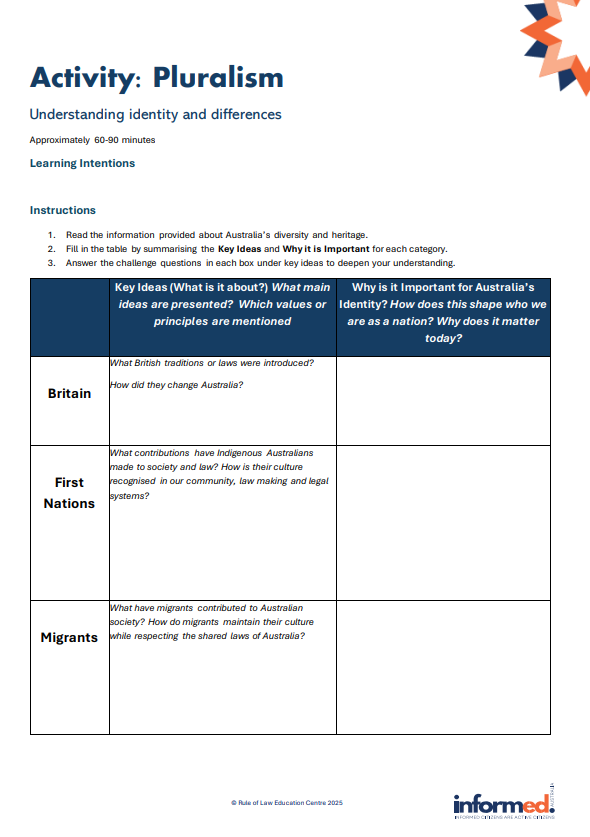
This activity helps students explore pluralism and why democratic societies protect a diversity of beliefs, values and identities. It guides learners to identify examples of pluralism, examine how laws support peaceful coexistence and understand how respecting difference strengthens equality, participation and the rule of law.
Pluralism Writing Task and Class Discussion
Related Resources
-
This explainer outlines what a plurality decision is and how courts reach an outcome when no single majority judgment exists. It explains how different groups of judges may agree on the result for different reasons, how the binding rule is identified and why plurality decisions still provide authoritative guidance within Australia’s legal system.
-
This resource explains how English law was imposed in early NSW and why Indigenous people, though deemed British subjects, were often denied its protections. Using the Myall Creek Massacre and Plunkett’s reforms, it shows how cultural barriers, rules of evidence, and frontier violence undermined equality before the law, and how gradual legal change sought to extend justice to Indigenous Australians.
Explore Related Topics
-
Democracy
Explore resources on democracy, highlighting how participation, accountability and representation ensure power is exercised fairly and transparently through open processes, civic engagement & responsible governance.
-
Law is Known and Accessible
Explore resources on accessible law, highlighting why clear, public and open legal rules are essential for fairness and participation by enabling informed decision‑making and transparency.
-
Laws
Explore resources on laws, explaining how rules are created, interpreted and enforced to maintain order, protect rights and support a functioning society through clear processes, accountability and fair application.