
The Criminal Justice System
-
This poster outlines the bail decision‑making process, showing how police and courts assess unacceptable risk, apply the show‑cause test, and decide whether bail conditions can address concerns. It visually maps the pathway from arrest to release or remand, highlighting the core rule‑of‑law principles of proportionality, transparency, and structured decision‑making.
-
This poster summarises the fundamentals of Australian criminal law, outlining its purpose, sources, key offence categories, core legal principles such as the burden and standard of proof, and essential elements of a crime including actus reus and mens rea
-
This video outlines how bail decisions are made in Australia, showing how police and courts assess risk, apply the presumption of innocence, and decide whether an accused person should be released or held on remand. It highlights the rule‑of‑law principles that guide the process, including fairness, transparency, and the need to balance community safety with individual rights.
-
This video features Mr Sofronoff KC outlining how circumstantial evidence works, using simple analogies, like Timmy and the broken window, to show how facts support reasonable inferences while still respecting rules that exclude unfair or unreliable material. Drawing on the Baden‑Clay appeal, he demonstrates how multiple pieces of circumstantial evidence can form a coherent, persuasive case and how courts apply evidentiary principles to ensure fair, logical reasoning.
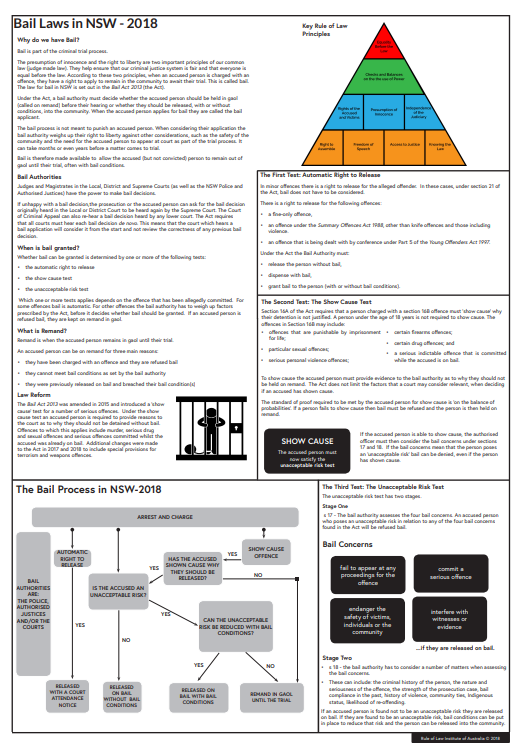
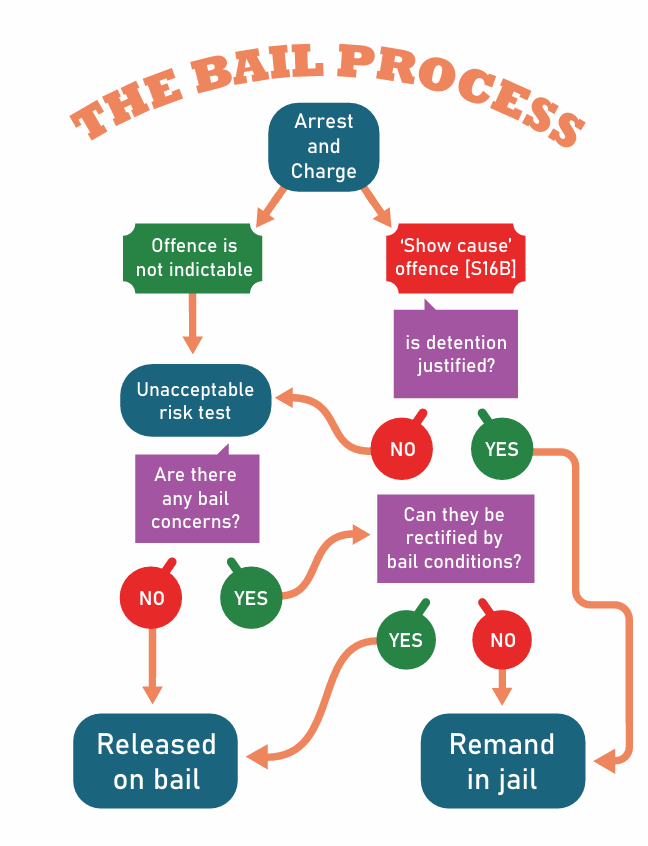
Poster: The Bail Process in NSW
Related Resources
-
This video outlines how bail decisions are made in Australia, showing how police and courts assess risk, apply the presumption of innocence, and decide whether an accused person should be released or held on remand. It highlights the rule‑of‑law principles that guide the process, including fairness, transparency, and the need to balance community safety with individual rights.
-
The criminal justice system defines offences, investigates wrongdoing, determines guilt through fair and transparent processes, and imposes proportionate punishment according to law. Each stage, from investigation and arrest, to bail, trial, sentencing, and punishment, must operate lawfully, protect individual rights, and uphold the rule of law by ensuring that state power is exercised fairly, consistently, and with proper safeguards.
Explore Related Topics
-
Fair and Prompt Trials
Explore resources on fair and prompt trials, showing how timely hearings and procedural fairness protect justice and public confidence.
-
Courts
Explore resources on courts, outlining the court hierarchy and providing Law Day Out materials and to support classroom understanding.
-
Presumption of Innocence
Explore resources on the presumption of innocence, showing how the burden of proof protects accused people and safeguards fairness in criminal justice.