
Separation of Powers
-
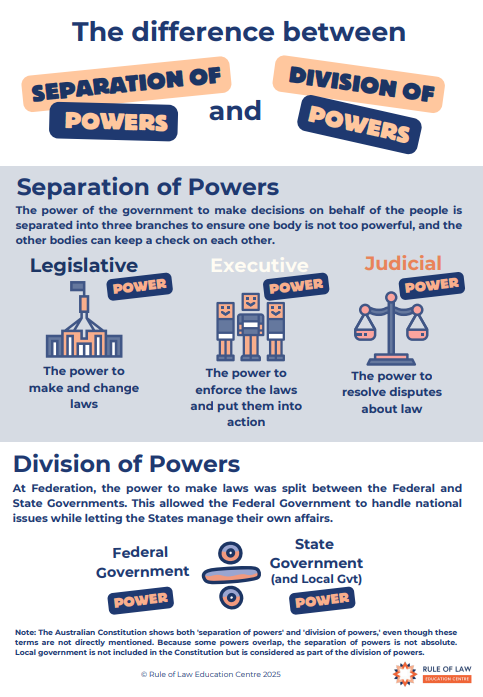
This poster pack outlines the difference between the separation of powers and the division of powers in Australia using clear, comparative visuals. It helps students understand how power is shared between branches of government and across levels of government, and how both principles work together to prevent the concentration of power and support the rule of law.
-
This poster outlines the separation of powers by clearly identifying the roles of the legislature, executive and judiciary. It supports student understanding of how independent courts, accountable government and distinct institutional roles uphold the rule of law.
-
This video outlines a discussion with Judge Amul Thapar of the United States Court of Appeals on how rights are protected under the American Bill of Rights and whether this is the most effective safeguard for individual freedoms. It explores the limits of written rights, the role of the separation of powers, and how checks and balances can offer stronger, long‑term protection for citizens under the rule of law, drawing comparisons between the United States and Australia.
-
This video outlines a discussion with Mr Sofronoff KC, former President of the Queensland Court of Appeal, on why the independence of the judiciary is essential to the separation of powers. It explains the role of judges in applying the law independently of government policy, contrasts judicial independence with judicial compliance in authoritarian systems, and shows how equal application of the law is critical to maintaining the rule of law.
-
This poster forms part of the Informed Playing Card Project, using a playing‑card design to show how Governance Structures and the separation of powers between the judiciary, executive and legislature spreads power between the different branches of government.
Poster: The Difference between Separation and Division of Powers
Related Resources
-
This explainer outlines the importance of an independent judiciary, showing how courts must be free from political pressure, external influence, and improper interference. It highlights how judicial independence protects individual rights, supports impartial decision‑making, and maintains public confidence in a justice system governed by law rather than power.
-
This explainer outlines Australia’s governance structures and how authority is organised across different institutions and levels of government. It explains how these structures distribute power, support accountability and help ensure decisions are made lawfully and in the public interest.
-
This case note outlines the High Court’s decision in NZYQ v Minister for Immigration, examining the constitutional limits on executive detention. It explores how the Court applied principles of separation of powers and personal liberty to determine when detention exceeds lawful executive authority.
Explore Related Topics
-
Checks and Balances on Power
Explore resources on checks and balances, explaining how oversight limits power and ensures decisions remain lawful and accountable, supporting transparency, restraint, & responsible government action.
-
The Division of Powers
Explore resources on the division of powers, showing how legislative authority is shared between the Commonwealth and states, supporting effective governance and accountability
-
Independent and Impartial Judiciary
Explore resources on an independent and impartial judiciary, including the history of the Supreme Court & its role in delivering justice & strengthening trust in the judiciary.