
The Magna Carta
-
The Magna Carta established the rule of law and the idea that all citizens, including those in power, should be fairly and equally ruled by the law.
The Magna Carta, which is Latin for The Great Charter, was a list of demands and expectations forced on the evil King, John of England in 1215. King John was so evil, he tortured the people who lived in his kingdom by starving and throwing them into prison for the slightest reason. He also stole their wives and their castles. He was so evil, there has never been a king named John ever since. The Magna Carta established the rule of law and the idea that all citizens, including those in power, should be fairly and equally ruled by the law.1. The King is no longer above the law
2. We are ruled by the law and the law alone
3. Qualified Independent Judiciary
4. Confidence in Fair Process
5. Known by All
-
This visual poster summarises Magna Carta’s enduring legacy, emphasising ideas such as rule of law, limits on authority, and individual rights. It connects past and present by showing how a medieval document continues to influence democratic systems and legal protections worldwide.
-
This poster displays excerpts and principles from Magna Carta in a clear, accessible format. It highlights key ideas such as lawful judgment and limitations on authority, supporting visual learning and helping students engage with the language and meaning of the original document.
-
To understand why checks and balances are so important, this poster shows the arbitrary and uncontrolled power of King John in 1215.. and why the Magna Carta was so needed!
-
This poster presents King John as a “wanted” figure to highlight grievances that led to Magna Carta. Using historical satire, it illustrates abuses of power, arbitrary rule, and conflict between the monarchy and nobles, helping students understand why demands for legal limits arose.
-
Henry Ergas AO spoke at the Annual Rule of Law dinner about Antisemitism, the Magna Carta and Justice for all.
-
Reflection Activity designed as part of the Informed Civics Competition where students draw on the blank card what they have learned about the concept Magna Carta and the Rule of law
Video: Magna Carta and the Rule of Law
The Magna Carta established the rule of law and the idea that all citizens, including those in power, should be fairly and equally ruled by the law.
Principles of the Rule of Law: Established in the Magna Carta
The rule of law is a phrase that is not often understood in Australia. But there are many signs of its existence in Australian governance that often go unnoticed, or are ignored, or even forgotten.
The rule of law underpins our democratic society through representative government – the people have all the power. It protects our rights and shields us from those in positions of influence, who think the law does not always apply to them. One of the reasons we do not notice how the rule of law supports us every day, is because it all works so well!
The Magna Carta, which is Latin for The Great Charter, was a list of demands and expectations forced on the evil King, John of England in 1215. King John was so evil, he tortured the people who lived in his kingdom by starving and throwing them into prison for the slightest reason. He also stole their wives and their castles. He was so evil, there has never been a king named John ever since.
The Magna Carta established the rule of law and the idea that all citizens, including those in power, should be fairly and equally ruled by the law.
1. The King is no longer above the law
2. We are ruled by the law and the law alone
3. Qualified Independent Judiciary
4. Confidence in Fair Process
5. Known by All
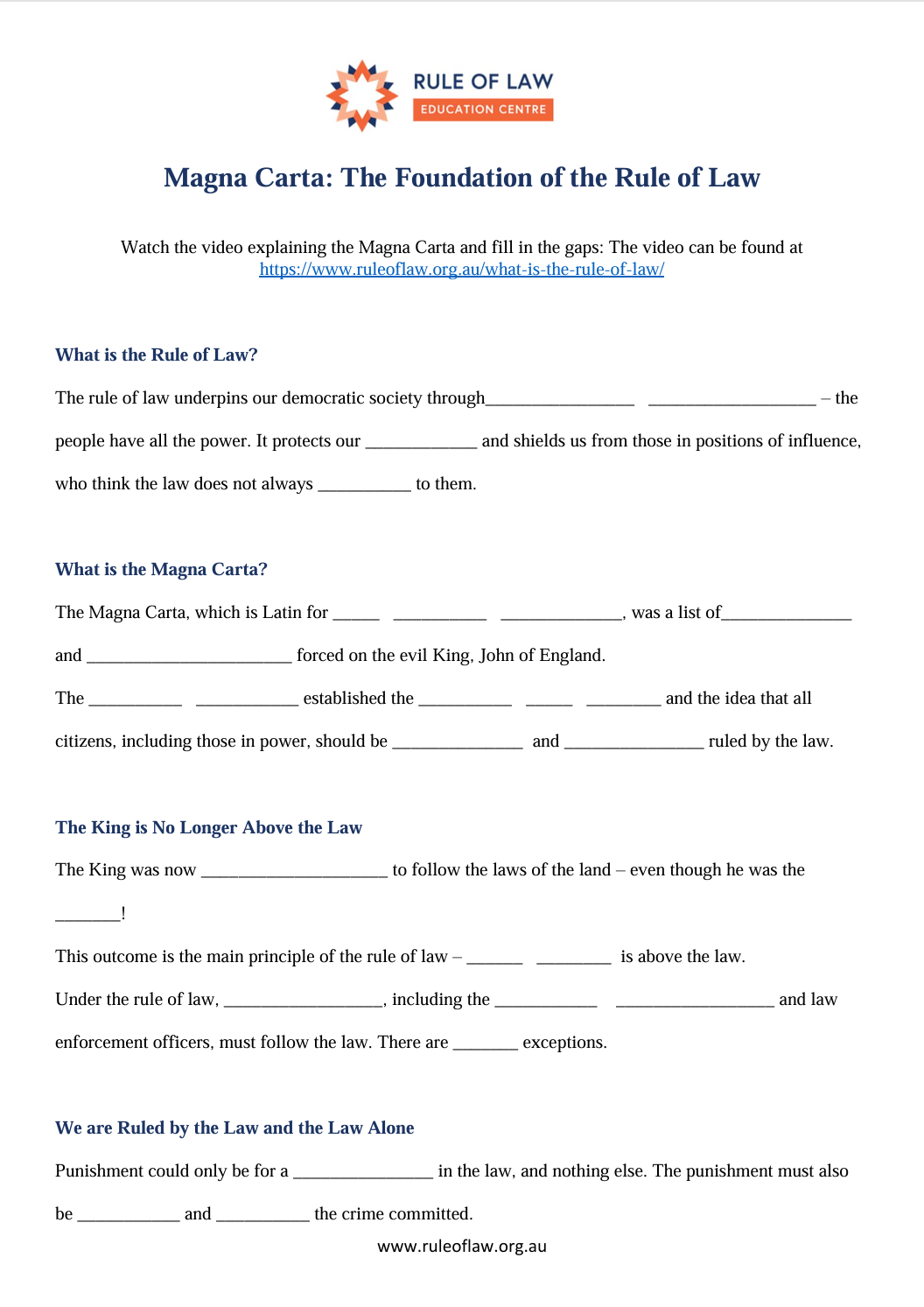
Activity Sheet for Video
Related Resources
-
One page Fact Sheet summarising key concepts about the Magna Carta. Can be used as part of Informed Civics Competition. The Magna Carta introduced the concept of equality before the law, independent judiciary, checks and balances on power and judgement before your peers.
-
This classroom activity looks at legacies and how they shape society. It includes short questions on a video about the Magna Carta in Australia and then extends students to consider where the rights from Magna Carta can be seen in modern Human Rights documents today.
Explore Related Topics
-
What is the Rule of Law?
Explore resources explaining the rule of law, showing how a collection of principles works to limit government power and protect rights through clear rules, accountability and fairness.
-
Checks and Balances on Power
Explore resources on checks and balances, explaining how oversight limits power and ensures decisions remain lawful and accountable through independent scrutiny and transparent review processes.
-
Democracy
Explore resources on democracy, highlighting how accountability and representative institutions ensure power is exercised fairly and transparently through open processes, civic engagement and responsible governance.