
Australia: Making a Nation
-
This collection of resources is aligned to the NSW History 7–10 Depth Study Australia: Making a Nation, supporting student learning from Federation through to World War I. Designed for teacher use, the resources cover the development of Australian democracy, perspectives leading to Federation, features of the Constitution, major early Commonwealth laws, workers’ rights, the Immigration Restriction Act 1901, the Commonwealth Franchise Act 1902, the War Precautions Act 1914, and democratic participation during the conscription debates, as well as the period’s impact on NSW governance structures.
-
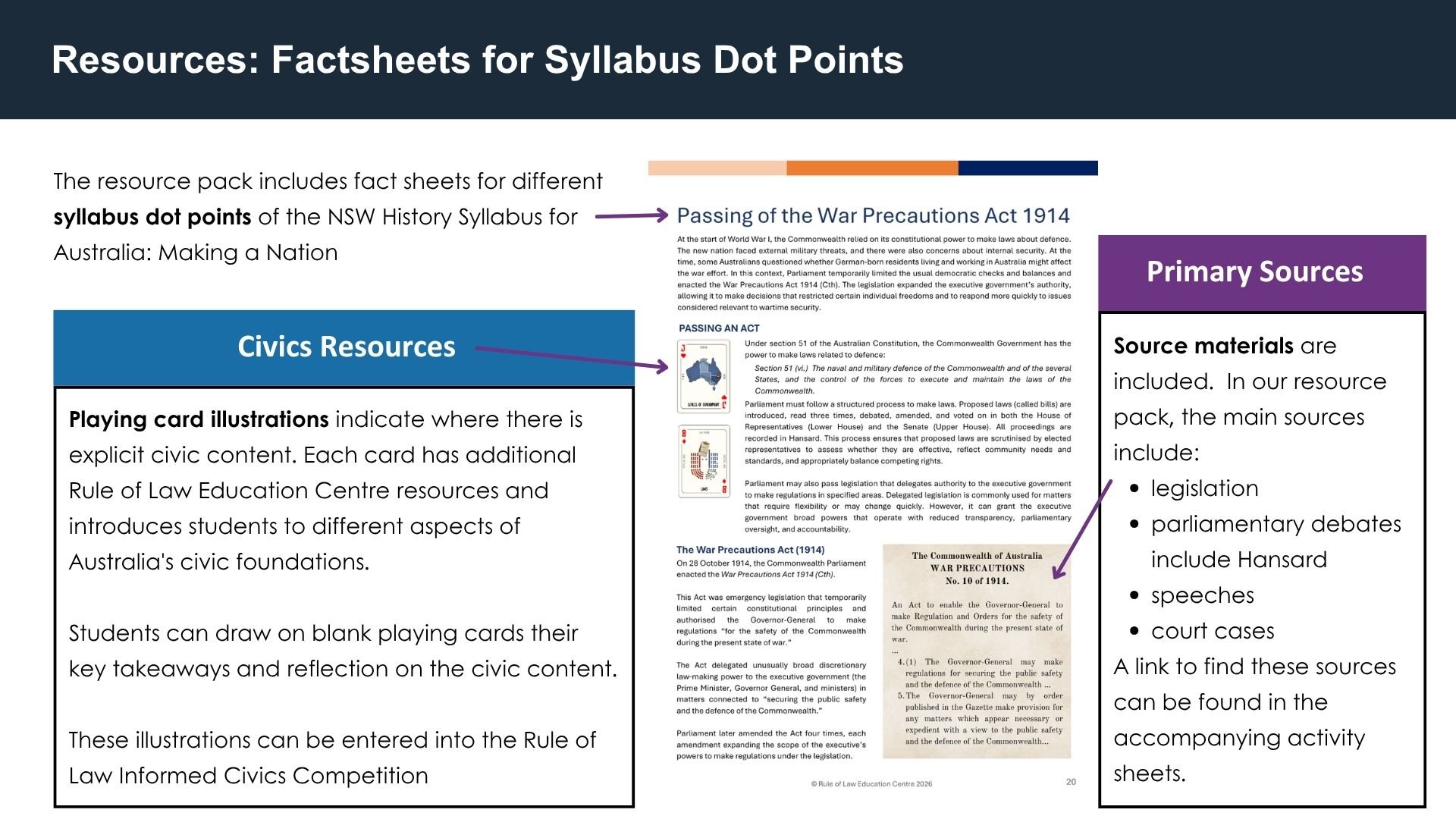
This factsheet explains how the Australia: Making a Nation resources support civics learning. Each syllabus‑aligned resource traces key developments in Australian democracy from Federation to World War I, with playing‑card icons marking explicit civics content and linking to additional Rule of Law Education Centre materials. By connecting historical events (such as the Constitution, early Commonwealth laws, workers’ rights and democratic debates) to Australia’s civic foundations, these resources help students build their understanding of civics and citizenship and the principles underpinning Australia’s free, democratic and egalitarian society.
Using the study of history to learn civics and citizenship
How to use the Australia: Making a Nation Resources
Through the study of history, students learn the civics and citizenship concepts that underpin Australia’s free, democratic and egalitarian society. The Australia: Making a Nation resource collection helps teachers make this link explicit by showing how events from Federation to World War I shaped Australia’s democratic institutions and legal foundations.
This factsheet explains how to use the resources to build students’ civics understanding and how legislation, parliamentary debates, speeches and court cases can be used as primary sources. Each resource aligns directly with a dot point in the NSW History syllabus for Australia: Making a Nation.
Primary Sources
The resources encourage use of primary sources that show democracy in action:
Legislation - Acts of Parliament reveal how governments responded to social, economic and political pressures. Reading legislation helps students identify the rights, restrictions and values embedded in the laws.
Parliamentary debates and speeches - These capture the arguments and reasoning of elected representatives, allowing students to examine democratic processes and competing viewpoints.
Court cases - Judicial decisions show how laws were interpreted and applied. Judgements illustrate the courts’ role in protecting rights, resolving disputes and upholding the rule of law.
Civics and citizenship Playing Cards
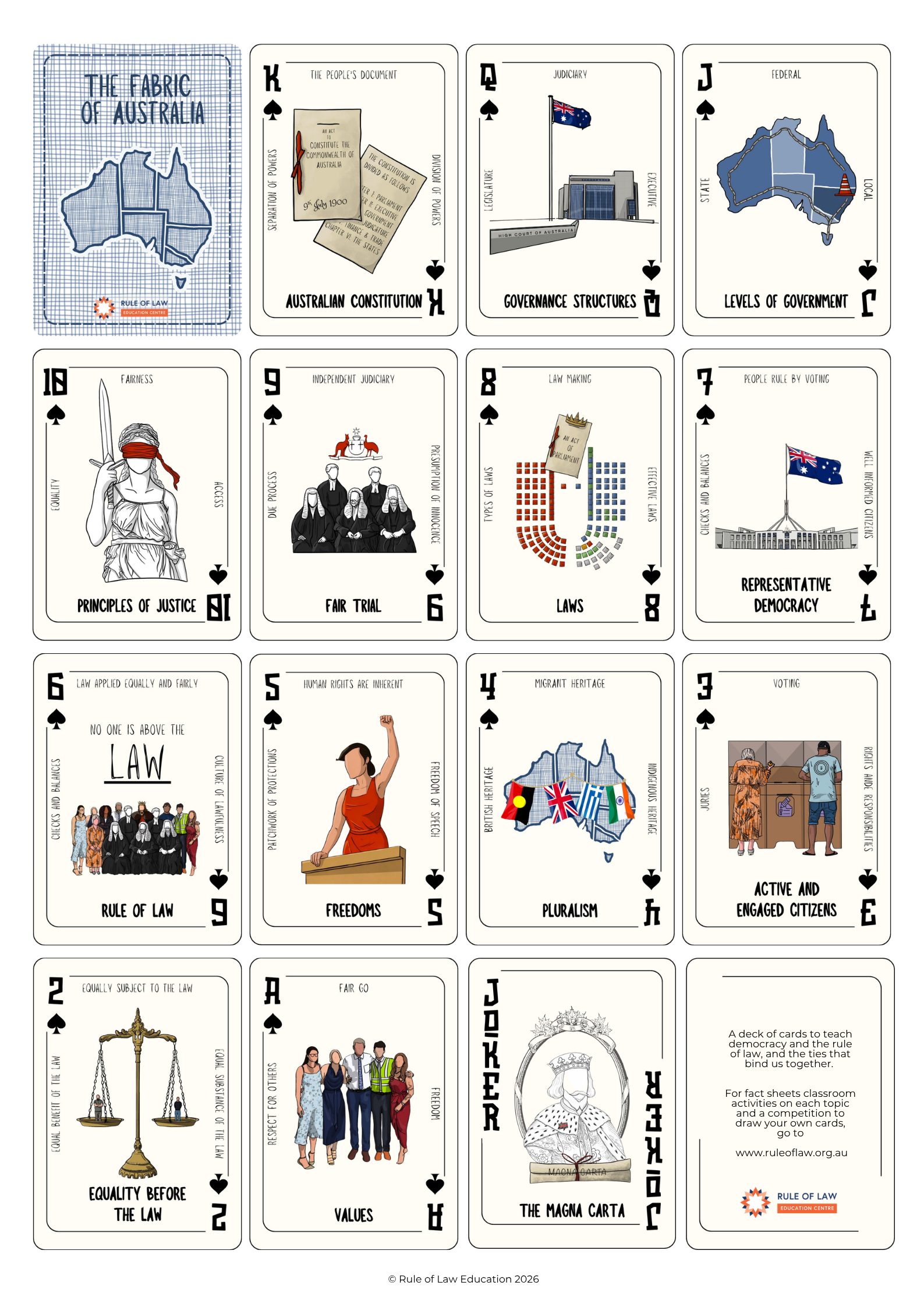
Playing‑card icons throughout the resources highlight explicit civics and citizenship content. Each card points to a key civic concept or institution, making it easy to see where historical events connect to Australia’s civic foundations. Students can also use blank cards to record their own reflections and key takeaways.
Ultimately, the goal of these resources is to show students how democratic ideas were built through real debates, laws and court decisions. By working closely with these primary sources (and using the civics and citizenship playing‑card prompts) teachers can help students see how Australia’s institutions took shape and how democratic principles were put into practice.
Explore Related Topics
-
Federation of Australia
Explore resources on Federation in 1901, outlining how Australia became a nation, divided powers, and established the constitutional structures and institutions that govern today.
-
Democracy
Explore resources on democracy, highlighting how accountability and representative institutions ensure power is exercised fairly and transparently through open processes, civic engagement and responsible governance.
-
Human Rights
Explore resources on human rights and freedoms, outlining the key protections, legal frameworks, that support rights, and explore how rights and responsibilities are balanced against government power in Australia.