
Fair and Prompt Trials
-
This activity helps students apply the core elements of a fair trial, including impartial decision‑makers, open justice, timely hearings, legal representation and the presumption of innocence. It guides learners through scenarios that test their understanding of procedural fairness and shows how these safeguards protect rights and uphold confidence in the justice system.
-
This activity uses Gall v Domino’s to analyse the consequences of a 3.5‑year delay in judgment, highlighting impacts on litigants, judicial efficiency, and community trust, while reinforcing the importance of timely justice in Australia’s legal system.
-
Reflection Activity designed as part of the Informed Civics Competition where students draw on the blank card what they have learned about the concept of a fair trial
Fair Trial Reflection
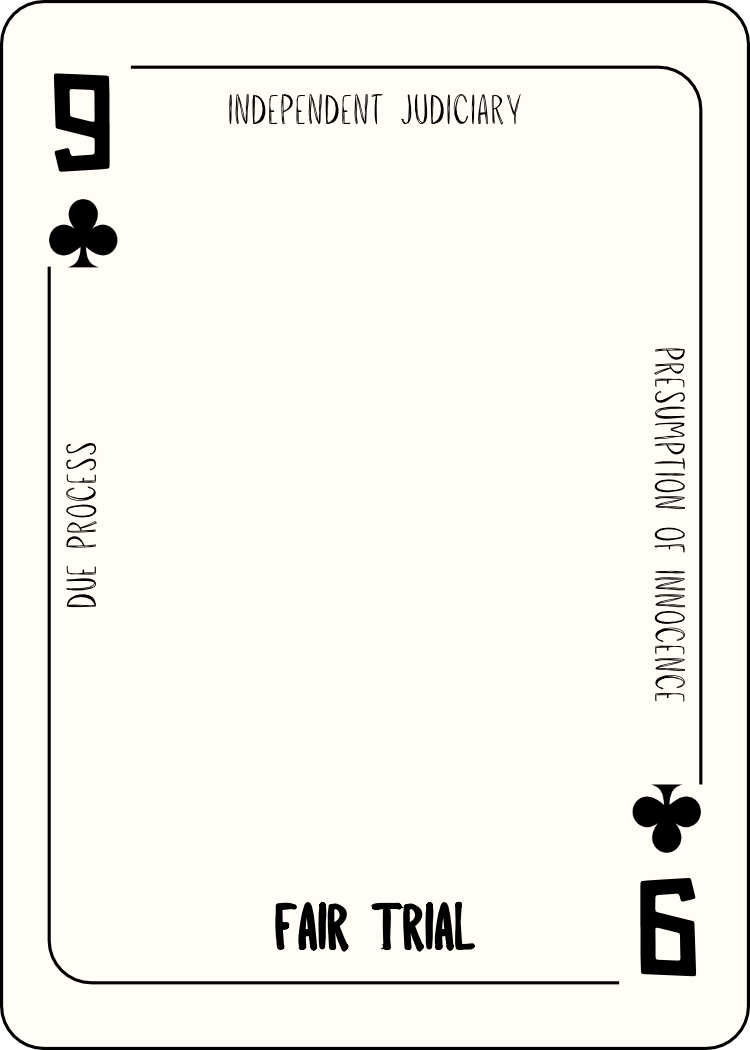
Blank playing card visual reflection activity
Students use this blank playing card as a reflection tool to show what they have learned about a fair trial. Before drawing, students read the factsheet on a fair trial here to understand the inter-related elements. Designing the card helps students distil these ideas into a clear visual summary, showing how the elements of a fair trial provide justice for all.
Students can submit this completed playing‑card drawing to the Informed Civics Competition for a chance to win!
See suggested drawing prompts below:
Suggested drawing prompt:
Students create a court hierarchy pyramid showing the different levels of state and federal courts in Australia. They label each court with its jurisdiction and use arrows to show how cases can move through the court system.
Related Resources
-
This explainer outlines the key elements of a fair trial, including impartial courts, open justice, timely hearings, legal representation and the presumption of innocence. It shows how these safeguards protect individual rights, ensure accountability and maintain public confidence in the justice system.
-
This case note highlights the 3.5‑year judgment delay in Gall v Domino’s and its implications for fair, prompt, and accessible civil justice.
Explore Related Topics
-
Law is Known and Accessible
Explore resources on accessible law, highlighting why clear, public, and open rules are essential for fairness and democratic participation, strengthening transparency, and public trust.
-
Open and Transparent Laws
Explore resources on transparent lawmaking, highlighting how accessible, participatory processes strengthen accountability and support openness, public trust, and community engagement.
-
Fair and Prompt Trials
Explore resources on fair and prompt trials, showing how timely hearings and procedural fairness protect justice through transparent and efficient processes and accountable decision‑making.