
The Criminal Justice System
-
This case note examines the trial of Greg Lynn, highlighting how jury decision‑making, evidentiary safeguards, and judicial independence protect fairness in serious criminal cases. It shows how the presumption of innocence and the standard of proof beyond reasonable doubt shaped the split verdict, illustrating core rule‑of‑law principles in practice.
-
A student activity based on the Chris Dawson case that asks learners to determine an appropriate sentence before the actual judgment is revealed. It encourages consideration of key sentencing factors such as the seriousness of the offence, aggravating and mitigating circumstances, and the purposes of punishment. The task helps develop understanding of how courts weigh evidence and individual circumstances to reach a fair and proportionate outcome.
-
A student activity based on the Baden-Clay case that explores key legal concepts such as jury trials, circumstantial evidence, and the appeals process. It asks learners to analyse evidence, consider challenges juries face when interpreting indirect evidence, and distinguish between offences like murder and manslaughter. The task also encourages understanding of how appeals contribute to fairness and uphold the rule of law.
-
A collection of student activities based on the Skaf case that help learners apply rule of law principles to real-world legal issues. The resources cover topics such as law reform, criminal investigation, trial processes, sentencing, and themes like discretion and effectiveness. They encourage critical thinking through analysis, discussion, and debate, helping students evaluate how the legal system responds to serious crimes and upholds justice.
R v Dawson Classroom Activities
Activity 1:
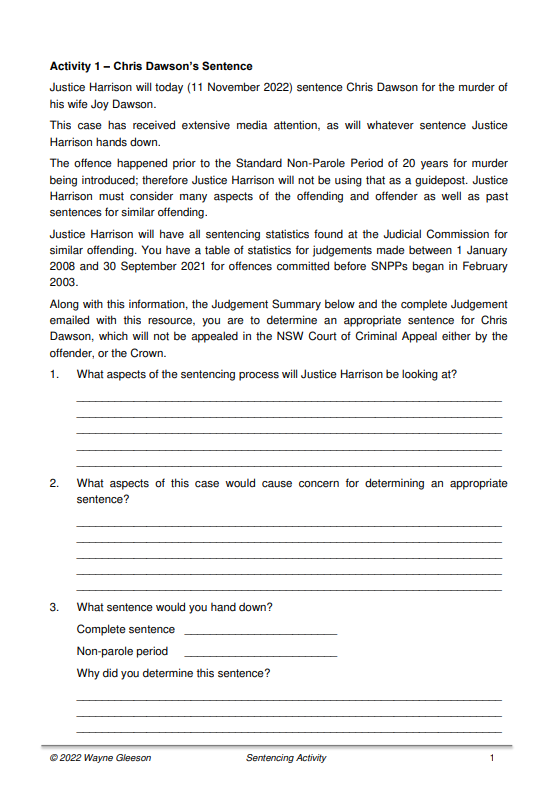
This student activity asks learners to step into the shoes of the court and consider how to sentence Chris Dawson for the murder of his wife. It provides background on the case, key sentencing factors (like aggravating and mitigating circumstances), and prompts students to decide an appropriate head sentence and non‑parole period and justify their reasoning in light of legal principles and similar past cases.
Related Resources
-
This case note examines how intense media attention, especially The Teacher’s Pet podcast, interacted with the legal process in the Chris Dawson trial. It highlights the safeguards courts use to protect fair‑trial rights in high‑profile cases, the difficulties of prosecuting decades‑old offences using circumstantial evidence, and the law reforms that followed, including NSW’s “no body, no parole” legislation.
-
This explainer outlines the major legal defences an accused person may rely on to avoid or reduce criminal liability, including duress, consent, self‑defence, mental illness, and intoxication. It highlights the strict evidentiary requirements for each defence and shows how they operate to ensure that only morally and legally blameworthy conduct results in conviction, reinforcing fairness and due process in the criminal justice system.
Explore Related Topics
-
Fair and Prompt Trials
Explore resources on fair and prompt trials, showing how timely hearings and procedural fairness protect justice and public confidence.
-
Courts
Explore resources on courts, outlining the court hierarchy and providing Law Day Out materials and to support classroom understanding.
-
Presumption of Innocence
Explore resources on the presumption of innocence, showing how the burden of proof protects accused people and safeguards fairness in criminal justice.