
Law and Technology
-
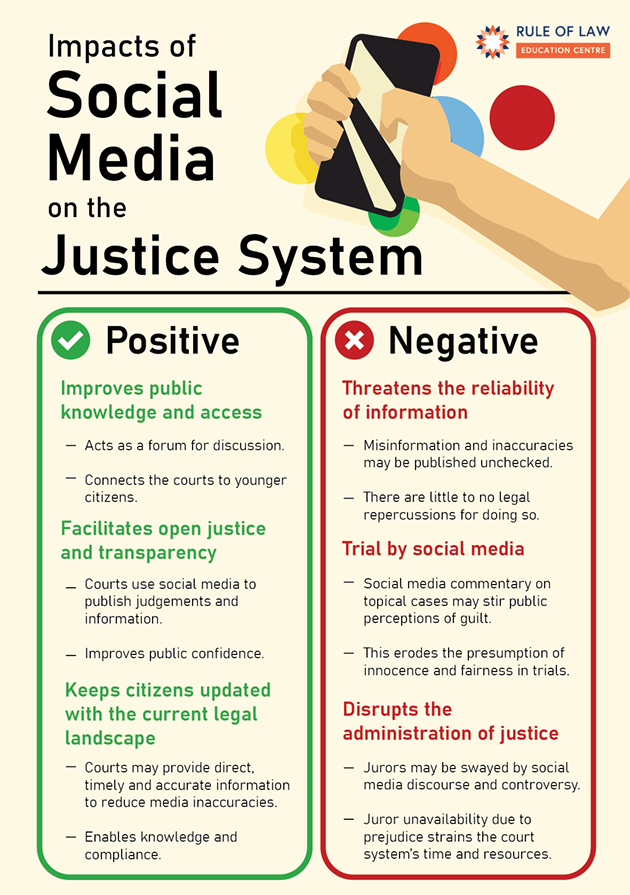
This poster explains how social media affects the justice system, noting that it can improve public access and transparency but also spread misinformation, fuel “trial by social media,” and disrupt fair trials by influencing jurors.
-
This video shows how technology is reshaping the justice system, noting that it can reduce costs, improve efficiency and make court processes less stressful, while also creating risks such as the spread of harmful content and the ease of fabricating documents.
-
This explainer shows how Australian law lets certain agencies access two years of stored telecommunications metadata, why it’s useful for investigations, and why it raises rule‑of‑law and privacy concerns. It also highlights problems with self‑authorisation, risks to journalists’ sources, and ongoing debates about whether current safeguards are sufficient.
Related Resources
-
This case note outlines the High Court’s decision in Comcare v Banerji, where a public servant challenged her dismissal after anonymously posting critical political comments on Twitter. The Court confirmed that the implied freedom of political communication is not a personal right but a limit on legislative power, and held that the APS Code of Conduct did not impose an unjustified burden on that freedom. The decision highlights how the rule of law balances public sector duties, political communication and constitutional limits on government power.
-
This poster forms part of the Informed Playing Card Project, showing how Australian values such as the fair go, freedom and respect for others guide civic behaviour and support a cohesive, democratic society.
-
This activity helps students identify Australia’s core civic values—such as equality, respect, freedom and responsibility—and apply them to everyday scenarios. Students discuss how these values guide behaviour, support democratic participation and connect to the rule of law.
Explore Related Topics
-
Checks and Balances on Power
Explore resources on checks and balances, explaining how oversight limits power and ensures decisions remain lawful and accountable, supporting transparency, restraint, & responsible government action.
-
Open and Free Criticism
Explore resources on open and free criticism of law & government, showing how scrutiny of institutions strengthens accountability and supports a rule‑of‑law culture.
-
Human Rights
Explore resources on human rights, outlining key protections, and how rights are balanced against government power in Australia through constitutional principles, legislative safeguards and rule‑of‑law accountability.