
Access to Justice
-
This poster forms part of the Informed Playing Card Project, showing how fairness, equality and access to justice help ensure everyone can have their rights protected.
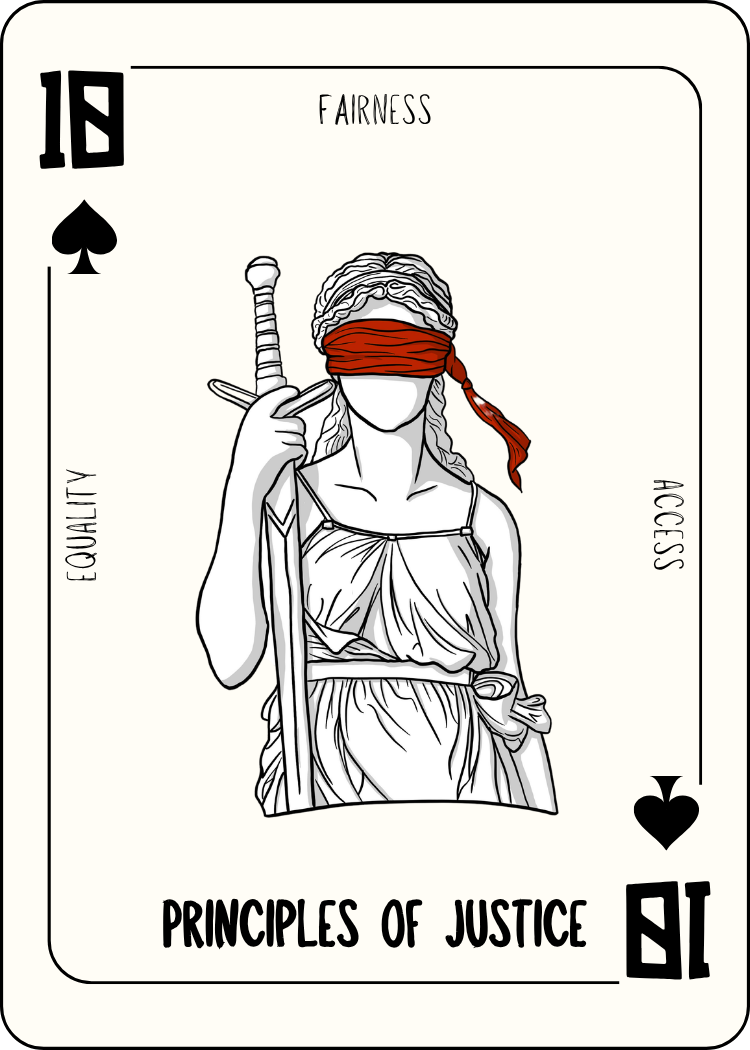
Informed Principles of Justice Playing Card
Related Resources
-
This resource outlines the core elements of access to justice in Australia, explaining why a fair, impartial, and adequately resourced legal system is essential to the rule of law. It highlights barriers such as legal complexity, limited Legal Aid funding, and the rise of self‑represented litigants, while pointing to mechanisms like pro bono work and government policy initiatives that help maintain fairness in the justice system.
-
This activity helps students apply the three principles of justice—access, equality and fairness—to real‑world scenarios. Students identify which principle is involved, analyse how it is upheld or limited, and discuss why each principle is essential for a fair legal system. The task builds understanding of how justice operates in practice and how these principles support the rule of law in Australia.
-
This case note explains the High Court’s landmark decision in Dietrich v The Queen, which established that an accused facing a serious criminal charge should not be tried without legal representation unless exceptional circumstances exist. It highlights the case’s significance for the right to a fair trial, access to justice, and judicial discretion in staying proceedings to ensure fairness.
Explore Related Topics
-
Law is Known and Accessible
Explore resources on accessible law, highlighting why clear, public, and open rules are essential for fairness and democratic participation, strengthening transparency, and public trust.
-
Open and Transparent Laws
Explore resources on transparent lawmaking, highlighting how accessible, participatory processes strengthen accountability and support openness, public trust, and community engagement.
-
Fair and Prompt Trials
Explore resources on fair and prompt trials, showing how timely hearings and procedural fairness protect justice through transparent and efficient processes and accountable decision‑making.