
Democracy
-
Australian democratic beliefs are Parliamentary Democracy, the rule of law, respect for all individuals and living peacefully
-
Poster summarising the elements and obligations of Democracy
-
Authoritarianism where regimes rule by law and have complete power and are not accountable to the people
-
Simple poster explaining how anarchy is a state of Chaos where there is a situation of lawlessness caused by absence of traditional forms of authority
-
A simple poster detailing the five main forms of goverance. There are many different types of governments around the world today, but only five form the basic characteristics of rule: Monarchy, Republic, Communism, Dictatorship and Democracy. Each one has elements that can be found in various government systems, from autocracy to democracy.
-
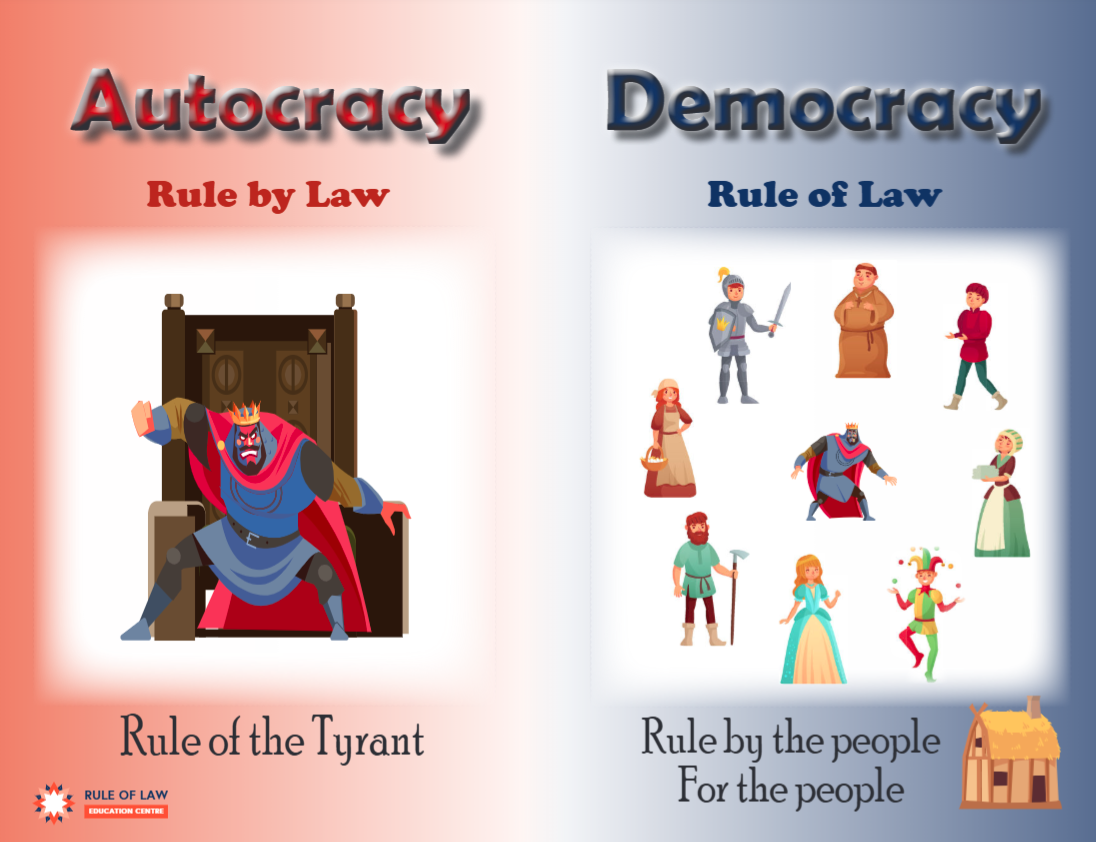
Simple poster illustrating Rule by a Tyrant (a King) v Rule of Law where there is rule by the people for the people.
-
From the classic storybook on Eureka Stockade written by Alan Boardman and illustrated by Roland Harvey and read by David Baldwin learn the events of Eureka Rebellion
-
Victoria’s democracy developed through key 19th‑century reforms influenced by Chartism and the Eureka Rebellion. Miners demanded fair representation, leading to secret ballots, expanded voting rights, limits on government power, and a more representative parliament. These milestones strengthened freedoms, accountability, and the rule of law in colonial Victoria.
-
Playing Card summarising key concepts in Representative Democracy: The people rule, checks and balances and protects Australian people
Poster: Autocracy v Democracy
Related Resources
-
This explainer outlines the core features of democracy, including free and fair elections, accountable government, equal participation and the protection of rights. It shows how democratic systems rely on the rule of law, transparency and active, informed citizens to ensure power is exercised responsibly and in the public interest.
-
Students develop a road map that shows the elements that can lead to the erosion of democracy and the rise of authoritarianism. Adding elements such as stops, landmarks, side roads or scenes to develop understanding of threats to democracy.
-
The Eureka Stockade had a significant impact on the development of democracy in the colonies and later within the Federation of Australia.
The Eureka Rebellion was a key moment where the people demanded equal and fair treatment and the right to take part in the democratic process.
Not long after Eureka, a new system of administration in the Goldfields of Victoria was introduced that upheld Chartist principles such as: universal male suffrage, secret ballot, abolishment of property qualifications for voting and the system of one man, one vote; and payment of members.
Explore Related Topics
-
Laws
Explore resources on laws, explaining how rules are created, interpreted and enforced to maintain order, protect rights and support a functioning society through clear processes, accountability and fair application.
-
Federation of Australia
Explore resources on Federation, outlining how Australia became a nation, divided powers, and established the constitutional structures & democratic principles that govern today.
-
What is the Rule of Law?
Explore resources explaining the rule of law, showing how a collection of principles works to limit government power and protect rights through clear rules, accountability & fairness.