
Democracy
-
This activity guides students through the 1975 dismissal of the Whitlam Government to explore how Australia’s democratic institutions operate during political crisis. It helps learners examine the roles of the Governor‑General, Parliament and the Constitution, and shows how checks and balances, accountability and the rule of law shape democratic stability.
-
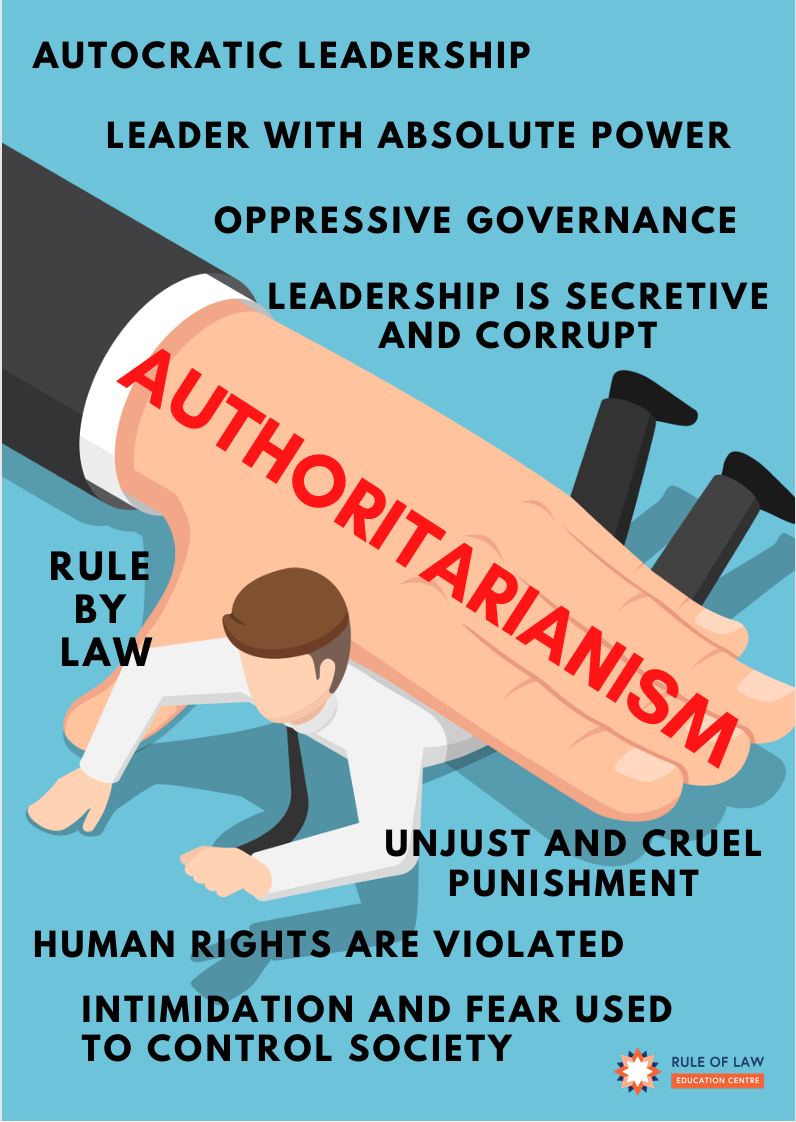
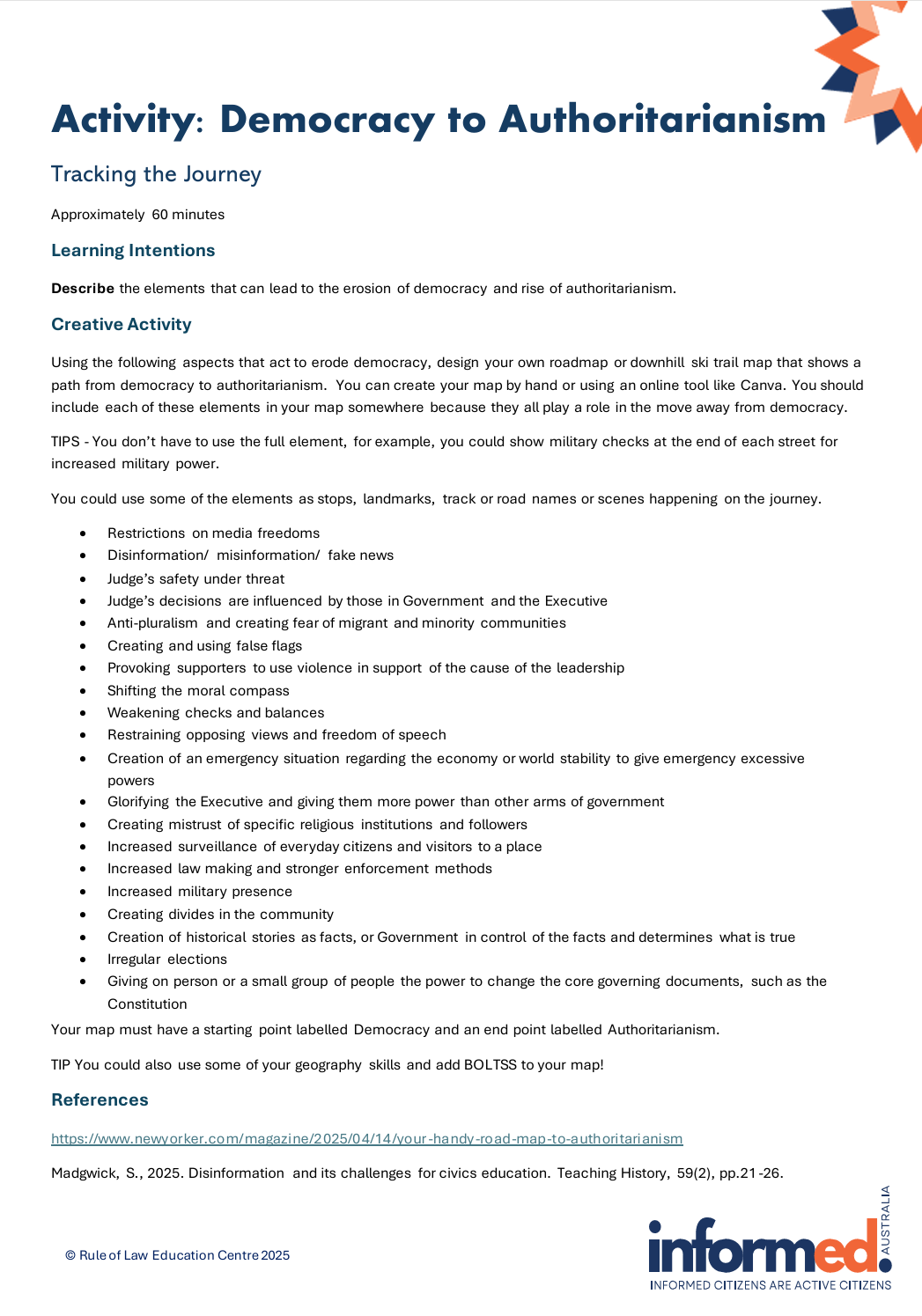
Students develop a road map that shows the elements that can lead to the erosion of democracy and the rise of authoritarianism. Adding elements such as stops, landmarks, side roads or scenes to develop understanding of threats to democracy.
-
Examine how different systems of government impact human rights. Students research 3 countries using a Media Article Source document of a ceremony and military parade held on 3rd September 2025 in Beijing, China, to mark 80 years since Japan’s surrender at the end of World War II. The Source document is a group photo taken of the attendees that included Vladimir Putin (Russia), Xi Jinping (China), Kim Jong-Un (North Korea) and Daniel Andrews (former Victorian Premier). The activity engages students to consider who was in the photo and what is known about the forms of government they represent, and their human rights records.
-
This student activity looks at national sovereignty and is a fun way to explain the four main elements that are required for a country to be internationally recognised as a sovereign state.
-
Reflection Activity designed as part of the Informed Civics Competition where students draw on the blank card what they have learned about the concept Representative Democracy.
Journey from Democracy to Authoritarianism
Tracking the Journey
Approximately 60 minutes
Learning Intentions
Describe the elements that can lead to the erosion of democracy and rise of authoritarianism.
Creative Activity
Using the following aspects that act to erode democracy, design your own roadmap or downhill ski trail map that shows a path from democracy to authoritarianism. You can create your map by hand or using an online tool like Canva. You should include each of these elements in your map somewhere because they all play a role in the move away from democracy.
TIPS - You don’t have to use the full element, for example, you could show military checks at the end of each street for increased military power.
You could use some of the elements as stops, landmarks, track or road names or scenes happening on the journey.
Restrictions on media freedoms
Disinformation/ misinformation/ fake news
Judge’s safety under threat
Judge’s decisions are influenced by those in Government and the Executive
Anti-pluralism and creating fear of migrant and minority communities
Creating and using false flags
Provoking supporters to use violence in support of the cause of the leadership
Shifting the moral compass
Weakening checks and balances
Restraining opposing views and freedom of speech
Creation of an emergency situation regarding the economy or world stability to give emergency excessive powers
Glorifying the Executive and giving them more power than other arms of government
Creating mistrust of specific religious institutions and followers
Increased surveillance of everyday citizens and visitors to a place
Increased law making and stronger enforcement methods• Increased military presence
Creating divides in the community
Creation of historical stories as facts, or Government in control of the facts and determines what is true
Irregular elections
Giving on person or a small group of people the power to change the core governing documents, such as the Constitution.
Your map must have a starting point labelled Democracy and an end point labelled Authoritarianism.
TIP You could also use some of your geography skills and add BOLTSS to your map!
References
https://www.newyorker.com/magazine/2025/04/14/your -handy-road-map-to-authoritarianism
Madgwick, S., 2025. Disinformation and its challenges for civics education. Teaching History, 59(2), pp.21 -26
Related Resources
-
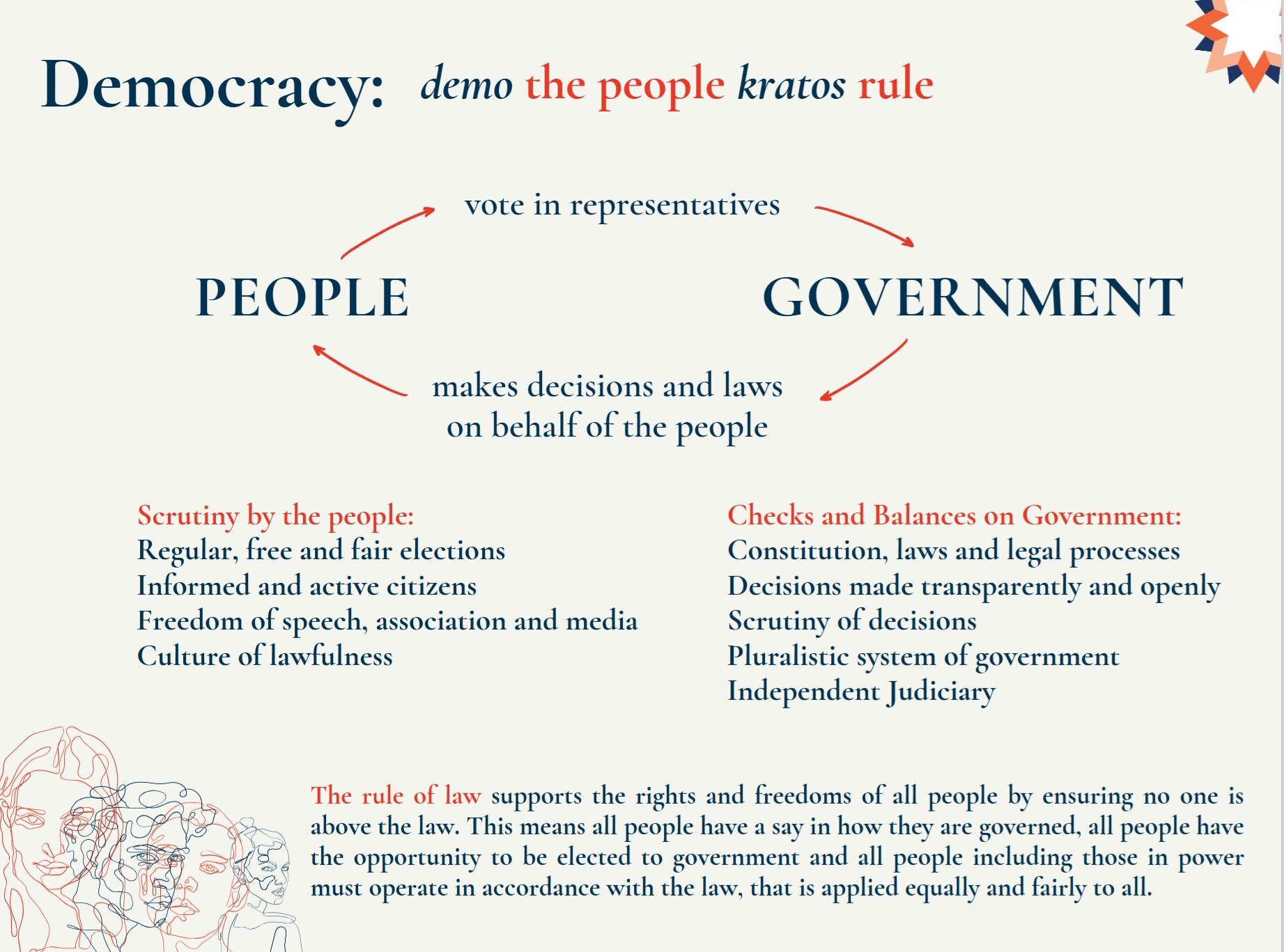
This explainer outlines the core features of democracy, including free and fair elections, accountable government, equal participation and the protection of rights. It shows how democratic systems rely on the rule of law, transparency and active, informed citizens to ensure power is exercised responsibly and in the public interest.
-
The Eureka Stockade had a significant impact on the development of democracy in the colonies and later within the Federation of Australia.
The Eureka Rebellion was a key moment where the people demanded equal and fair treatment and the right to take part in the democratic process.
Not long after Eureka, a new system of administration in the Goldfields of Victoria was introduced that upheld Chartist principles such as: universal male suffrage, secret ballot, abolishment of property qualifications for voting and the system of one man, one vote; and payment of members.
Explore Related Topics
-
Laws
Explore resources on laws, explaining how rules are created, interpreted and enforced to maintain order, protect rights and support a functioning society through clear processes, accountability and fair application.
-
Federation of Australia
Explore resources on Federation, outlining how Australia became a nation, divided powers, and established the constitutional structures & democratic principles that govern today.
-
What is the Rule of Law?
Explore resources explaining the rule of law, showing how a collection of principles works to limit government power and protect rights through clear rules, accountability & fairness.