
Civics: Democracy Year 5-6
-
Teaching program – Citizenship, rights and responsibilities
Pre-assessment
Australia outline (carousel)
Question stems
Citizenship sorting statements
Rights and responsibilities assessment
-
Teaching program – Symbols and emblems
Symbols photo cards
Blank playing card
Flags of Australia
SWOT chart Exit card
Teaching program – Week 2: Symbols and emblems in national identity
- To describe the symbols and emblems that are connected with Australian identity
- To explain how and why symbols and emblems connected with Australian identity have changed
- To understand what national identity is
Provocation Activity: Socratic Dialogue
Sitting in a circle, discuss ‘What is national identity?’.
Students take it in turns to voice their opinion.
They listen to the student and then respond with “I agree with … because…” or “I disagree with … because …”
Teacher can map out discussion on butchers paper.
The aim is to learn to listen, develop informed opinion, challenge and be challenged in respectful dialogue.
Differentiation / Adjustments: Whole class discussion
Resources: Butchers paper
Introduction
As whole class, brainstorm on the board, what a ‘symbol’ is. Establish a whole class definition for ‘national symbols’.
Pose question:
What is the difference between a symbol and an emblem?
Differentiation / Adjustments: Whole class discussion
Resources: White Board
Activity 1:
Divide class into groups of 4. Distribute bundle of photographs depicting symbols of Australia (they will need to be cut up into individual photographs). In groups, students:
(1) Discuss each photograph using these questions (written on board) as prompts:
What is the photograph of?
Does it connect to national identity? Why/Why not?
Should it be considered a National Symbol today? Why/Why not?
(2) Sort the photos into different categories of symbols. As a group, decide what the categories will be (eg. landmarks, fauna, flora, lifestyle etc ).
(3) Decide on the 3 most important symbols that connect to Australia’s national identity and is relevant to all people/Australians As whole class, a representative from each group brings up their top 3 photos to board.
(4) Discuss photos – any duplications and how and why groups differ in their choices. Would you add any other symbols to the collection?
(5) Draw a Symbols and Emblems playing card/poster using the blank card
Differentiation / Adjustments: Mixed ability groups; Whole class discussion; Independent
Resources: White Board; Symbols of Australia; Blank playing card
*** UP TO HERE: Activity 2: Think | Pair | Share activity
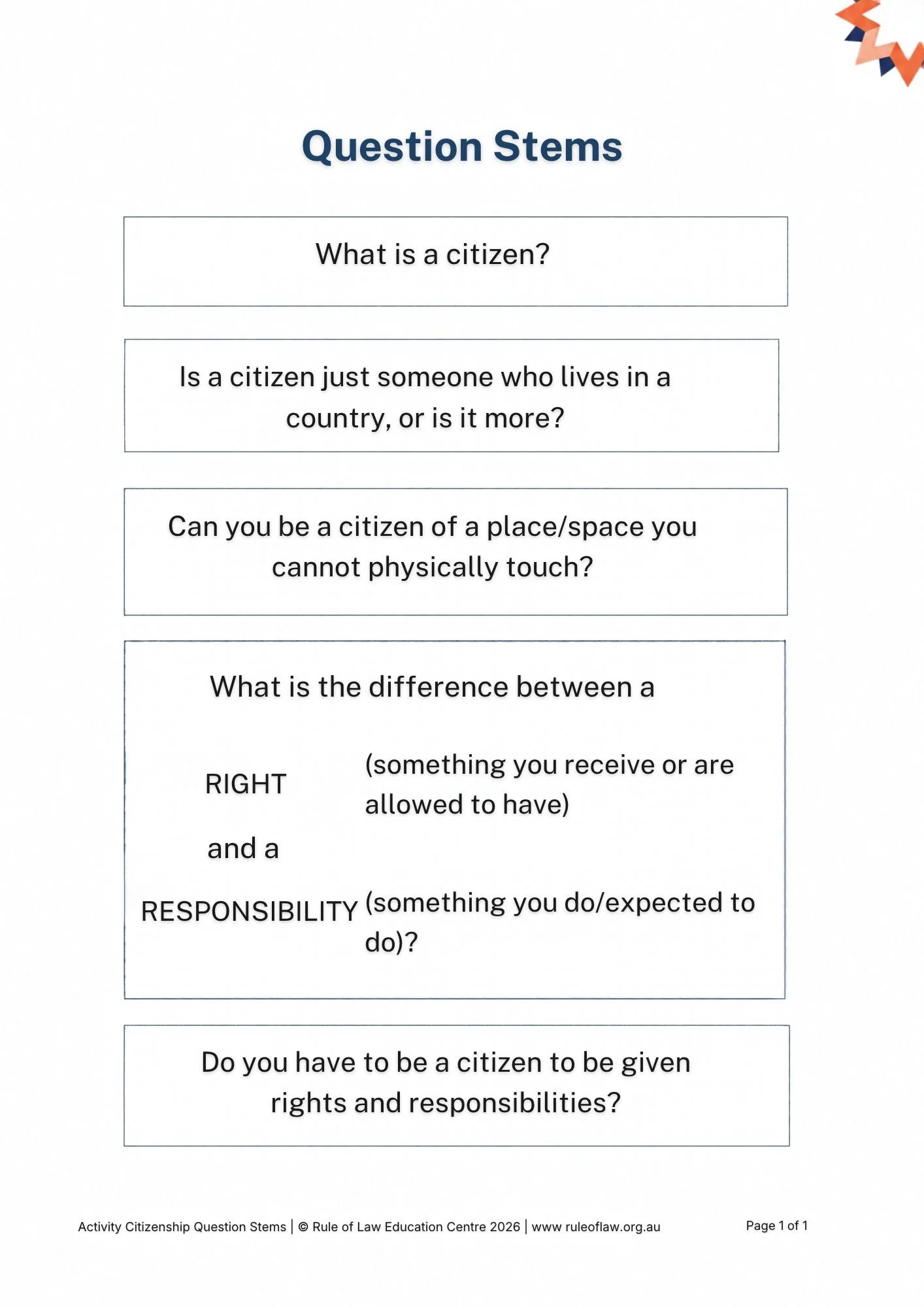
Use these Question Stems to guide discussion in pairs. Distribute to each group.
What is a citizen?
Is a citizen just someone who lives in a country, or is it more?
Can you be a citizen of a place/space you cannot physically touch?
What is the difference between a RIGHT (something you receive or are allowed to have) and a RESPONSIBILITY (something you do/expected to do)?
Do you have to be a citizen to be given rights and responsibilities?
Remind the class principles for a good discussion; listening, one person speaking at a time, respectfully disagree – “there are no bad ideas in a brainstorm”.
Share with whole class ideas/answers. Use question stems as a visual prompt on board as part of whole class discussion. Teacher writes key words on board for visual prompt: eg. belonging, rights, responsibilities, actions etc.
Combining two pairs, so in groups of four, and using your ideas to the questions, write a definition of citizenship on butchers paper provided. Choose a spokesperson to report back to whole class. Combine definitions to create a whole-class definition of citizenship. Write on board.
Differentiation / Adjustments: In pairs, Small Groups and Whole class
Resources: Question Stems, Butchers Paper
Activity 3: Watch video
Clickview Australian Citizenship (active citizenship)
Students can check their definitions from previous activity with the video’s.
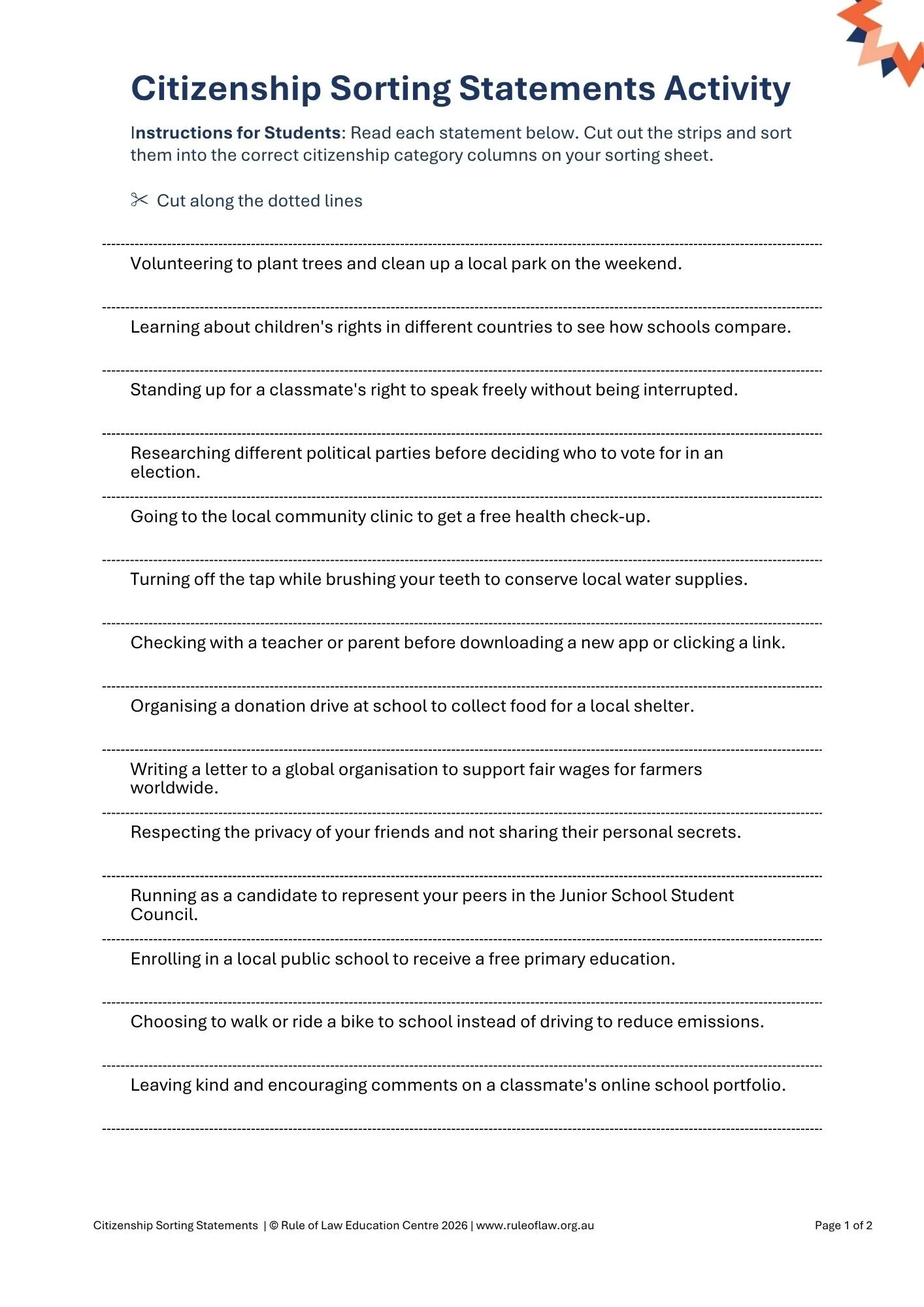
Using the Sorting Statements:
Teacher introduces categories of citizenship: Active, Global, Civil, Political, Social, Environmental, Digital – write as 7 headings across board. Introduce sorting activity to be completed in groups – statements written on individual pieces of paper are to be sorted into columns. Teacher distributes one for each group.
Pool ideas as whole class. Teacher has own statements to use on board as class discusses position of statements. Together, write a summary statement at the bottom of each column. (following examples to be used as a guide only):
As civil citizens we stand up for fairness, privacy, and free speech
As political citizens we use our voice, vote, and participate in democracy
As social citizens we share community resources like schools and public buildings or, As social citizens we follow the law because we respect it and believe it is for the good of all society if everyone follows it.
As active citizens we volunteer our time to help people
As environmental citizens we protect our planet, reduce waste and save water
As digital citizens we use technology safely, kindly and responsibly
As global citizens we care about human rights and cultures everywhere
Differentiation / Adjustments: Small Groups and Whole class
Resources: ClickView video: Australian Citizenship, Sorting statements
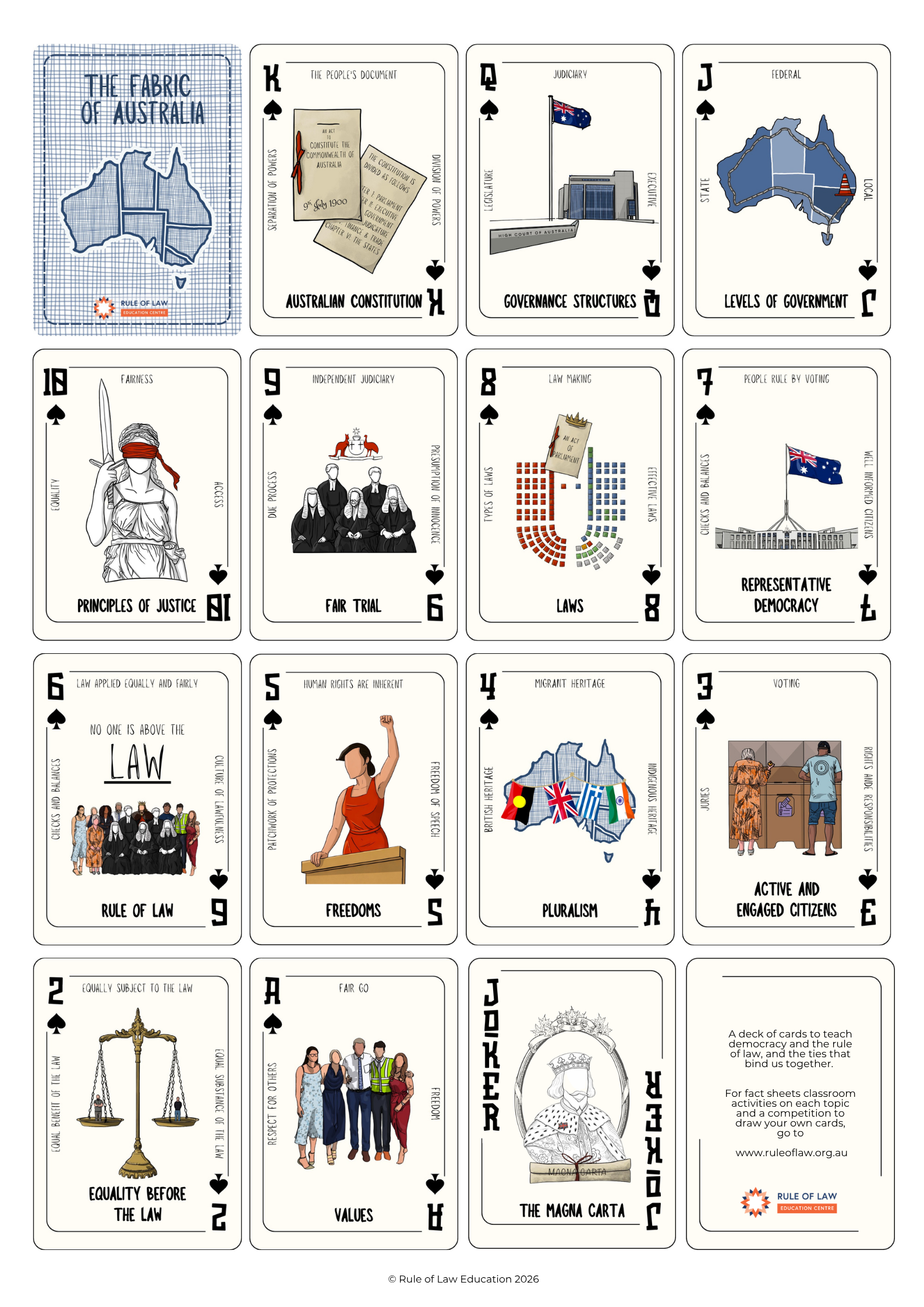
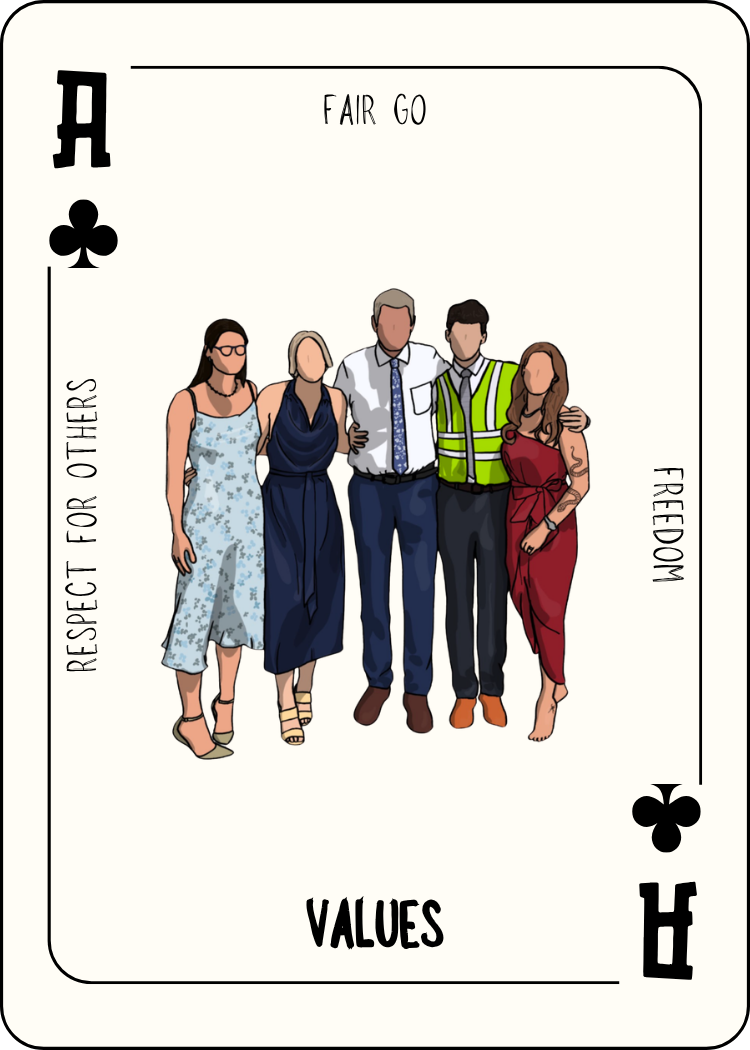
Whole class discussion: How can we show these three values in our class? ie. Fair Go, Respect for Others and Freedom.
Activity 5: Classroom Rules based on Values
Establish classroom agreements/rules based on these values and citizenship. Create a visual display.
How can we show we are agreeing to these expectations/rules each day?
Take student suggestions. e.g. Sign contract, daily signature on wall as enter classroom etc
Whole Class Discussion: What are the rights and responsibilities of citizens?
Pose question to class and encourage students to respond, listen to each other and be challenged.
Differentiation / Adjustments: Whole class discussion
Resources: Butchers Pape
Assessment: Rights and Responsibilities
Students write the statements in their books:
As an Australian citizen I have the RIGHT to:
• Write 5 statements
As an Australian citizen I have the RESPONSIBILITY to:
• Write 5 statements
Key Words: Citizen, citizenship, civics, freedom, democracy, equality, right, responsibility, belonging, civil, political, global citizen
People in Australia have democratic roles and responsibilities
- Describe the ways people can participate in democracy in Australia
- To understand what it means to be an Australian citizen
- To know how to be an active and engaged citizen
- To describe ways in which people can participate in democracy in Australia
Related Resources
-
-
A summary of the key arguments for and against Federation in Australia, including support for unified defence, emerging nationalist ideas, immigration control, and economic disagreements. It also outlines major developments from the 1880s to 1901, from the Federal Council and Tenterfield Oration to the Conventions, referendums, and final passage of the Constitution.
Explore Related Topics
-
Federation of Australia
Explore resources on Federation in 1901, outlining how Australia became a nation, divided powers, and established the constitutional structures and institutions that govern today.
-
Democracy
Explore resources on democracy, highlighting how accountability and representative institutions ensure power is exercised fairly and transparently through open processes, civic engagement and responsible governance.
-
Human Rights
Explore resources on human rights and freedoms, outlining the key protections, legal frameworks, that support rights, and explore how rights and responsibilities are balanced against government power in Australia.