
Civics: Democracy Year 5-6
-
A Year 5–6 civics and citizenship teaching program exploring Australian citizenship, rights and responsibilities, representative democracy, freedoms, and active participation in Australian society.
-
A Year 5–6 civics and citizenship teaching program investigating Australian symbols, emblems and national identity, including how they have changed since Federation.
-
A Year 5–6 civics and citizenship teaching program introducing democracy, Australian values, governance structures and government systems from around the world.
-
A Year 5–6 civics and citizenship teaching program exploring Magna Carta, the Rule of Law, equality before the law and the principles of justice.
-
A Year 5–6 civics and citizenship teaching program examining how bills become laws, the role of Parliament and Australia's bicameral system of government.
-
A Year 5–6 civics and citizenship teaching program exploring the roles and responsibilities of local, state and federal governments in Australia.
-
A Year 5–6 civics and citizenship teaching program investigating voting, civic participation, freedoms and the history of voting rights in Australia.
-
A Year 5–6 civics and citizenship teaching program exploring Federation, the Australian Constitution and the development of Australia's democratic system of government.
-
A Year 5–6 civics and citizenship teaching program consolidating learning about citizenship, democracy, government, laws and the Australian Constitution.
-
A Year 5–6 civics and citizenship teaching program investigating significant Australians and their contributions to the Commonwealth, democracy, society and Australia's development as a nation.
Teaching program – Week 1: Introduction to Citizenship
- To understand what it means to be an Australian citizen
- To know how to be an active and engaged citizen
- To describe ways in which people can participate in democracy in Australia
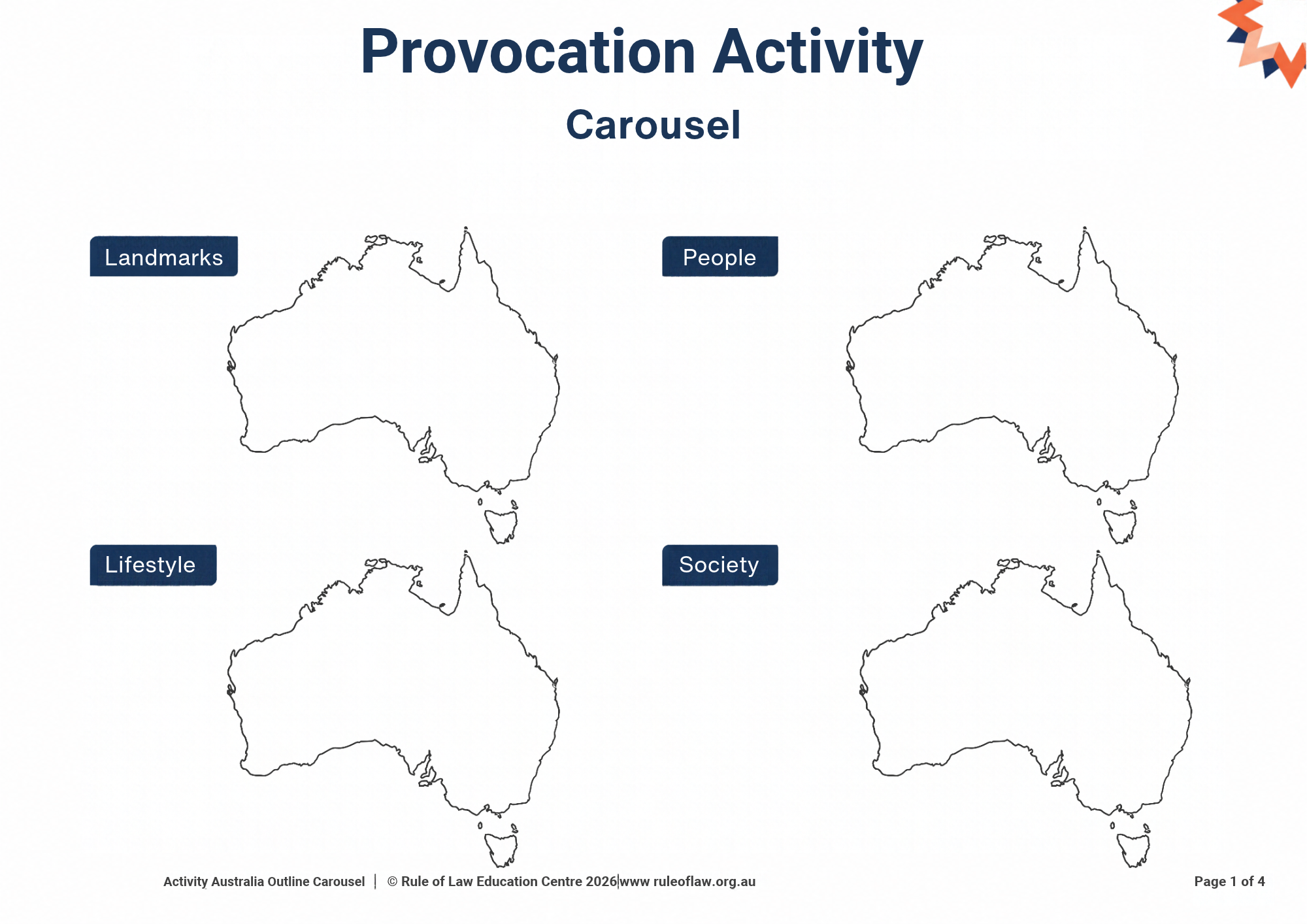
Provocation Activity: Carousel activity
Divide class into four groups.
In groups, students rotate around classroom as a carousel (5 mins on each) and using the post-it notes provided write one-word ideas for each category.
Outlines of Australia are used for each category:
Re-group post-it notes within each category to form sub-categories eg. re-group landmarks into natural and architectural/man-made.
On completion of carousel, students write key words that summarise each category eg. freedom, citizenship, democracy, equality
* Keep for later reference – when looking at change over time since Federation
Differentiation / Adjustments: Mixed ability group work
Resources: Outlines of Australia to be enlarged onto A3 paper; Post-it notes
Introduction
Read the picture book, “I am Australian Too” by Mem Fox
Pre-assessment
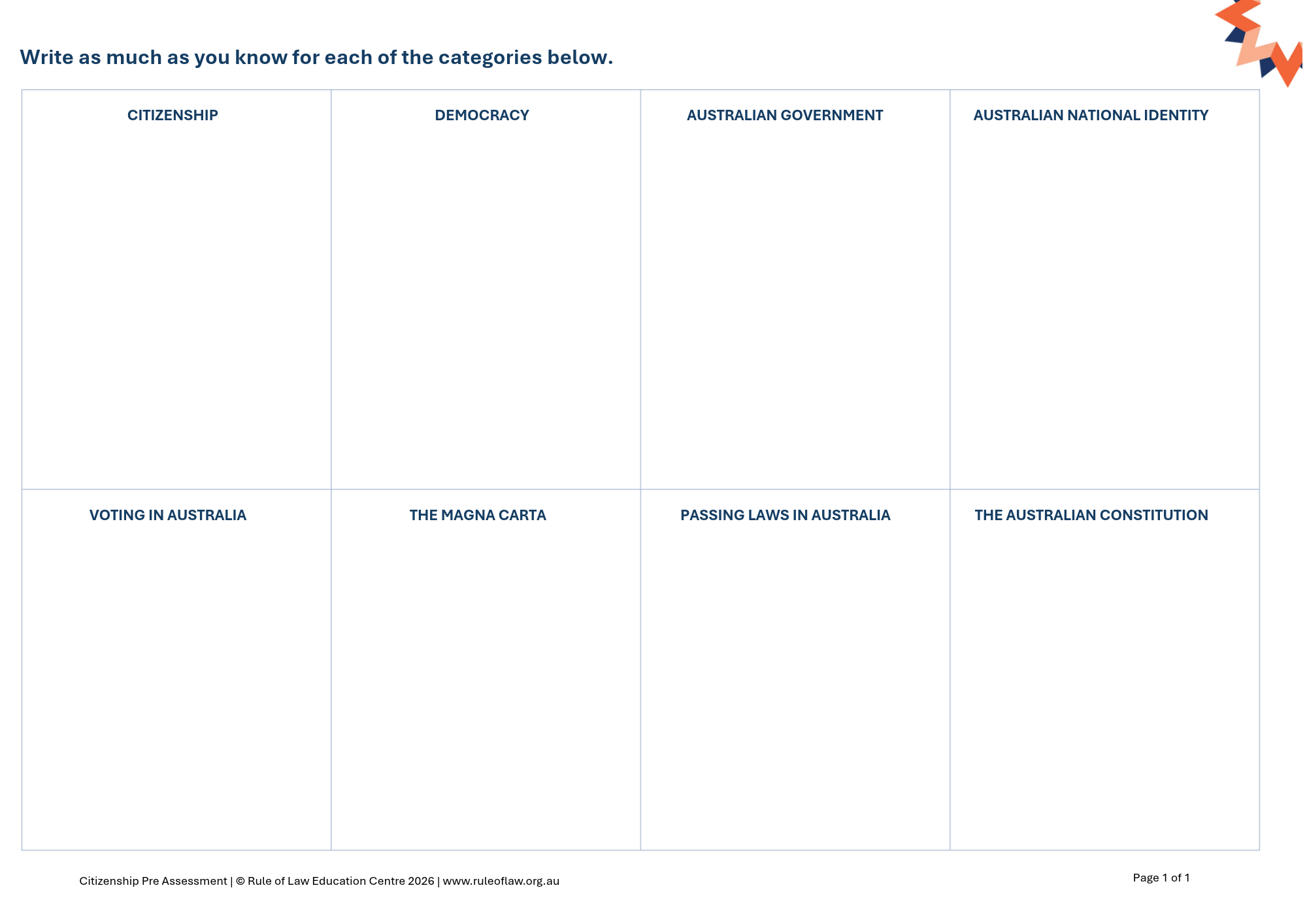
The pre-assessment can be enlarged to A3 size to allow for students to write as much as they know about each category. This can be used as a guide to inform teaching of content and to compare with summative assessment at end of unit.
Differentiation / Adjustments: N/A
Resources: Pre Assessment to be enlarged onto A3 paper
Activity 1: Whole Class Discussion
Pose question
What does it mean to “belong” to a group, community, city or country?
Write answers/examples on board as a brainstorm into quadrants using the categories as headings.
Differentiation / Adjustments: Whole class discussion
Resources: White Board
Activity 2: Think | Pair | Share activity
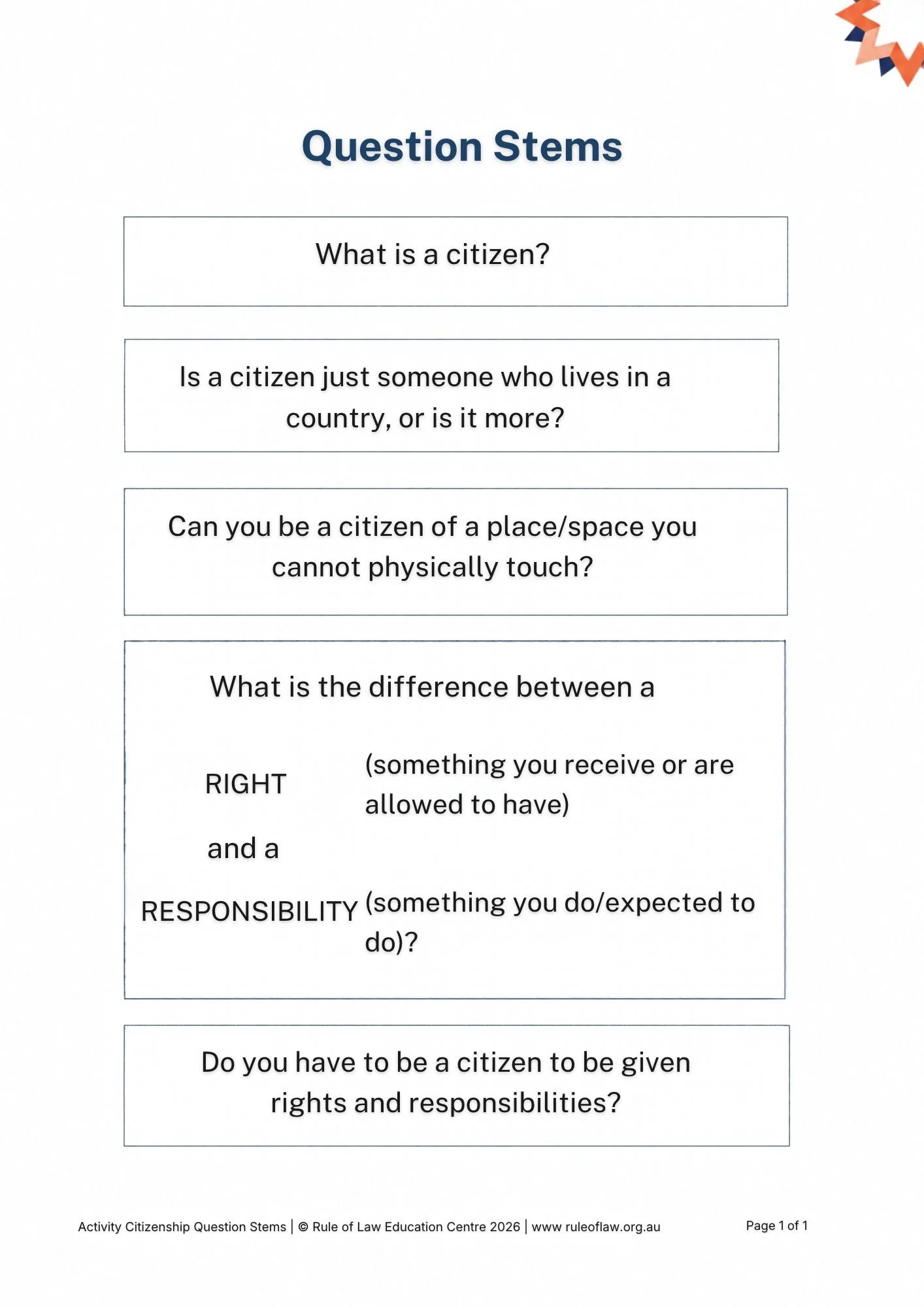
Use these Question Stems to guide discussion in pairs. Distribute to each group.
What is a citizen?
Is a citizen just someone who lives in a country, or is it more?
Can you be a citizen of a place/space you cannot physically touch?
What is the difference between a RIGHT (something you receive or are allowed to have) and a RESPONSIBILITY (something you do/expected to do)?
Do you have to be a citizen to be given rights and responsibilities?
Remind the class principles for a good discussion; listening, one person speaking at a time, respectfully disagree – “there are no bad ideas in a brainstorm”.
Share with whole class ideas/answers. Use question stems as a visual prompt on board as part of whole class discussion. Teacher writes key words on board for visual prompt: eg. belonging, rights, responsibilities, actions etc.
Combining two pairs, so in groups of four, and using your ideas to the questions, write a definition of citizenship on butchers paper provided. Choose a spokesperson to report back to whole class. Combine definitions to create a whole-class definition of citizenship. Write on board.
Differentiation / Adjustments: In pairs, Small Groups and Whole class
Resources: Question Stems, Butchers Paper
Activity 3: Watch video
Clickview Australian Citizenship (active citizenship)
Students can check their definitions from previous activity with the video’s.
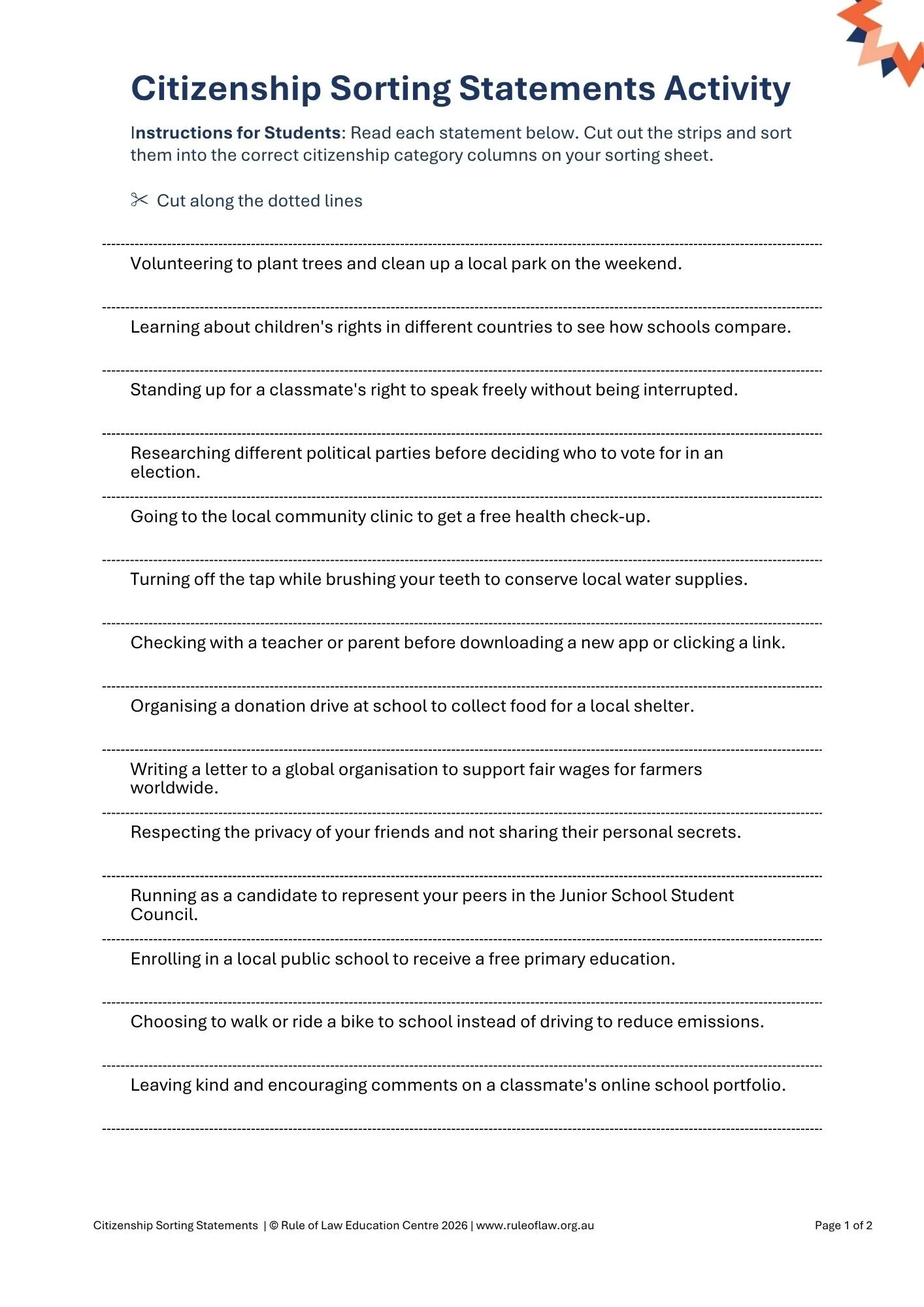
Using the Sorting Statements:
Teacher introduces categories of citizenship: Active, Global, Civil, Political, Social, Environmental, Digital – write as 7 headings across board. Introduce sorting activity to be completed in groups – statements written on individual pieces of paper are to be sorted into columns. Teacher distributes one for each group.
Pool ideas as whole class. Teacher has own statements to use on board as class discusses position of statements. Together, write a summary statement at the bottom of each column. (following examples to be used as a guide only):
As civil citizens we stand up for fairness, privacy, and free speech
As political citizens we use our voice, vote, and participate in democracy
As social citizens we share community resources like schools and public buildings or, As social citizens we follow the law because we respect it and believe it is for the good of all society if everyone follows it.
As active citizens we volunteer our time to help people
As environmental citizens we protect our planet, reduce waste and save water
As digital citizens we use technology safely, kindly and responsibly
As global citizens we care about human rights and cultures everywhere
Differentiation / Adjustments: Small Groups and Whole class
Resources: ClickView video: Australian Citizenship, Sorting statements
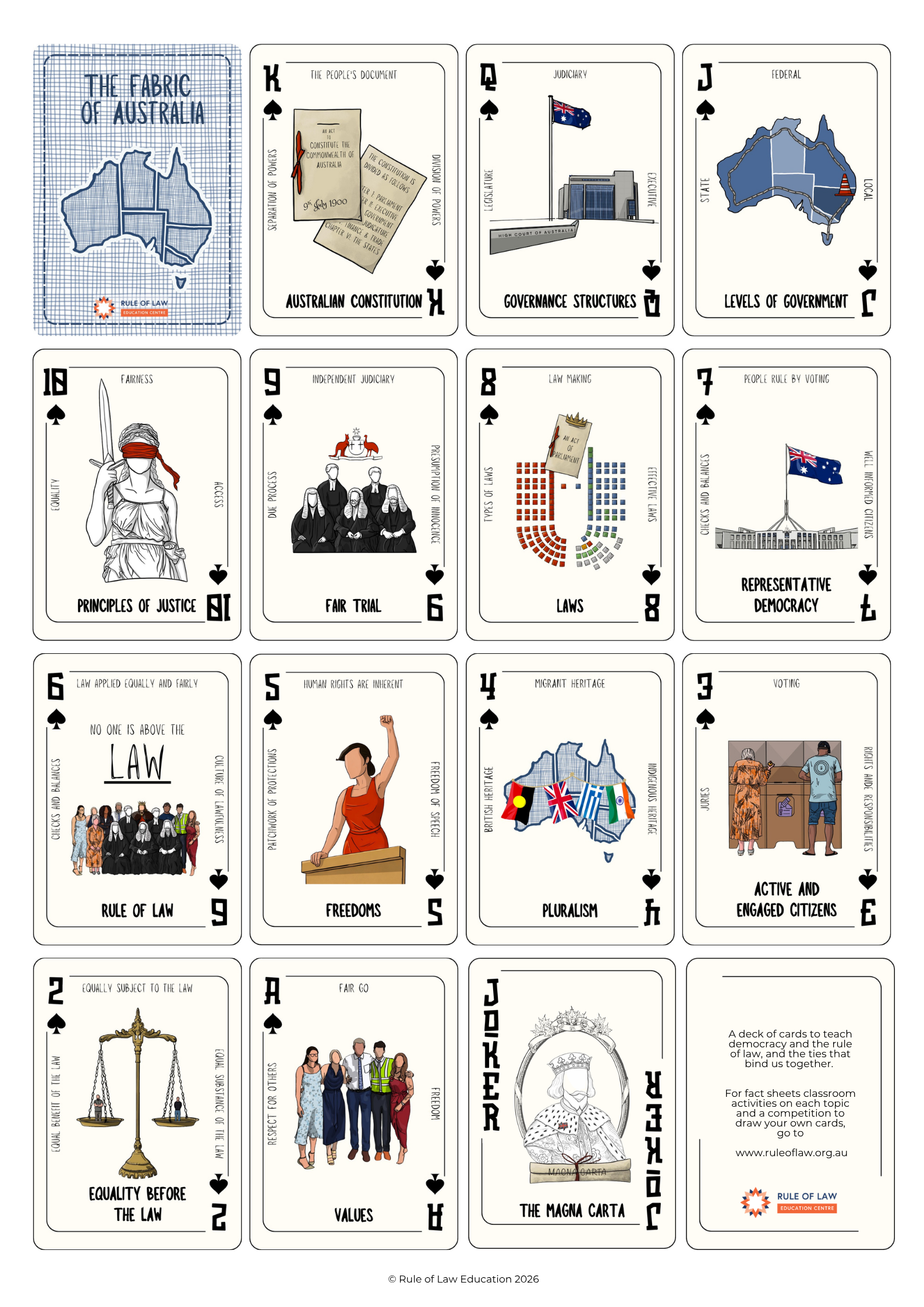
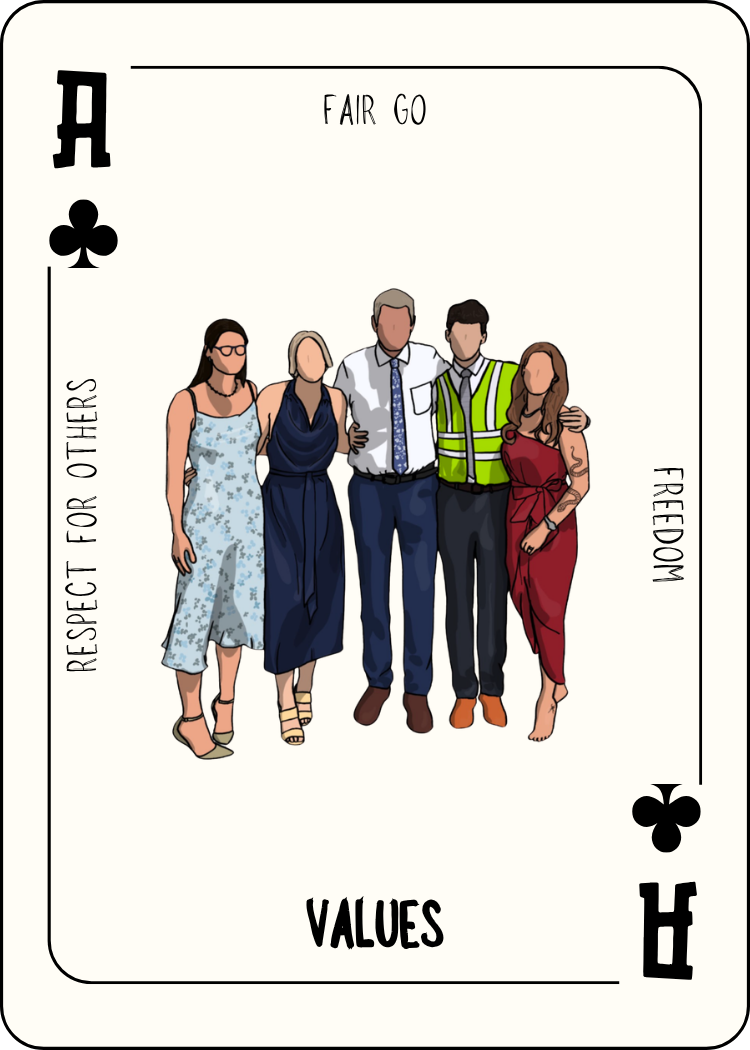
Whole class discussion: How can we show these three values in our class? ie. Fair Go, Respect for Others and Freedom.
Activity 5: Classroom Rules based on Values
Establish classroom agreements/rules based on these values and citizenship. Create a visual display.
How can we show we are agreeing to these expectations/rules each day?
Take student suggestions. e.g. Sign contract, daily signature on wall as enter classroom etc
Whole Class Discussion: What are the rights and responsibilities of citizens?
Pose question to class and encourage students to respond, listen to each other and be challenged.
Differentiation / Adjustments: Whole class discussion
Resources: Butchers Pape
Assessment: Rights and Responsibilities
Students write the statements in their books:
As an Australian citizen I have the RIGHT to:
• Write 5 statements
As an Australian citizen I have the RESPONSIBILITY to:
• Write 5 statements
Key Words: Citizen, citizenship, civics, freedom, democracy, equality, right, responsibility, belonging, civil, political, global citizen
People in Australia have democratic roles and responsibilities
- Describe the ways people can participate in democracy in Australia
Related Resources
-
A Year 5–6 civics and citizenship teaching program investigating Australian symbols, emblems and national identity, including how they have changed since Federation.
-
A summary of the key arguments for and against Federation in Australia, including support for unified defence, emerging nationalist ideas, immigration control, and economic disagreements. It also outlines major developments from the 1880s to 1901, from the Federal Council and Tenterfield Oration to the Conventions, referendums, and final passage of the Constitution.
Explore Related Topics
-
Federation of Australia
Explore resources on Federation in 1901, outlining how Australia became a nation, divided powers, and established the constitutional structures and institutions that govern today.
-
Democracy
Explore resources on democracy, highlighting how accountability and representative institutions ensure power is exercised fairly and transparently through open processes, civic engagement and responsible governance.
-
Human Rights
Explore resources on human rights and freedoms, outlining the key protections, legal frameworks, that support rights, and explore how rights and responsibilities are balanced against government power in Australia.