
Civics: Democracy Year 5-6
-
A Year 5–6 civics and citizenship teaching program exploring Australian citizenship, rights and responsibilities, representative democracy, freedoms, and active participation in Australian society.
-
A Year 5–6 civics and citizenship teaching program investigating Australian symbols, emblems and national identity, including how they have changed since Federation.
-
A Year 5–6 civics and citizenship teaching program introducing democracy, Australian values, governance structures and government systems from around the world.
-
A Year 5–6 civics and citizenship teaching program exploring Magna Carta, the Rule of Law, equality before the law and the principles of justice.
-
A Year 5–6 civics and citizenship teaching program examining how bills become laws, the role of Parliament and Australia's bicameral system of government.
-
A Year 5–6 civics and citizenship teaching program exploring the roles and responsibilities of local, state and federal governments in Australia.
-
A Year 5–6 civics and citizenship teaching program investigating voting, civic participation, freedoms and the history of voting rights in Australia.
-
A Year 5–6 civics and citizenship teaching program exploring Federation, the Australian Constitution and the development of Australia's democratic system of government.
-
A Year 5–6 civics and citizenship teaching program consolidating learning about citizenship, democracy, government, laws and the Australian Constitution.
-
A Year 5–6 civics and citizenship teaching program investigating significant Australians and their contributions to the Commonwealth, democracy, society and Australia's development as a nation.
Teaching program – Week 8: Federation and the Constitution
- To understand the significant events that led to Federation
- To understand the impact significant people had that led to Federation
- To investigate and use primary and secondary sources
- To identify the purpose and role of Australia’s Constitution
Modelled reading: “There’s a prawn in Parliament House” by Annabel Crabb
Differentiation / Adjustments: Whole class
Resources: “There’s a prawn in parliament house” by Annabel Crabb
Introduction:
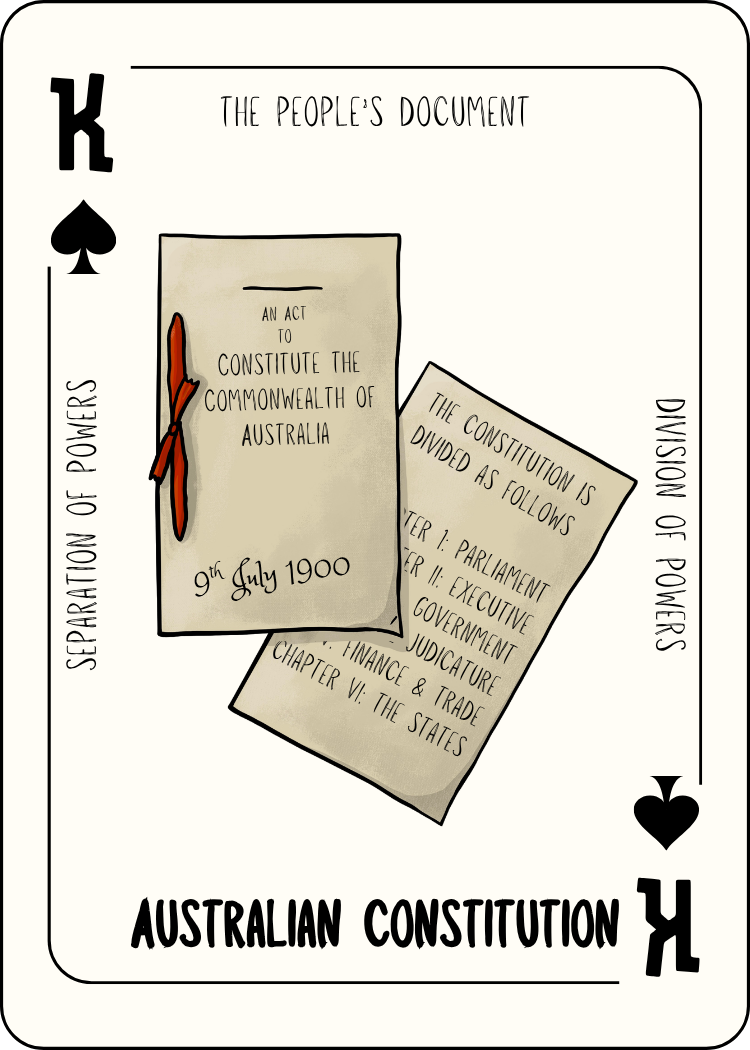
Teacher displays Australian Constitution poster on board as a visual prompt.
Students take notes and teacher writes key words on board as visual prompt. Watch the video: Federation and the Australian Constitution
Differentiation / Adjustments: Independent Teacher uses visual prompts on board
Resources: Fabric of Australia Poster; ClickView video: Federation and the Australian Constitution
Activity 1: Tug-of-War Visible Thinking Routine
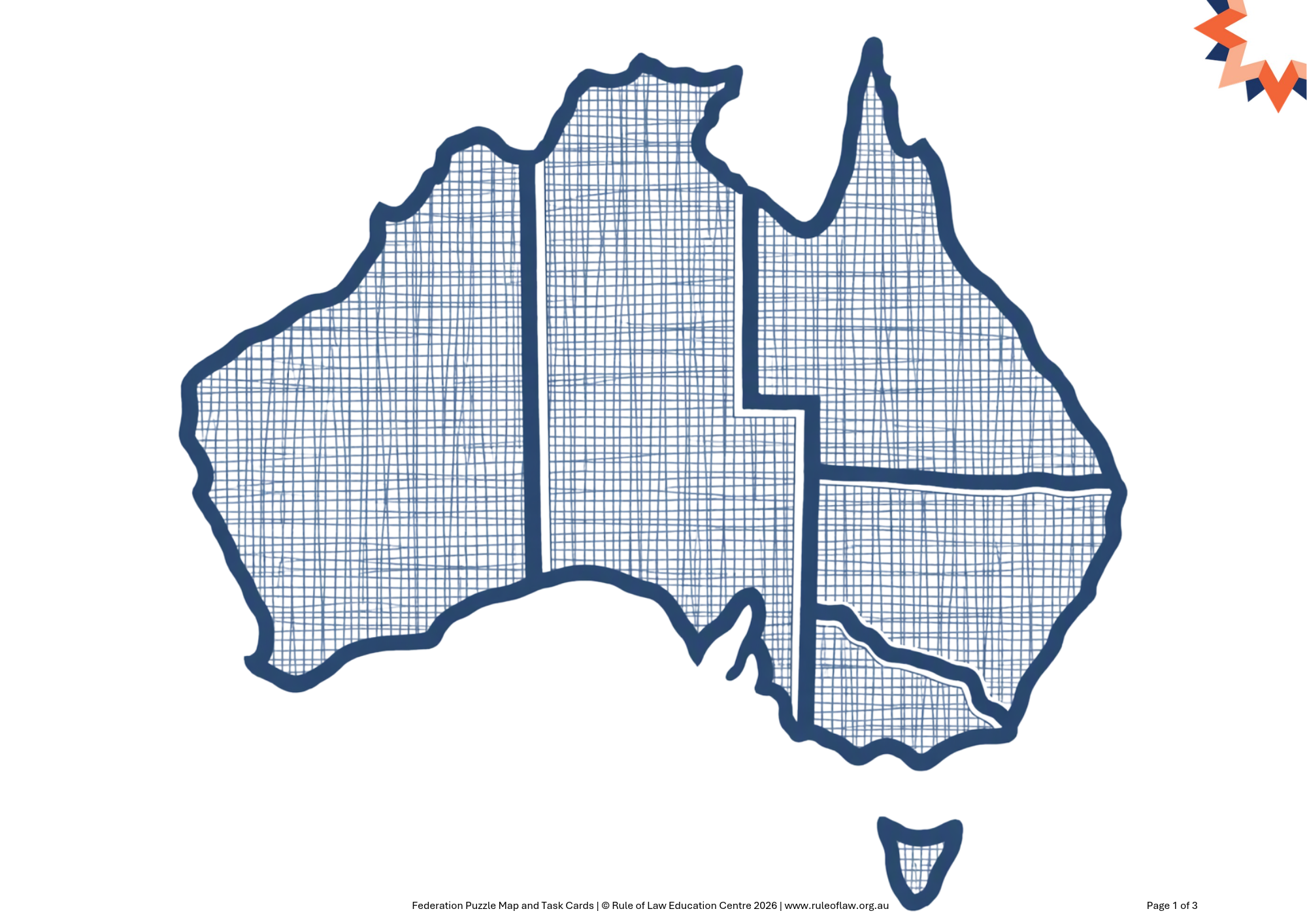
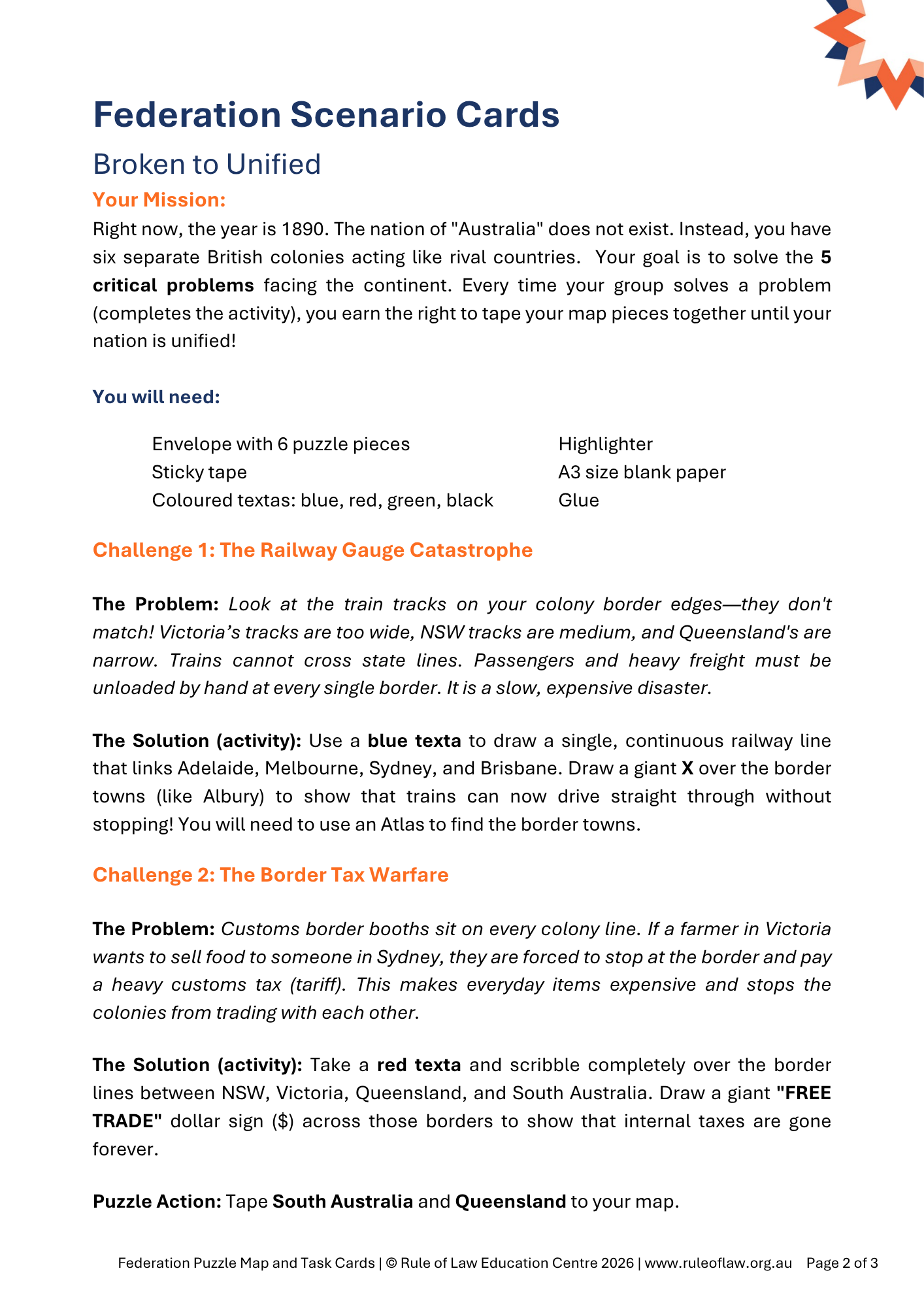
In groups of 4, students complete the Australia Puzzle Challenge: Broken to Unified. Each group receives an envelope with:
Broken Australian Map – cut into the 6 states at time of Federation
5 Task cards – each with a Problem and a Solution.
On completion of each task, students can piece/tape two states together.
Continue until all puzzle is completed. For the last challenge, students pastes into A3 size blank paper.
Reflection: In your groups discuss which of the 5 problems do you think was the most frustrating or dangerous daily issue? Defend your choice in whole class discussion.
Differentiation / Adjustments: Whole class
Resources: Envelope; Pieces of Map of Australia Puzzle. Set at A3 size. Cut out 6 states; Federation Scenario cards in envelopes; Atlas; Blank A3 piece of paper
Discussion:
Why was it necessary to become a federated nation? How different would Australia look today of we didn’t become a federation?
Differentiation / Adjustments: Whole class discussion
Resources: N/A
Activity 2: Carousel Activity
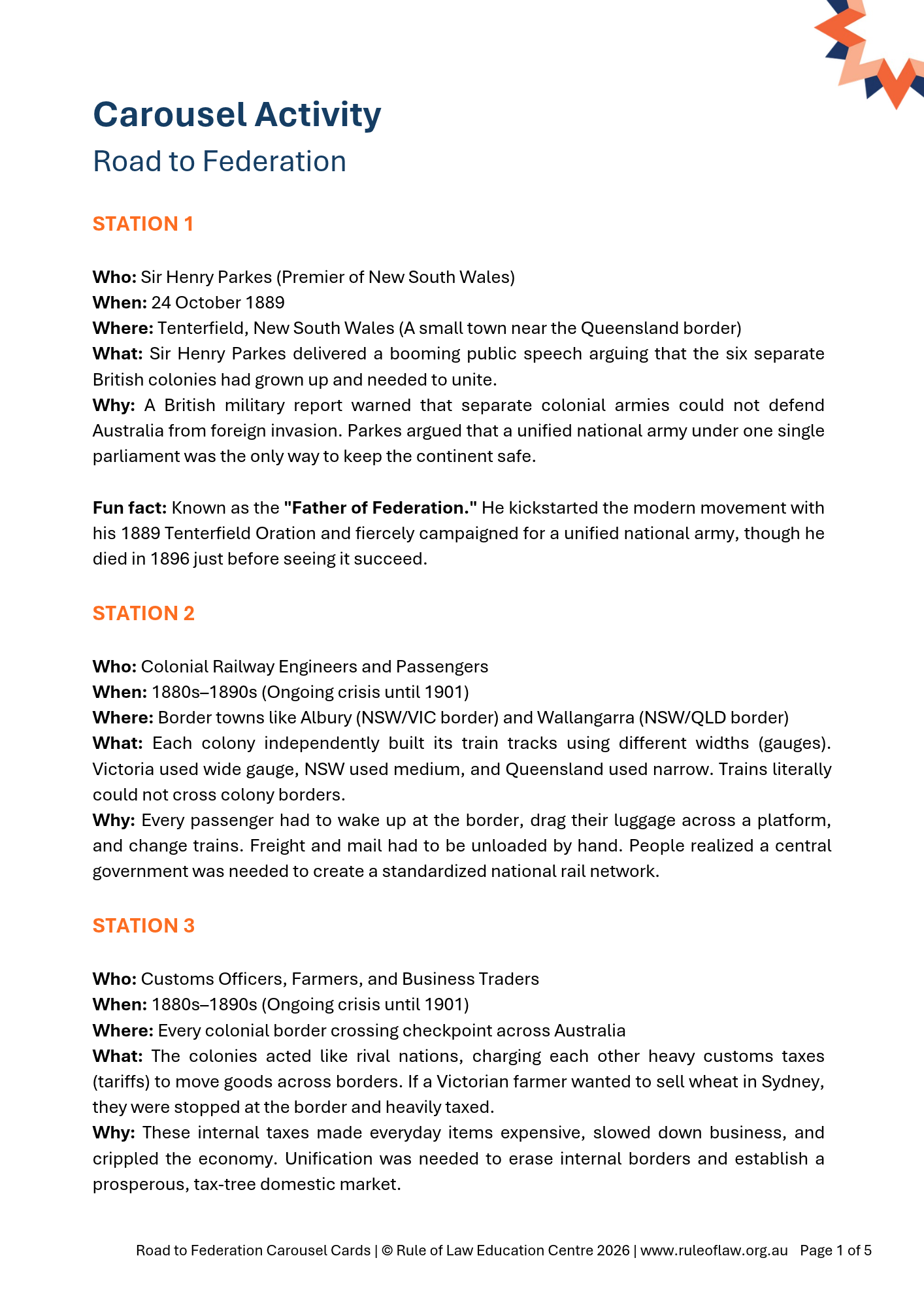
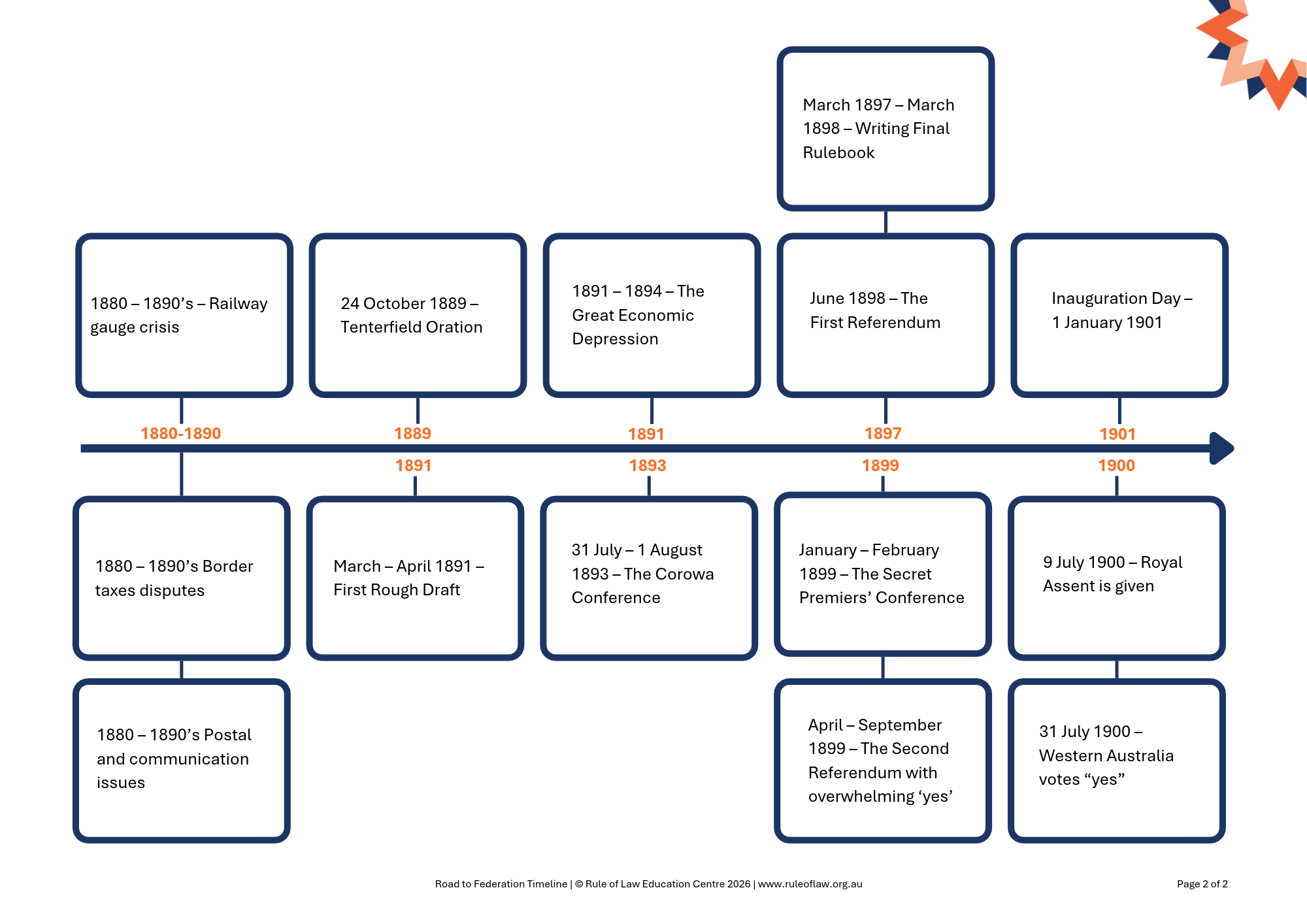
Road to Federation: In groups of 2 or 3, and using the timeline provided, students rotate around the classroom and read the information at each of the 11 stations. Students summarise the information in their own words in each box. They add the year/s in chronological order along the line and join the boxes to the line at each point. This shows the events leading to Federation in correct order. Teachers can use the scaffold worksheet as a guide. On completion, discuss the ‘Road to Federation’ as a whole class.
Differentiation / Adjustments: In pairs or groups of 3; Scaffold – prompts included with dates & key events: CONTENT PROCESS
Resources: Carousel Activity – Road to Federation cards; Timeline – Road to Federation incl scaffold; Print at A3 size.
Activity 3: Think | Pair | Share
Watch the video or teacher works through the slides (same information) explaining the purpose of the Constitution: Informed, The Purpose of the Constitution
Show students the Pocket Constitution. This can be sought free from the local Federal Minister of Parliament. Allow students to have a look, read and explore the book.
Differentiation / Adjustments: Independent; In pairs
Resources: Video: Informed, The Purpose of the Constitution Or, PowerPoint: Informed, The Purpose of the Constitution; Australia’s Constitution: Pocket Edition
Activity 4:
Our constitution is a written constitution or codified one and it was established through peaceful unification of states. As a result of referendum everyone peacefully agreed to the constitution and federation of Australia.
Discussion: Why is it called the peoples’ document?
As a whole class, complete the online quiz: 4.10 Case study: Where did the Australian Constitution come from?
Differentiation / Adjustments: Whole class discussion
Resources: Online quiz: 4.10 Case study: Where did the Australian Constitution come from?
Activity 5:
Using Kids News, Britannica Kids or your school’s library portal, students in pairs find the answers to the following:
The United Kingdom is uncodified. What does this mean? How did it become established? How can it be changed?
How was the American Constitution established? What is it called and what is its purpose? How can it be changed?
The Australian Constitution. How was it established? What is its purpose? How can it be changed?
Decide how you will present the information showing the differences and the similarities. Add extra information or interesting facts that you learn.
Differentiation / Adjustments: In pairs; Personalisation: Choice of PRODUCT
Resources: Access to Kids News, Britannica Kids, or school’s library portal
Homework Suggestion:
Students answer these questions by making a short video:
What is a Referendum? How does it work and have many been successful? Why was it important for the Australian Constitution to be approved by referendum?
Differentiation / Adjustments: Independent
Resources: Students film short video on phone at home
Discussion:
Is the Constitution out of date? Set up two teams – affirmative to agree with question, and negative to disagree. Have a class debate. Remind student to respectfully listen and be willing to be challenged.
Differentiation / Adjustments: Whole class discussion – divided into two teams
Resources: N/A
Assessment:
In books, students answer the following questions written on the board: What is the Australian Constitution? What is its purpose? How does the purpose of the Constitution protect the rights and responsibilities of Australian citizens?
Differentiation / Adjustments: Independent
Resources: Student books
Extension work:
Create a board game about Australia’s democracy – the history, the parliamentary system, the Australian Constitution, levels of government, bicameral system, voting in Australia, citizenship, laws.
Differentiation / Adjustments: Personalisation – CHOICE in pairs, small groups or independent; CONTENT; PROCESS; PRODUCT
Resources: N/A
Key Words: preferential, compulsory, roles, responsibilities, participate, voting rights, referendum, campaign, voting age
People have developed Australia as a nation
- Describe significant events and people that led to Australia becoming a federated nation on 1 January 1901, using sources as evidence
- Identify the purpose of Australia’s Constitution
Related Resources
-
-
A summary of the key arguments for and against Federation in Australia, including support for unified defence, emerging nationalist ideas, immigration control, and economic disagreements. It also outlines major developments from the 1880s to 1901, from the Federal Council and Tenterfield Oration to the Conventions, referendums, and final passage of the Constitution.
Explore Related Topics
-
Federation of Australia
Explore resources on Federation in 1901, outlining how Australia became a nation, divided powers, and established the constitutional structures and institutions that govern today.
-
Democracy
Explore resources on democracy, highlighting how accountability and representative institutions ensure power is exercised fairly and transparently through open processes, civic engagement and responsible governance.
-
Human Rights
Explore resources on human rights and freedoms, outlining the key protections, legal frameworks, that support rights, and explore how rights and responsibilities are balanced against government power in Australia.