
Australia: Making a Nation
-
An overview of the major factors that shaped the development of democracy in Australia, including egalitarian legal ideals shown in cases like Kable v Sinclair, the introduction of checks and balances through institutions such as the Supreme Court and a free press, the influence of immigration and political activism including Chartism and the Eureka Stockade, and the constitutional debates that led the colonies to design their own representative systems of government.
-
A summary of the key arguments for and against Federation in Australia, including support for unified defence, emerging nationalist ideas, immigration control, and economic disagreements. It also outlines major developments from the 1880s to 1901, from the Federal Council and Tenterfield Oration to the Conventions, referendums, and final passage of the Constitution.
-
This explainer examines the War Precautions Act 1914, highlighting how the legislation granted broad executive powers, regulated public behaviour, and demonstrated the tension between national security and individual freedoms.
-
An overview of the key features of the Australian Constitution, including its role as the highest source of law, its democratic structure, and its deliberate division and separation of powers. It explains federalism, the responsibilities of the Parliament, Executive and Judiciary, the High Court’s constitutional role, and the Constitution’s reliance on the rule of law and responsible government rather than a full Bill of Rights.
-
This explainer examines the development of workers’ rights in Australia, focusing on trade unions’ advocacy for fair pay and safe conditions, and analysing how the Immigration Restriction Act 1901 affected labour markets and access to workplace protections.
-
An overview of the Commonwealth Franchise Act 1902 and its significance in expanding political rights for women in Australia. It explains how the Act granted most Australian women the right to vote and stand for federal Parliament, placing Australia among the earliest countries to adopt women’s suffrage. The explainer also outlines the Act’s limitations, and examines its broader impact on democratic participation and later reforms.
COMING SOON!
-
An overview of how governance structures in New South Wales have evolved from the early colonial period to the present, highlighting key changes such as the shift from autocratic rule to responsible government, the development of democratic institutions, and the introduction of checks and balances. It also identifies elements of continuity, including the ongoing influence of Westminster traditions, the role of the Governor, and the structure of Parliament within the NSW system of government.
Continuity and Change of NSW Governance Structures
When Australia became a nation on 1 January 1901, New South Wales did not lose its identity or long‑established institutions. Instead, it shifted from a self‑governing British colony to a state within a federal system. This transition brought both continuity and change. Many colonial‑era structures remained central to NSW governance, while new national responsibilities and institutions reshaped how the state operated.
NSW Before Federation
Before Federation, NSW had already established the core features of its political and legal system. From 1788, the colony adopted British principles such as the rule of law, representative and responsible government, and an independent judiciary. These principles were strengthened through a series of reforms.
While these principles showed continuity, the institutions that supported them gradually developed over time. The New South Wales Act 1823 (UK) created the Supreme Court and Executive Council. These institutions introduced a more balanced system of government by reducing the Governor’s unchecked exercise power.
Later, the Australian Constitutions Act 1842 (UK) introduced a partly elected Legislative Council, and the Australian Constitutions Act 1850 (UK) allowed colonies to draft their own constitutions. NSW did so in 1855, establishing a representative, bicameral parliament and responsible government, with the Premier and Cabinet accountable to the elected Legislative Assembly.
By 1901, NSW had a stable system of governance and controlled key areas such as education, policing, hospitals, transport and taxation.
Continuity After Federation
After Federation, much of this structure remained intact. NSW kept its bicameral parliament, its Westminster system, and its model of responsible government. The Premier and Cabinet continued to answer to the NSW Parliament, and state elections, political parties and parliamentary debates continued largely unchanged. NSW also retained responsibility for major areas of everyday life, including schools, hospitals, policing, transport and criminal law.
This continuity ensured stability during the transition to nationhood and allowed NSW to maintain a strong sense of political identity within the Commonwealth.
Change After Federation
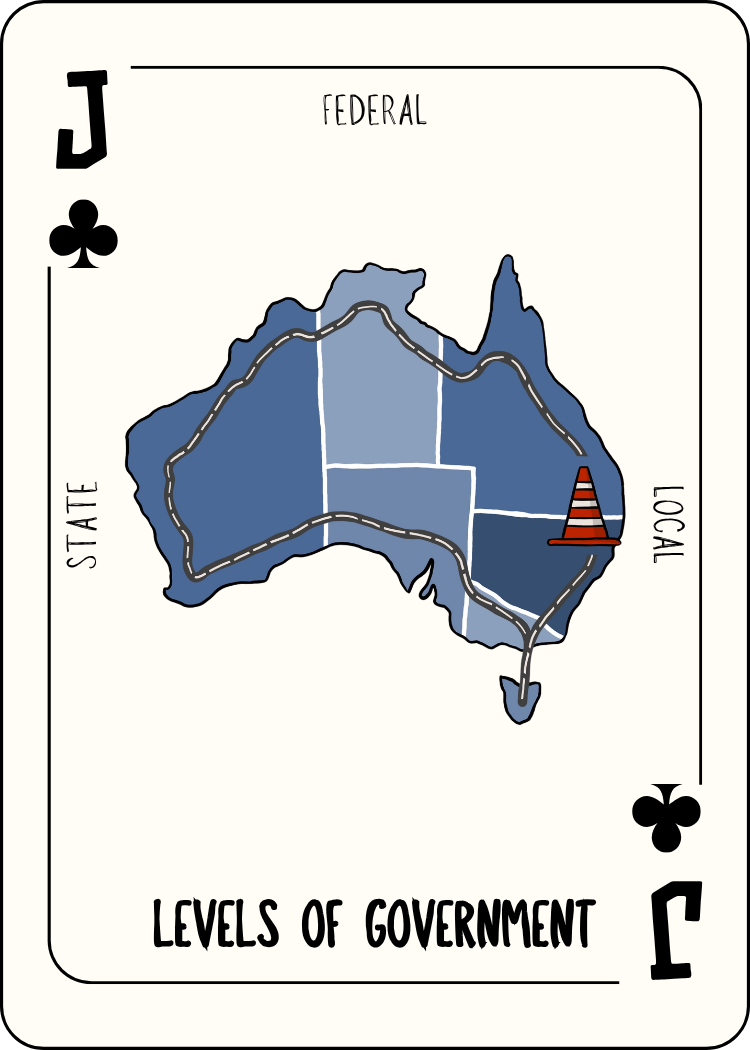
However, Federation also brought significant change. The Australian Constitution introduced an American-style division of powers that required NSW to share authority with a new national government. NSW ceded control over defence, taxation, immigration, currency and external affairs, while retaining areas such as education, health and criminal law.
New national institutions also reshaped governance. NSW gained representation in the federal Parliament through the House of Representatives and the Senate, giving the state a voice in national decision‑making. The High Court of Australia became the highest Australian court of appeal and the final interpreter of the Constitution (although appeals could still be made to the Privy Council in Britain at the time).
Early Commonwealth legislation quickly influenced life in NSW, from uniform tax laws to the Immigration Restriction Act and the establishment of national arbitration systems regulating wages and working conditions.
Ultimately, the governance of NSW after 1901 reflects a balance between continuity and change. The state preserved its long‑standing legal principles, parliamentary structures and areas of responsibility, ensuring stability and the preservation of its identity. At the same time, the creation of the Commonwealth and the rise of national institutions reshaped the way NSW exercised power within the federal system. This combination of enduring traditions and new constitutional arrangements still defines how NSW operates within the Australian federation today.
Related Resources
-
This resource guides students to examine how NSW governance has evolved from colonial administration to modern democratic institutions. It encourages analysis of both enduring features and significant structural changes over time.
-
An overview of the key features of the Australian Constitution, including its role as the highest source of law, its democratic structure, and its deliberate division and separation of powers. It explains federalism, the responsibilities of the Parliament, Executive and Judiciary, the High Court’s constitutional role, and the Constitution’s reliance on the rule of law and responsible government rather than a full Bill of Rights.
-
A summary of the key arguments for and against Federation in Australia, including support for unified defence, emerging nationalist ideas, immigration control, and economic disagreements. It also outlines major developments from the 1880s to 1901, from the Federal Council and Tenterfield Oration to the Conventions, referendums, and final passage of the Constitution.
Explore Related Topics
-
Federation of Australia
Explore resources on Federation in 1901, outlining how Australia became a nation, divided powers, and established the constitutional structures and institutions that govern today.
-
Democracy
Explore resources on democracy, highlighting how accountability and representative institutions ensure power is exercised fairly and transparently through open processes, civic engagement and responsible governance.
-
Human Rights
Explore resources on human rights and freedoms, outlining the key protections, legal frameworks, that support rights, and explore how rights and responsibilities are balanced against government power in Australia.